

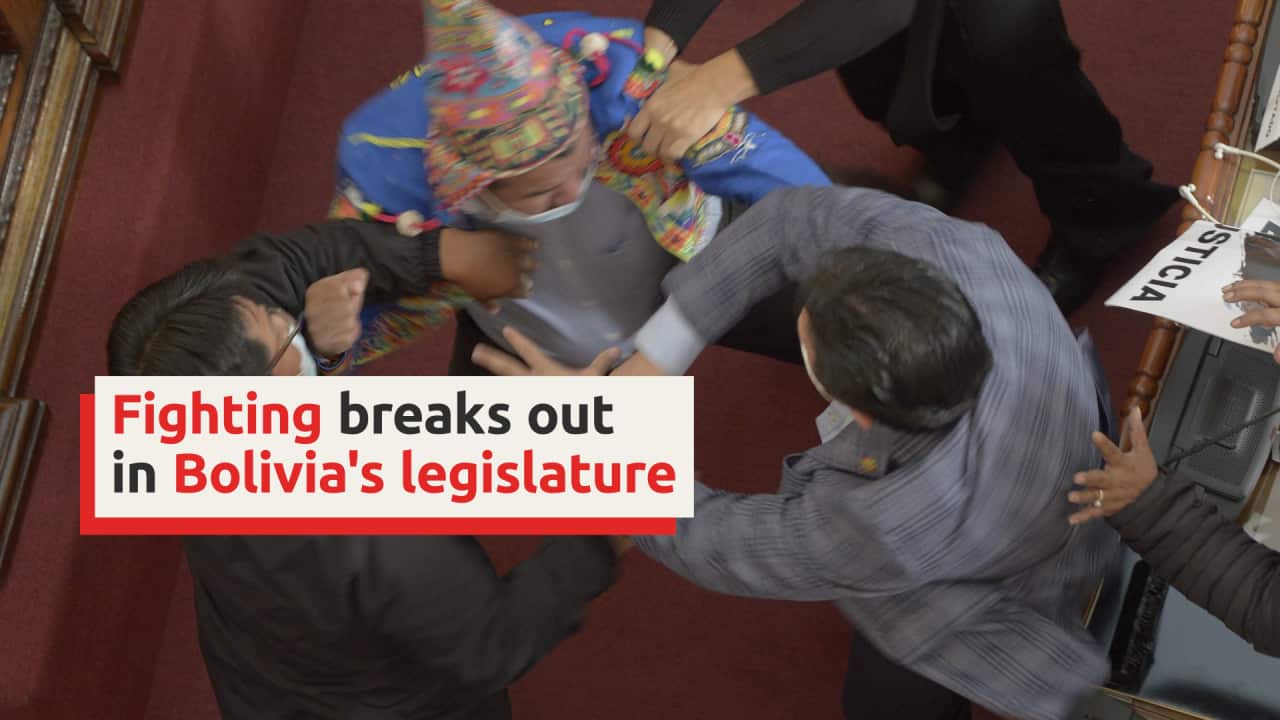
"They all grabbed me, pulled me by my back," Colque told reporters after the fight. "We can't allow this."
At issue was Bolivia's roiling politics of recent years.
In 2019, Bolivia's socialist president, Evo Morales, resigned amid widespread violent protests against his government over allegations he fraudulently won an election when running for an unprecedented and unconstitutional fourth term.
At least 33 people were killed in violence that followed the election in clashes in Senkata, outside La Paz.
In October, after an 11-month caretaker government, Morales' former economy minister Luis Arce won a landslide election, paving the way for Morales to return home.
News that makes sense
Your trusted source for staying up-to-date with the world around you. Get free daily news updates and analysis, straight to your inbox.
Jeanine Anez, a conservative lawmaker who took the helm of the interim government, was sent to prison on charges she helped foment a coup against Morales.
The parliament was reviewing the legitimacy of this history.
"All we are asking for is that we be respected, that they stop calling us criminals, murderers, and that they stop exploiting the pain of the Bolivians who died in Senkata," said Romero, after the fighting. "And surely it will be up to the law to clarify it all, as with all the subsequent tragic events."