
With the 75th anniversary of the Battle of the Coral Sea, off North-Eastern Australia during the Second World War, and Anzac Day only last week, many Australians are still reflecting on the sacrifices made by our men and women in uniform.
Anzac Day holds a special place for me, not least because I find the history of wars fascinating, but because as a journalist working for NITV and SBS I get the chance to work on some of the often forgotten stories of war.
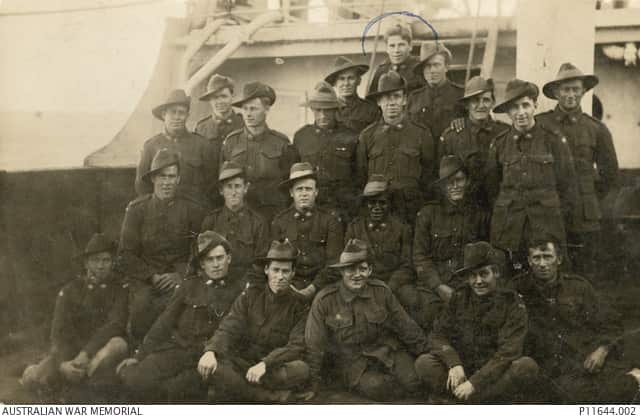
This year I was helping to produce a story about the Australia War Memorial's ‘Spirit of Anzac Centenary Experience’ exhibition that just finished touring the country for the last 18 months. One of the key figures from the exhibition was Indigenous soldier Douglas Grant, captured by the Germans at the First Battle of Bullecourt with 1000 other Australian soldiers, and eventually repatriated to Australia in 1919.
On hearing his remarkable story I decided to try and search for my own ancestor’s war history - all I knew was rather limited.
News that makes sense
Your trusted source for staying up-to-date with the world around you. Get free daily news updates and analysis, straight to your inbox.
Online Research Manager for Australian War Memorial, Jennifer Milward, says one of the most common questions she receives is about how to find service records of people's relatives.
“First World War records are really easy to find," she said. "You can find a unit’s full combat history on our website, but you can also find the full service record of veterans on the National Archives of Australia website.
"But for the Second World War and other conflicts only a fraction of records have been digitised, so it’s much harder to come by this information. In most cases people have to specifically ask for these records to be found and digitised.”
So during the afternoon on Anzac Day I began my search and much to my delight, I found the war record of my great-grandfather Reginald Garland Treseder. A man wounded in the little-known story of the Second Battle of Bullecourt; a battle which much to my surprise marks its centenary this week.
When Reginald enlisted in the Australian Imperial Force on 12 October 1915 he would have already known of the carnage that was taking place amongst the Anzac forces at Gallipoli. Living at Waverly, it wouldn’t have been hard to find newspaper reports on what was going on at the front. Despite this, he signed up quite proudly at the age of 21-and-a-half to fight for King and country.
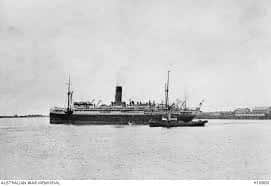
Reginald was assigned to the 19th Battalion in early December, but was soon transferred to 2nd Battalion to help rebuild its now depleted ranks from its losses at Gallipoli. He sailed from Sydney for Egypt on December 17th aboard the troopship HMAT Berrima. After completing training he sailed from Alexandria with the 2nd Battalion arriving in Marseilles in late March. Soon after the 2nd Battalion was sent to the area of Somme River in Northern France for the build-up to the Battle of the Somme, however it would not find itself in any serious action until it reached Pozieres in July 1916. After joining battle the 2nd Battalion was subjected to gas attack and repeated intense artillery bombardments.
The 2nd would later go on to fight near Ypres in Belgium later in the year, only to be transferred back to the Somme for some relief over the winter months. Its first major battle for 1917 would come in April in part of the First Battle of Bullecourt along part of the newly constructed Hindenburg Line.
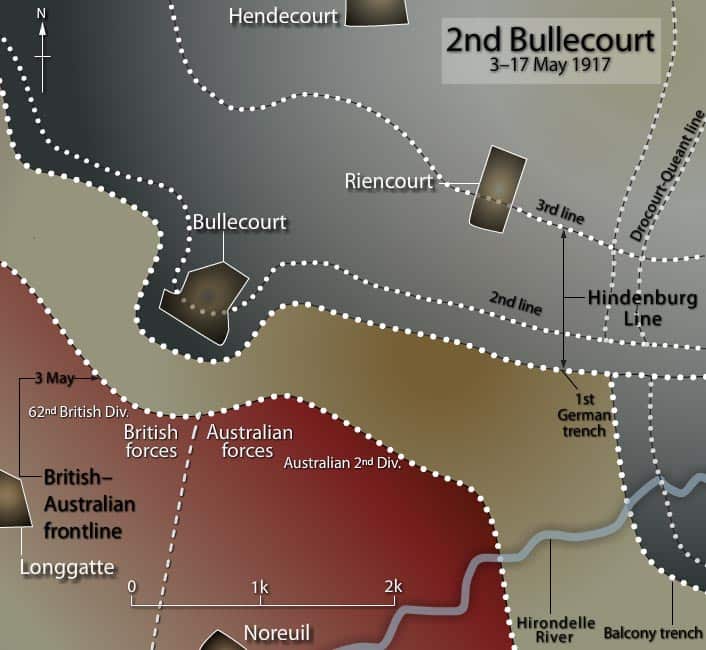
After a two-week lull in activity, the Second Battle of Bullecourt opened on the 3rd of May 1917, where the Allies planned to counter attack the Germans, and it was into this ferocious fight that my now 23 year old great-grandfather, who would had just celebrated his birthday in the day or two prior, would find himself fighting for his life.
War Correspondent Charles Bean‘s official coverage of the battle said: “the conditions of Bullecourt were extraordinarily difficult, approximating those… in the First Battle of the Somme. The Place had been so battered that the trenches were barely recognisable, and the German garrison relied entirely on deep dugouts. The food supply was irregular and the inmates of the dugouts lived partly on rations found in the haversacks of the British dead.”
And it was into this muddy nightmare that a still down on strength 2nd Battalion, made up of 16 officers and 446 men, marched onto the line on the 4th of May, 100 years ago, to help shore up some of the weaker sections of the line.
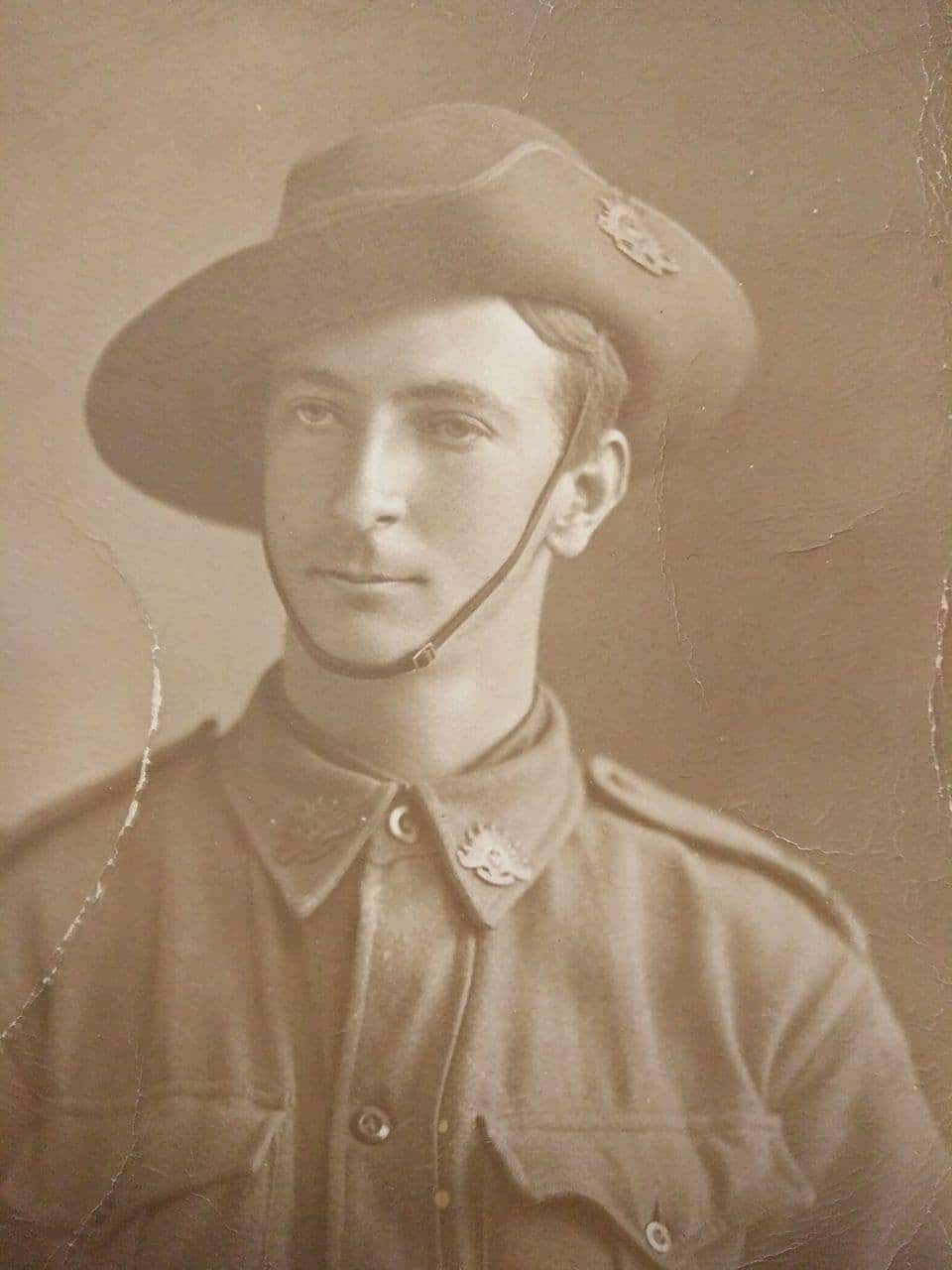
Two days later, 6 May 1917, would be the end of my great-grandfather's war. During a period of the battle, Reginald received multiple gunshot wounds, most likely by German machine gun fire from the Hindenburg Line. His war record notes he had gunshot wounds to his arms, left foot and to the thigh of his right leg. I can only imagine that this caused him to fall to the ground. The fighting no doubt would have continued on around him.
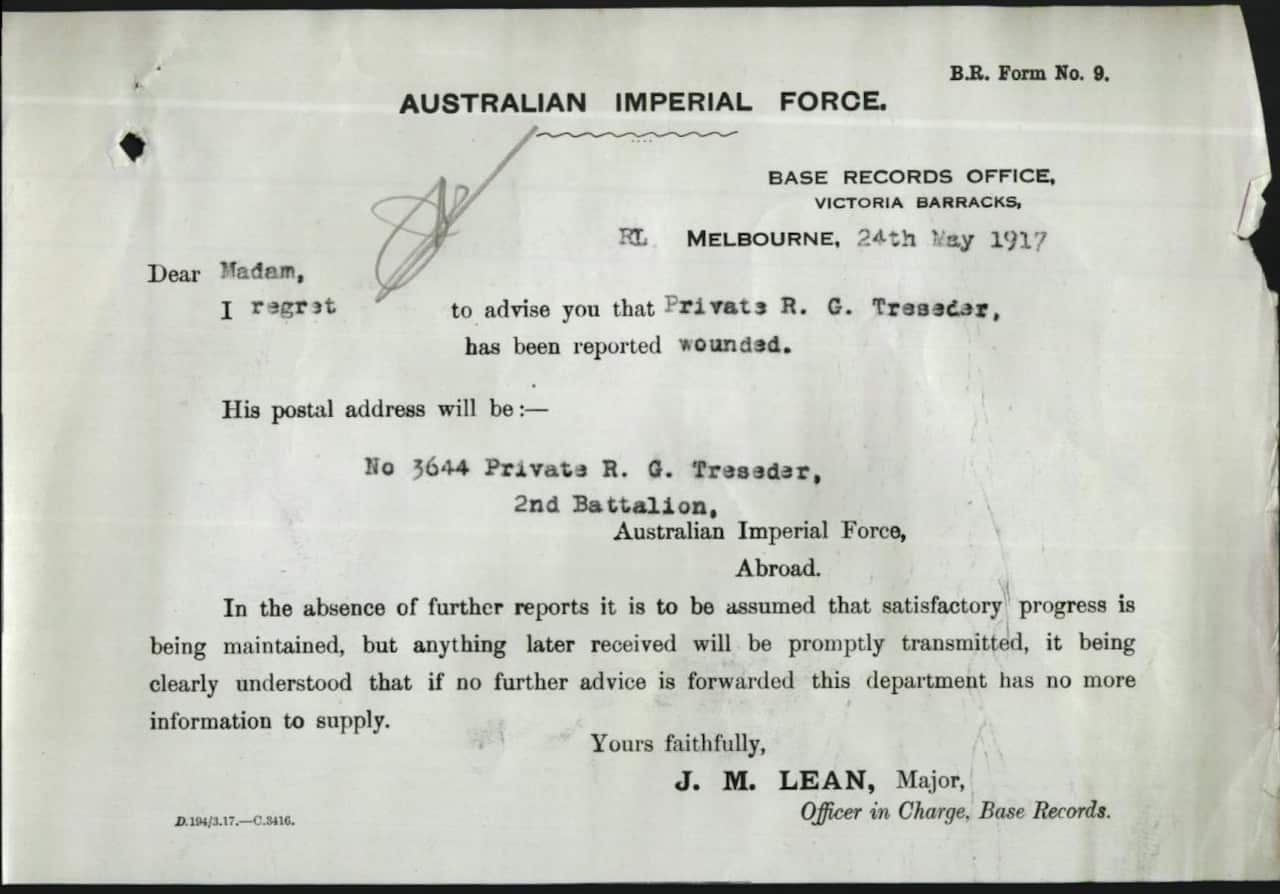
There are no records as to how long it took for Reginald to be rescued or if he was able to make it back to the line himself. Regardless he would have been sent down the line for treatment. Two days later the 2nd Battalion would be relieved by units of the 5th Brigade. Within two weeks of being shot Reginald found himself aboard the hospital ship St Denis on his way back to England for treatment.
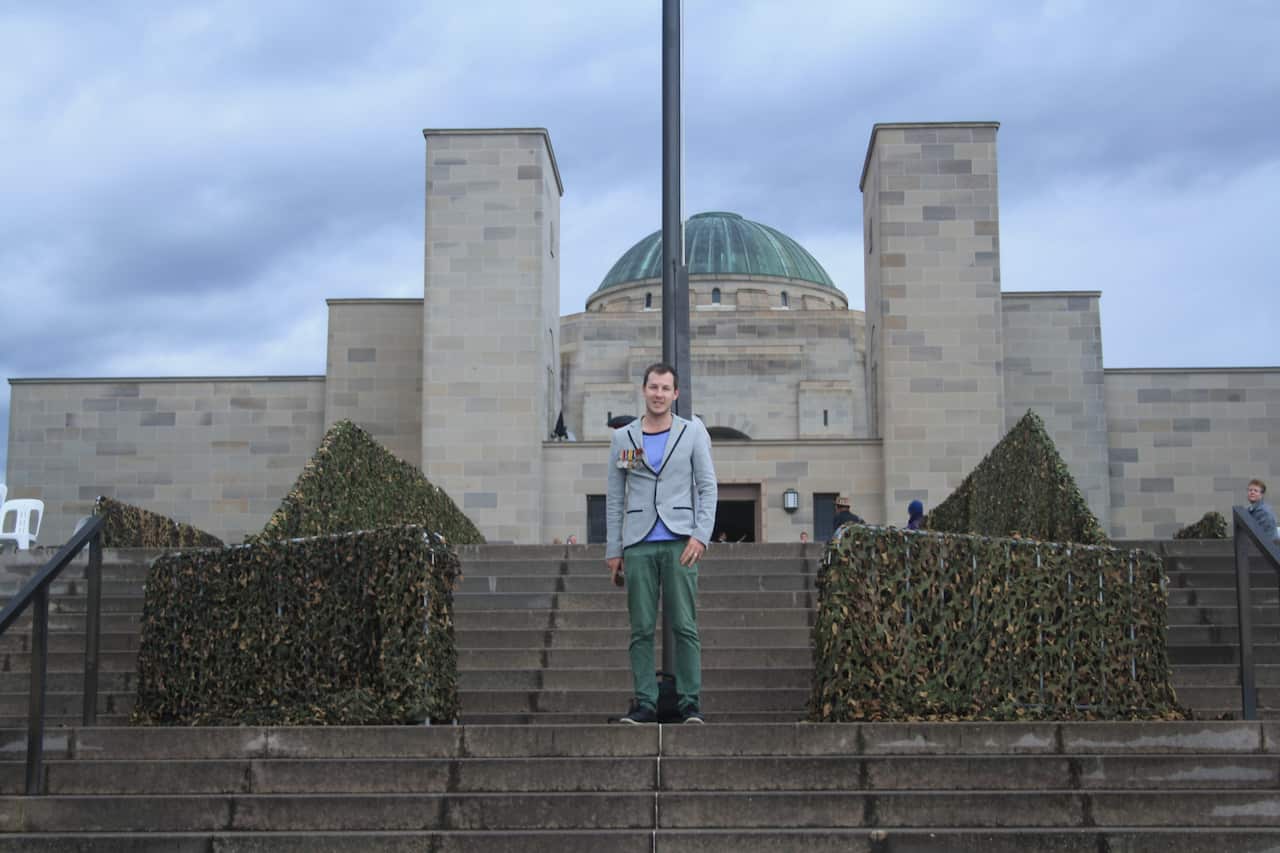
Finding all of this out on Anzac Day really hit home. Two years ago I’d attended the centenary of Anzac commemorations on the steps of Australian War Memorial proudly wearing Reginald’s service medals, and only having a minor clue that he had been at the Somme. Now two years later I was contemplating what must have been going through his head as he was shot.
Did he think he was going to die? Was he thinking about how he’d only just turned 23 a few days before? Was he worried he’d never make it home to his mother again?
It made me think about what I was going through when I was 23. Remarkably around the same time of year I got married, my biggest fear being how the wedding day might go and if I’d shed a tear during my vows. And yet here he was laying in a muddy field in France fearing for his life. It really made me think. And no doubt this weekend I will be thinking about it some more as I mark a century since he fell in the fields.
Unfortunately there were many others that fell in those fields as well. The battle ended on May 17th when the Germans withdrew from the remnants of the village of Bullecourt. The AIF’s casualties totalled 7,482 from across three divisions.
Seeing these figures made me wonder: if I’d found out about all of this on Anzac Day, how many other people around the country might also be trying to find out about a family member's fighting past?
The Australian War Memorial's Jennifer Milward says it’s very common.
“We experienced a huge spike of people in 2015 after the centenary of Anzac," she said. "When we came back to work the next day we had over a thousand emails waiting for us with people asking for help to find out about their relatives.
"In general we normally have a build-up of interest in the weeks before Anzac Day, but we’d never seen anything like that before. Typically we have around 14,000 requests each year for help, and we have already had quite a lot for this year, but we are expecting another rise in interest around Remembrance Day.”
Ms Milward said “it' also quite common to have people contacting the Memorial with photos of their relatives or just to let us know when we’ve got a soldier's war story wrong. It’s great to see people so interested.”
And it’s easy to understand why - once you’ve managed to piece together an ancestor’s past it’s an exciting thing, and to find out that a relative has been in action it can also be rather sobering.
My great-grandfather saw more than his fair share of action, and like many veterans who returned home he didn’t speak much about his war. There are naturally the odd anecdotes. My mother knew he’d been near Ypres because he’d shown her a photo of the blown up cathedral there, but other than that she didn’t know much else.
In the end it wasn’t injury that ended Reginald Treseder’s war. Instead it was deafness in his right ear that had initially been caused by scarlet fever at a young age, but exacerbated by the constant shelling of the Western Front. Reginald arrived back in Sydney aboard the HMAT Themistocles in January 1918 and was discharged from the AIF on 2 May 1918, almost a year to the day since the beginning of the Second Battle of Bullecourt.







