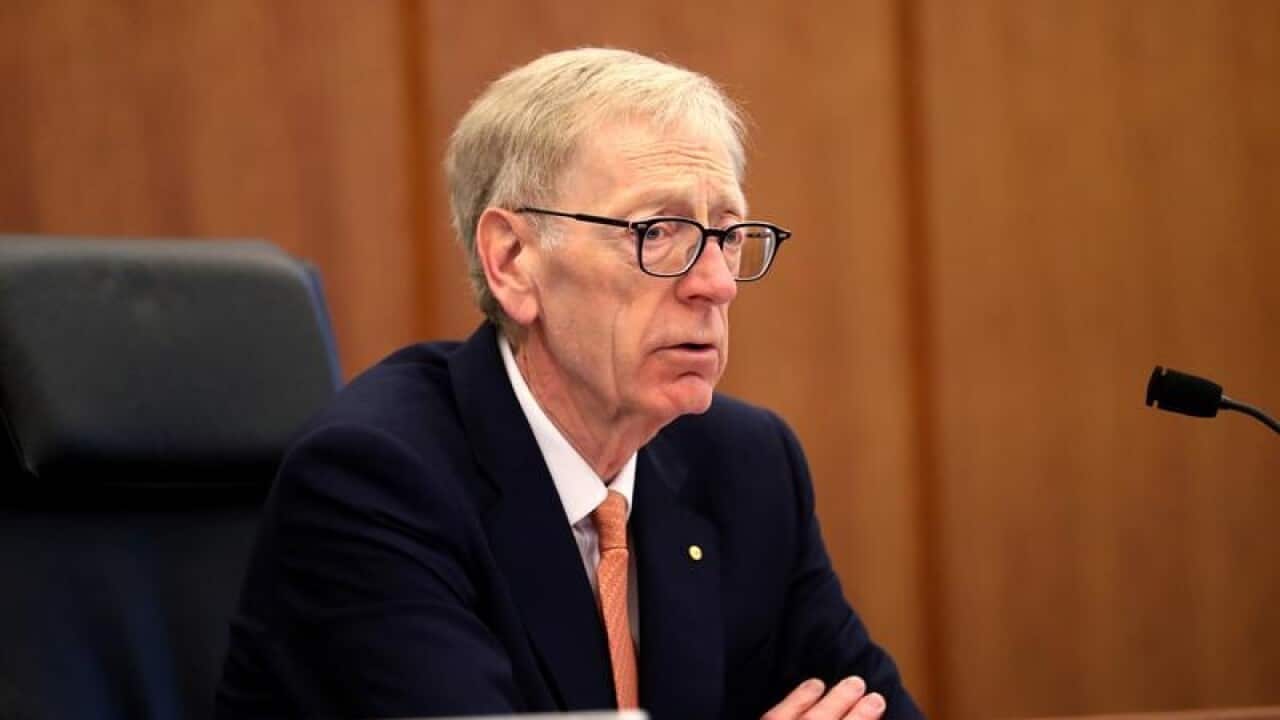
The banking royal commissioner has a simple message for financial companies: stop charging customers when you know they're dead.
Kenneth Hayne QC was left a bit perplexed about AMP charging thousands of dead superannuation customers for life insurance, when there was longer a life to insure.
"How do you deduct a premium for life insurance on a life that's dead?"
Three of Australia's biggest financial players have admitted charging dead customers, amid a wider fees-for-no-service scandal.
As counsel assisting the commission detailed their recommended findings against the latest culprit, AMP, on Friday, Mr Hayne interrupted to bring the issue back to the basics.
Whether or not it breached provisions of corporations and superannuation laws, he wanted to know by what right the company could take the money.
It was not just a case of failing to stop deducting the life insurance premiums in a timely way.
"Notification of the death. Payment stops.
"It's not a case of stops some reasonable time thereafter.
"It stops, I would have thought."
AMP charged 4645 dead super customers life insurance premiums despite knowing they had died.
It owes their estates about $1.3 million in insurance premiums and lost earnings.
Australia's largest wealth manager blamed a number of system errors that meant it either did not stop deducting the premiums or did not process premium refunds owed to them.
AMP knew about a similar issue in 2016 but only started investigating in April, after revelations at the royal commission about some Commonwealth Bank of Australia advisers continuing to charge dead clients fees.
CBA and National Australia Bank have both admitted charging advice fees to dead super customers.
AMP rejected counsel assisting's suggested findings about its process for refunding premiums to a member's estate after the date of death, including that it may have committed a criminal offence by failing to comply with breach reporting obligations.
"AMP believes there was no obligation to notify the regulator in 2016 of charging premiums after death as we believed premiums were being appropriately refunded," it said in a statement.
AMP said in 2018, it identified and reported to the regulators a process failure to refund premiums and was now improving its systems and processes, as well as remediating the estates of affected customers.
"AMP's policy has always been to refund premiums to a customer's estate back to the date of death.
"However, we rely on notification and confirmation of death before the claim can be finalised and premium refunds paid."
Share


