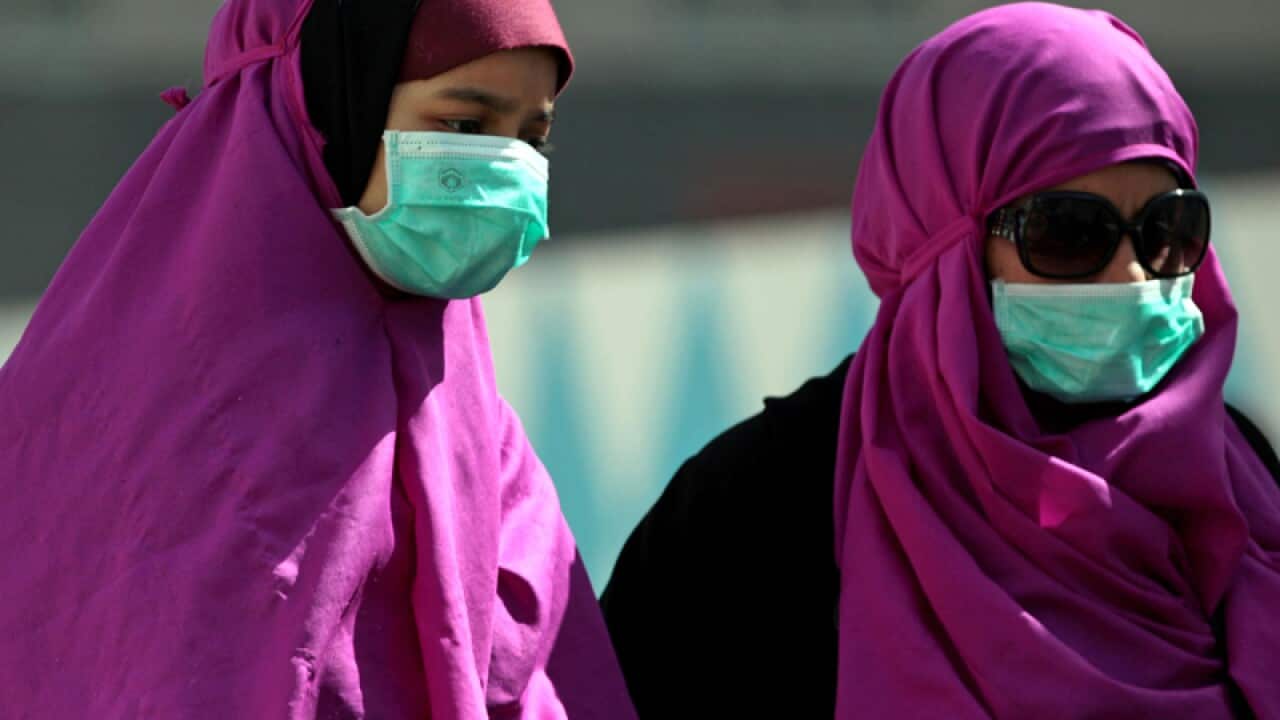
A woman has died from the MERS coronavirus in Iran's southeastern province of Kerman, the Islamic republic's first victim, media reported Thursday.
The 53-year-old woman was one of two sisters the health ministry said on Wednesday had tested positive for the illness.
"Despite all the efforts made by the medical staff, the patient who was infected by the coronavirus passed away," Mohammad Mehdi Gooya, transmissible diseases unit chief, told Fars news agency.
The patient, suffered from high blood pressure and her immune system could not fight the virus, Gooya said, adding the second sister was in good condition and had been discharged from hospital.
Meanwhile, Mehdi Shafiei, head of the Kerman disease prevention unit, was quoted by Mehr news agency as saying there are six other suspected cases in Kerman.
News that makes sense
Your trusted source for staying up-to-date with the world around you. Get free daily news updates and analysis, straight to your inbox.
Iran's first reported cases come just a month before the Muslim holy fasting month of Ramadan, when pilgrim numbers are expected to rise sharply.
The vast majority of MERS cases worldwide since the virus's discovery two years ago have been in Saudi Arabia.
Nearly all cases recorded elsewhere have been among people who had recently travelled to the kingdom or one of its Gulf Arab neighbours, or had been in contact with someone who had.
Nearly 900,000 Iranians make the pilgrimage to the Muslim holy places in Saudi Arabia each year, most of them during the annual hajj, which this year falls in October.
Gooya said that Iranian authorities would test all returning pilgrims and that anybody displaying potential symptoms would be kept under quarantine for two weeks.
MERS is considered a deadlier but less transmissible cousin of the Severe Acute Respiratory Syndrome (SARS) virus that appeared in Asia in 2003 and killed hundreds of people, mainly in China.
Like SARS, it appears to cause a lung infection, with patients suffering coughing, breathing difficulties and a temperature, but MERS differs in that it also causes rapid kidney failure.
Studies have confirmed that the likely source of the disease is among Saudi Arabia's huge camel herd.
But a cluster of cases among medical staff and hospital patients in the kingdom in recent months have shown that the virus can be transmitted from person to person unless strict precautions are taken.







