In brief
- Joseph Aoun is the first Lebanese president invited to Washington since 2009.
- Aoun asked US President Donald Trump to continue backing the Lebanese army, along with support for an Israeli withdrawal.
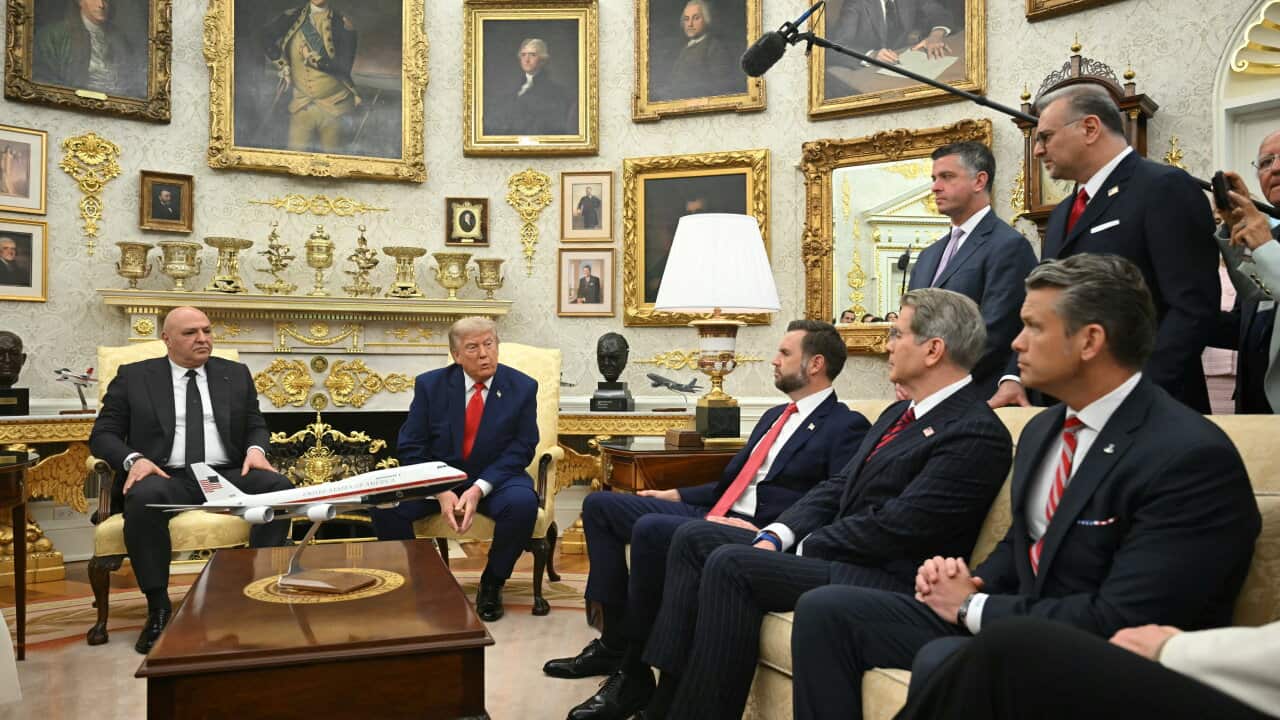
United States President Donald Trump vowed on Wednesday to help Lebanon "a lot" as its president, Joseph Aoun, sought the US' backing for a fragile effort to disarm Hezbollah and forge a path to peace with Israel.
Meeting Aoun at the White House, Trump said Lebanon had been "a very mistreated country" that had been "hit hard" for decades.
"It's probably a dangerous place in a lot of ways," Trump told reporters. "But they love the country ... and we're going to help it. We're going to help it a lot."
Aoun, the first Lebanese president invited to Washington since 2009, asked Trump for political support and continued backing for the Lebanese army, which has begun deploying in southern areas under a US-backed framework agreement with Israel.
"We need to support the LAF," Aoun said, referring to the Lebanese Armed Forces. "Without the LAF, everything will collapse."
News that makes sense
Your trusted source for staying up-to-date with the world around you. Get free daily news updates and analysis, straight to your inbox.
Aoun's nearly two-hour visit took place as Israeli troops continue to occupy a swath of the country's south and hundreds of thousands of Lebanese remain displaced following Israeli strikes. Hezbollah has rejected the government's direct talks with Israel as well as efforts by the state to disarm it.
The talks highlighted Aoun's delicate balancing act — seeking Trump's help to secure an Israeli withdrawal from southern Lebanon while simultaneously facing pressure from the US and Israel to disarm Hezbollah, which remains a formidable fighting force despite recent setbacks.
The Lebanese president, a former army commander, said the military was "the backbone of security and stability" and the country's most trusted institution.
In a statement after the talks, the Lebanese presidency said Aoun stressed to Trump the "urgent need for a complete Israeli withdrawal from Lebanese territory," calling it "an essential step to consolidate stability and enable the Lebanese state to extend its full sovereignty exclusively through its own forces."
Flights resume
Following his meeting with Aoun, Trump said he would direct his administration to allow all US airline carriers to fly directly to Lebanon— a historic policy shift more than 40 years in the making.
US flights were suspended in 1985 after the hijacking of TWA Flight 847 from Athens, Greece, en route to Rome, Italy, that was forced to land in Beirut. During the 17-day ordeal, a US Navy diver was brutally killed.
The Federal Aviation Administration and Transportation Department did not immediately comment.
Trump's visit came as the Lebanese army moved into an area of the south under a deal with Israel aimed at proving Lebanon can extend state authority and disarm Iran-backed Hezbollah.
But in a sign of the fragility of the agreement, the Lebanese army said Israeli troops fired near its soldiers deploying in a so-called "pilot zone" Israel is supposed to withdraw from.
Asked whether the US would put additional pressure on Israel to withdraw, Trump said: "We'll be looking at that."
Lebanon is under pressure to prove that it can and will disarm Hezbollah, which Israel has set as a precondition for ending its occupation in southern Lebanon.
The "pilot zones" where the Lebanese army is deploying are primarily located just outside territory Israeli forces invaded after Hezbollah opened rocket fire on Israel and drew Lebanon into the Middle East war in March.
The army said on Tuesday it had begun deploying to one of three pilot zones, the village of Zawtar al-Gharbiya. Israel's military said it would be "adjusting its force posture" in one pilot area.
Hours later, however, the Lebanese army said Israeli forces "opened fire in the vicinity of these units," adding that the incident would hinder the deployment.
The Israel Defense Forces (IDF) said it had only fired "warning shots into the air" after Lebanese soldiers entered an area that was "not part of the pilot area".
"The Lebanese Armed Forces personnel withdrew from the area, and no injuries were reported," it added.
'Terrorist infrastructure'
Aoun has staunchly criticised Hezbollah for forcing Lebanon into the war and has vowed since taking office in early 2025 to bring all weapons under state control.
But Hezbollah has repeatedly rejected laying down its arms, and the group has flatly opposed both the deal and the Israel-Lebanon negotiations that underpin it.
Aoun said the framework agreement did not require parliamentary endorsement and was a presidential prerogative under Lebanon's constitution.
US secretary of state Marco Rubio said after meeting Aoun on Sunday that Lebanon would "never truly get peace" as long as Hezbollah remained armed.
Rubio also praised what he called the Lebanese government's effort to reclaim sovereignty, disarm Hezbollah and dismantle its "terrorist infrastructure."
Aoun's push comes after Israeli strikes in the latest conflict killed more than 4,300 people in Lebanon, according to Lebanese authorities.
The violence has dropped off sharply since the signing of a framework agreement between the United States and Iran last month and the Lebanon-Israel deal.
Trump also used the meeting to warn Yemen's Iran-backed Houthi rebels against following through on threats to blockade Saudi ports.
"If something like that happens, we take care of it," Trump told reporters. "We've done that with the Houthis before, and we haven't heard from them in a while since we did what we did originally."
For the latest from SBS News, download our app and subscribe to our newsletter.







