This audio is voiced by AI and may occasionally mispronounce words.
Share your feedback and help us improve this feature. Read more about how we use AI at SBS here.
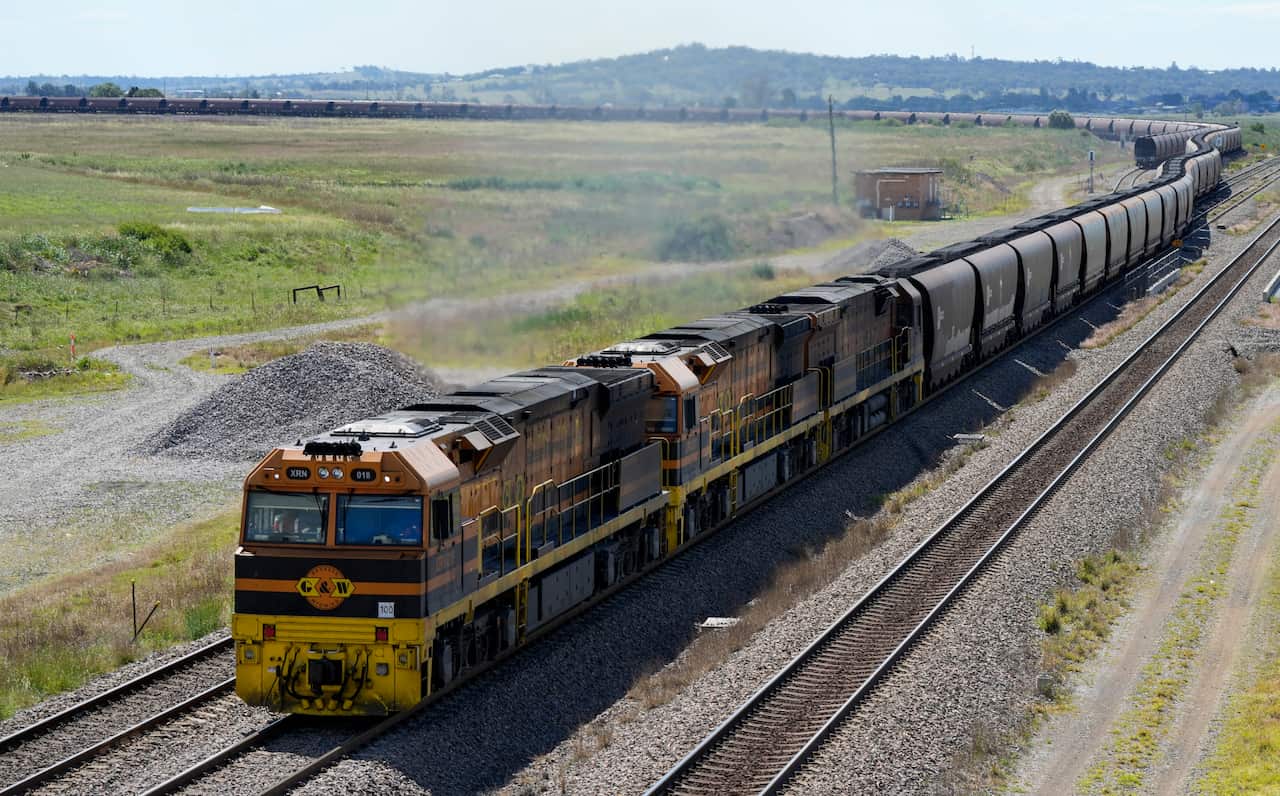
The high-pitched whirr of coal trains between Newcastle and Muswellbrook has been the backdrop to life in the NSW Hunter region for more than 100 years, but a new soundscape is set to take its place as the renewables transition gathers pace.
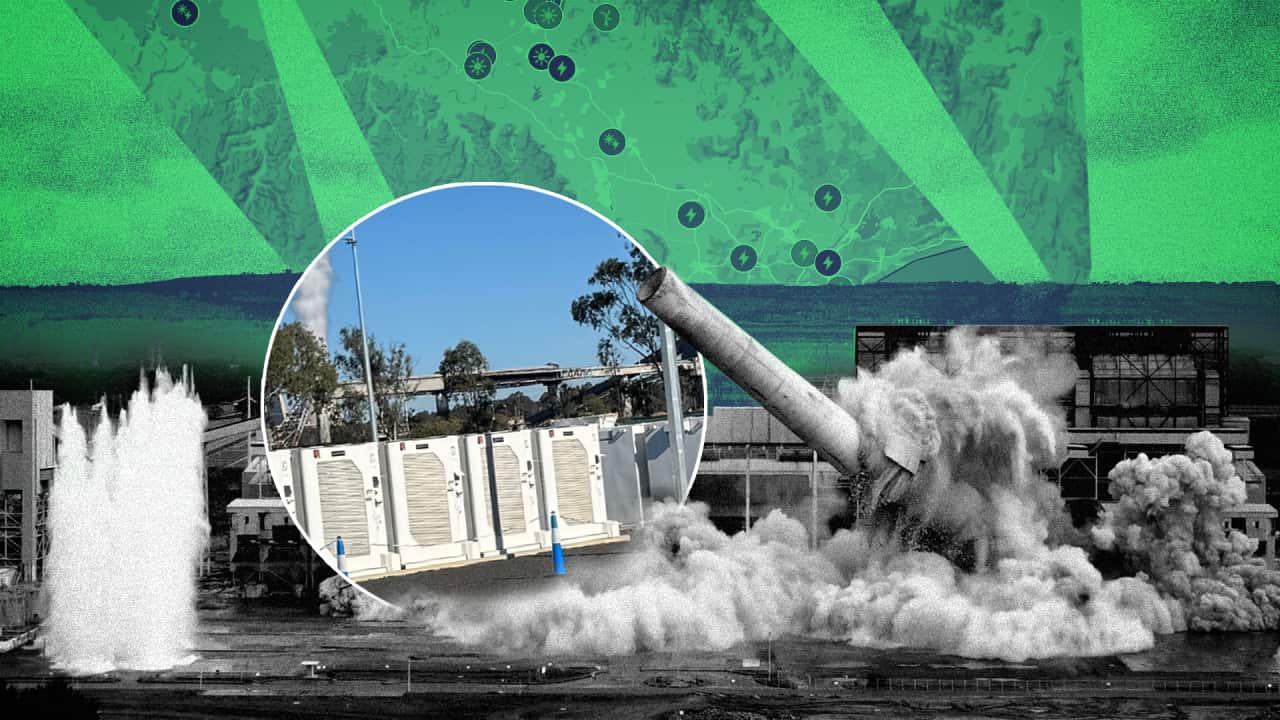
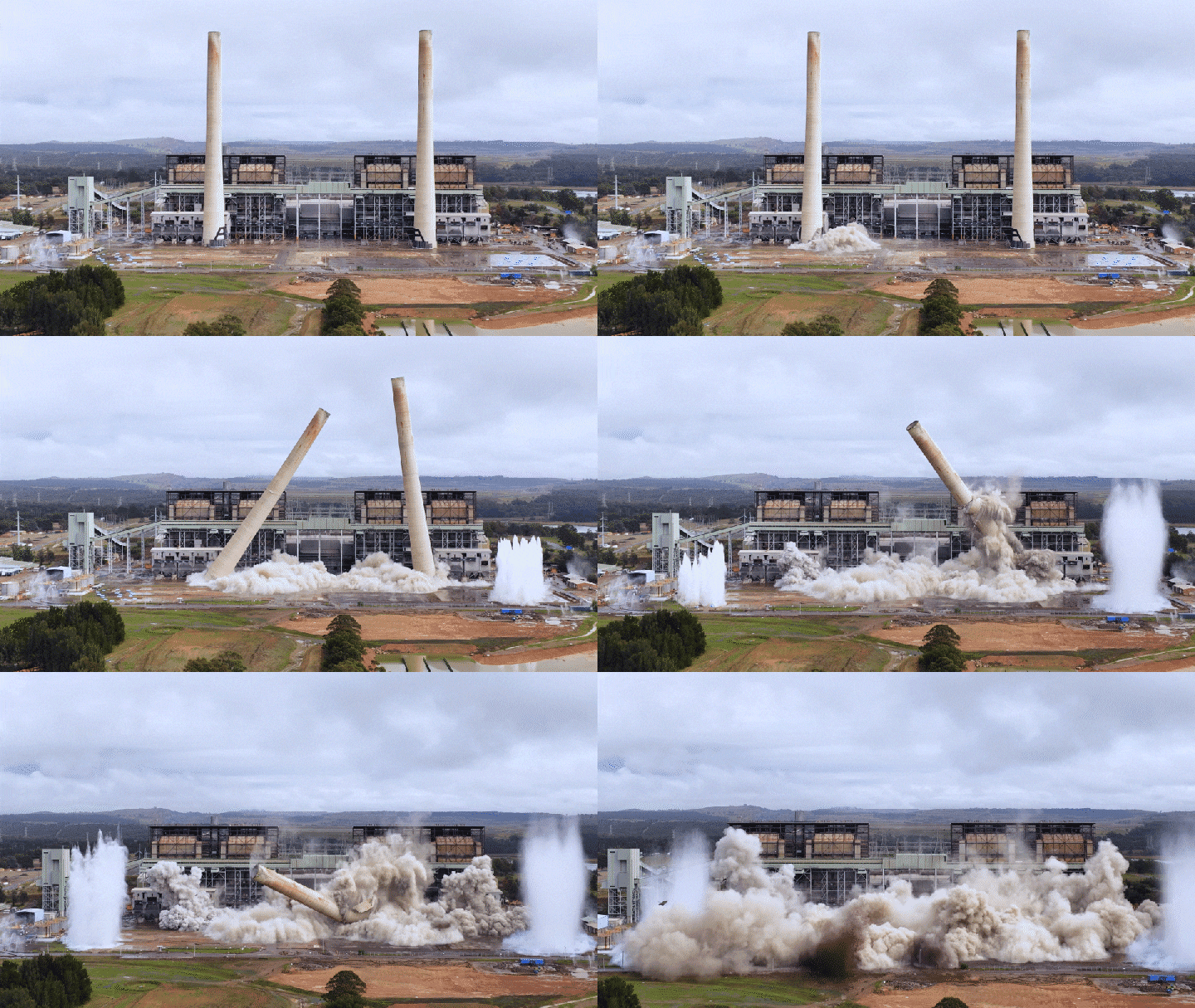
Earlier this year, the 169-metre-high chimneys of Muswellbrook's Liddell coal-fired power station were brought down in a controlled explosion, demolishing a structure that has greeted those entering the town, about 240km north-west of Sydney, for more than 50 years.
The change now taking place next to the former boilers of "old Lady Liddell", where a new kind of industrial activity can be heard, is largely hidden from passersby.
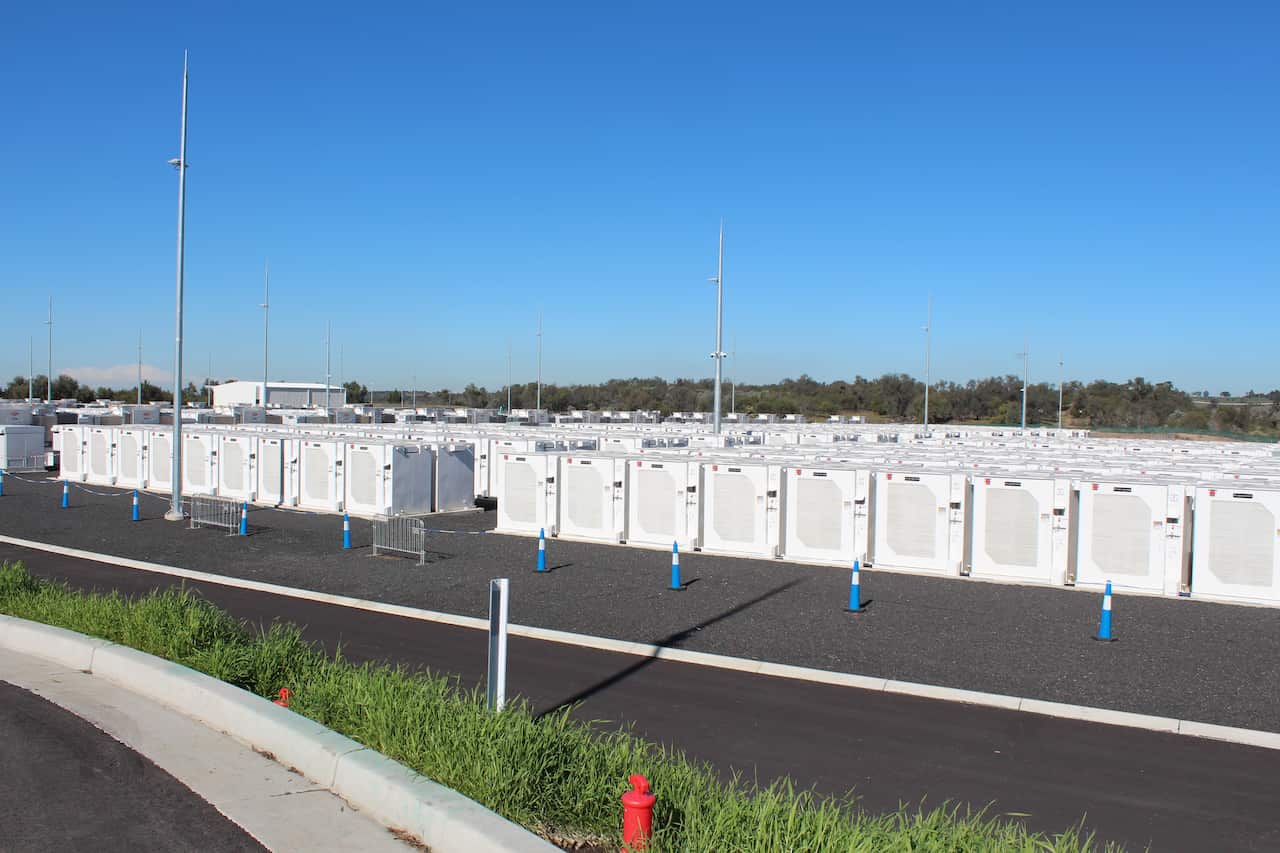
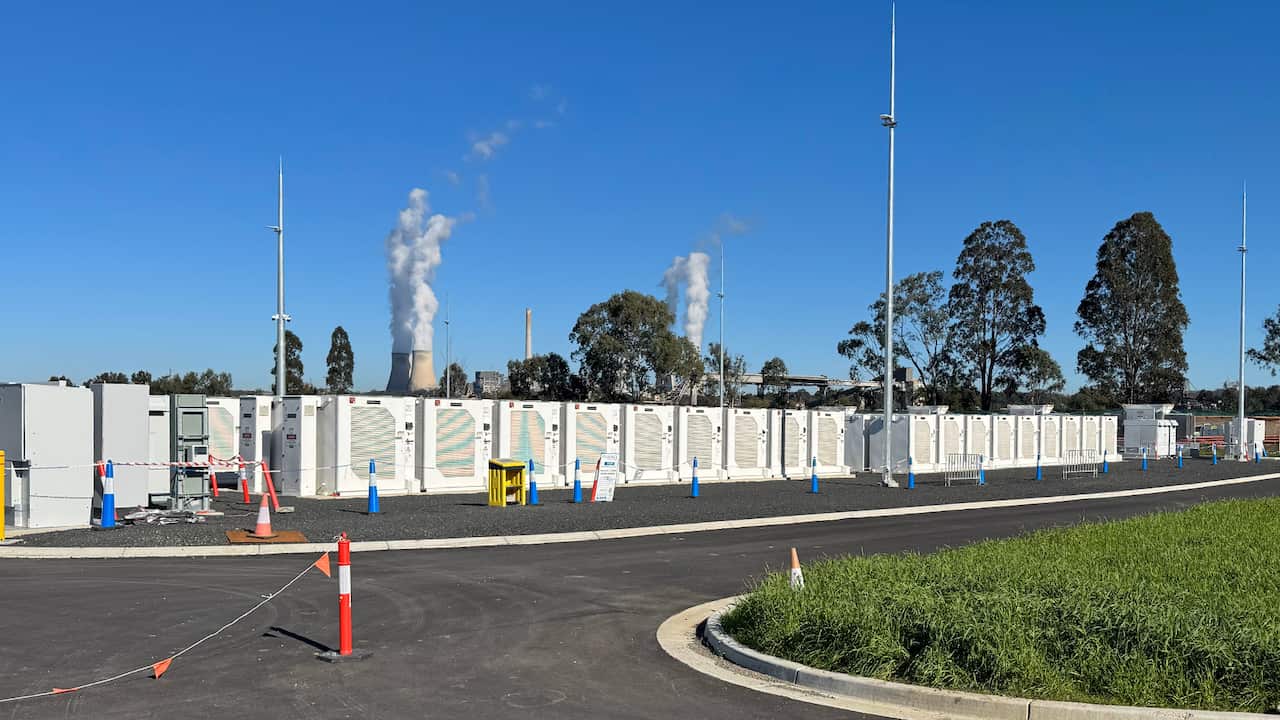
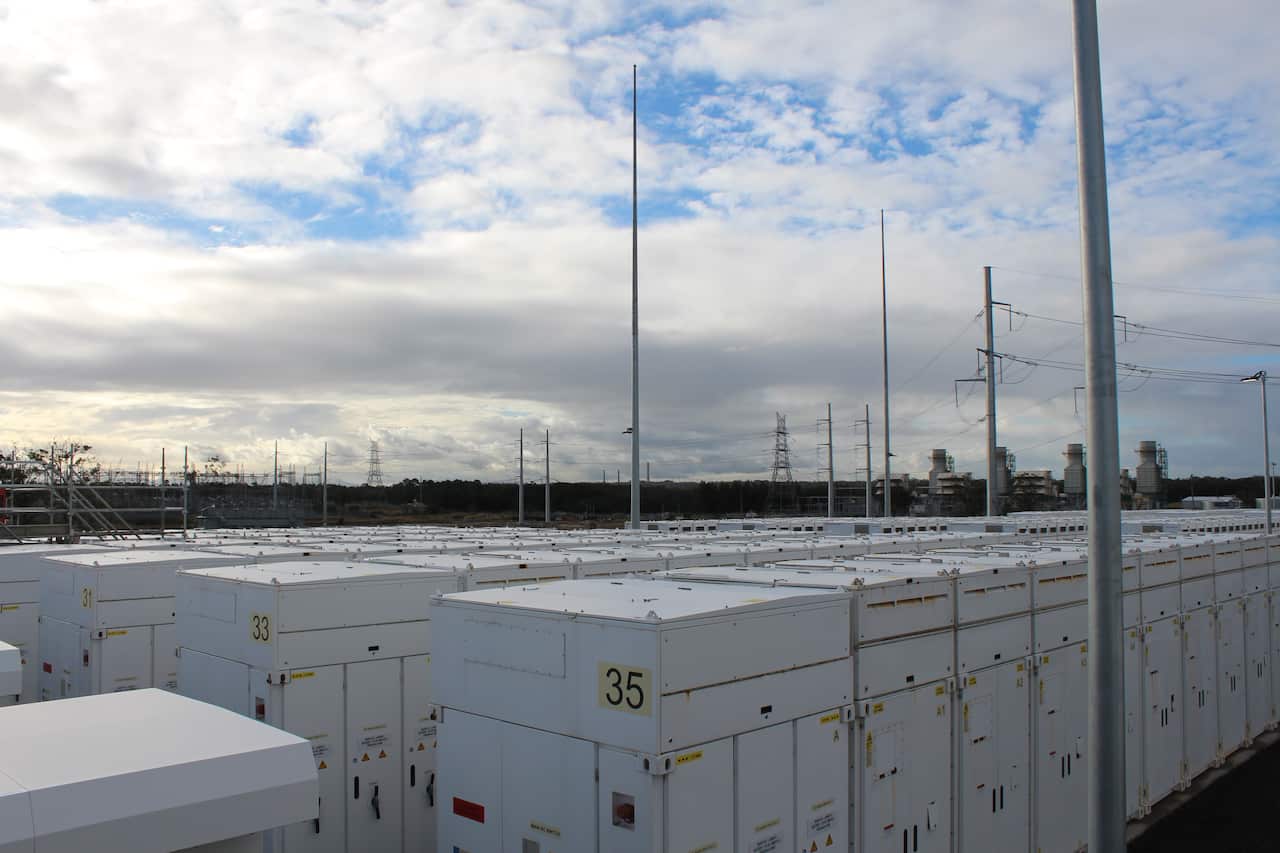
When SBS News visited the site on the shores of the picturesque Lake Liddell last month, long rows of pristine white cabinets had been installed, from which a dull drone could be heard.
They are part of the new Liddell Battery, which is due to be brought online within weeks.
News that makes sense
Your trusted source for staying up-to-date with the world around you. Get free daily news updates and analysis, straight to your inbox.
The project is one of eight large-scale battery systems in the Hunter region that have been approved and are in various stages of construction across the council areas of Muswellbrook, Lake Macquarie, Newcastle City, Singleton, Port Stephens and Central Coast.
Two batteries — one of which is the most powerful in Australia — are already operational near Lake Macquarie.
Eight solar and wind projects have also been approved, with more in the pipeline.
The projects are set to change the nature of this region forever, and even supporters of coal mining acknowledge the future prosperity of the region may rely on this once-in-a-lifetime transition.
'Extraordinary' interest in region
Muswellbrook mayor and former coal miner Jeffrey Drayton is among those acknowledging the shift.
He says the region is now attracting "extraordinary interest" from businesses due to the energy security on offer.
"I don't think there's been any form of renewable energy that's not proposed for Muswellbrook Shire," Drayton tells SBS News.
The mayor says there have been around 20 renewable energy projects proposed in the council area, including a 2.4-gigawatt (GW) battery, along with solar, hydro and wind projects.
With 4.8GW storage capacity and 2.4GW discharge capacity, the giant Denman battery near Muswellbrook could power more than one million homes — around a third of all households in the state — for roughly two hours if approved.
It's one of 13 battery projects currently undergoing planning assessment or consideration in the broader Hunter region, according to the NSW government. Two others are already operational, two are under construction and a further four have been approved.In addition to this, 14 projects for other renewables are in the pipeline.
In the past 12 months, more than 40 businesses have shown interest in basing their operations in the Muswellbrook area, Drayton says. Proposed ventures include a large data centre, manufacturing, recycling of renewable energy parts and components, and agribusiness.
The interest from industries moving to town has been probably something 12 months ago that I couldn't have imagined.
While renewable projects generally don't require a substantial ongoing workforce once construction is complete, Drayton says they do drive potential job growth in adjacent sectors, such as manufacturing, recycling, agribusiness and other industries.
"Those industries need energy security, which is what some of these renewable energy projects will give."
Up to 20,000 jobs hang in the balance
For a region that has long thrived off the back of mining, its energy transition poses a radical challenge as well as an opportunity.
There are still 21 coal mines operating in the broader Hunter region, comprising more than half the mines in NSW.
Fleeting glimpses of land excavated into stepped terraces can still be seen by motorists travelling along the New England Highway — a visible etching in the landscape that serves as a reminder of the prosperity that has fuelled the region.
Mining is such an integral part of the community that Muswellbrook Council estimates more than half of its rate revenue — 56 per cent — comes from the industry.
But with five mines in the Hunter closing in the next four years and the future of another three hanging in the balance, the council has taken decisive action.
This year it was granted a special rate variation by the state government to charge mining operators 25.9 per cent above the standard rate peg of 3.1 per cent. It's expected to bring in approximately $6 million of extra revenue in 2026/27, totalling $21 million.
"No shire can sustain losing more than half of its rateable income," Drayton says.
"That extra rateable income from those mines will go into economic development, making sure that we keep our community alive."
Drayton hopes the NSW and federal governments will also contribute to infrastructure works and master planning to help new industries to move into the area.
He says around 12,000 jobs (both direct and indirect) are expected to be lost by 2030 from the closure of just two open cut mines: BHP's Mt Arthur and Glencore's Mangoola.
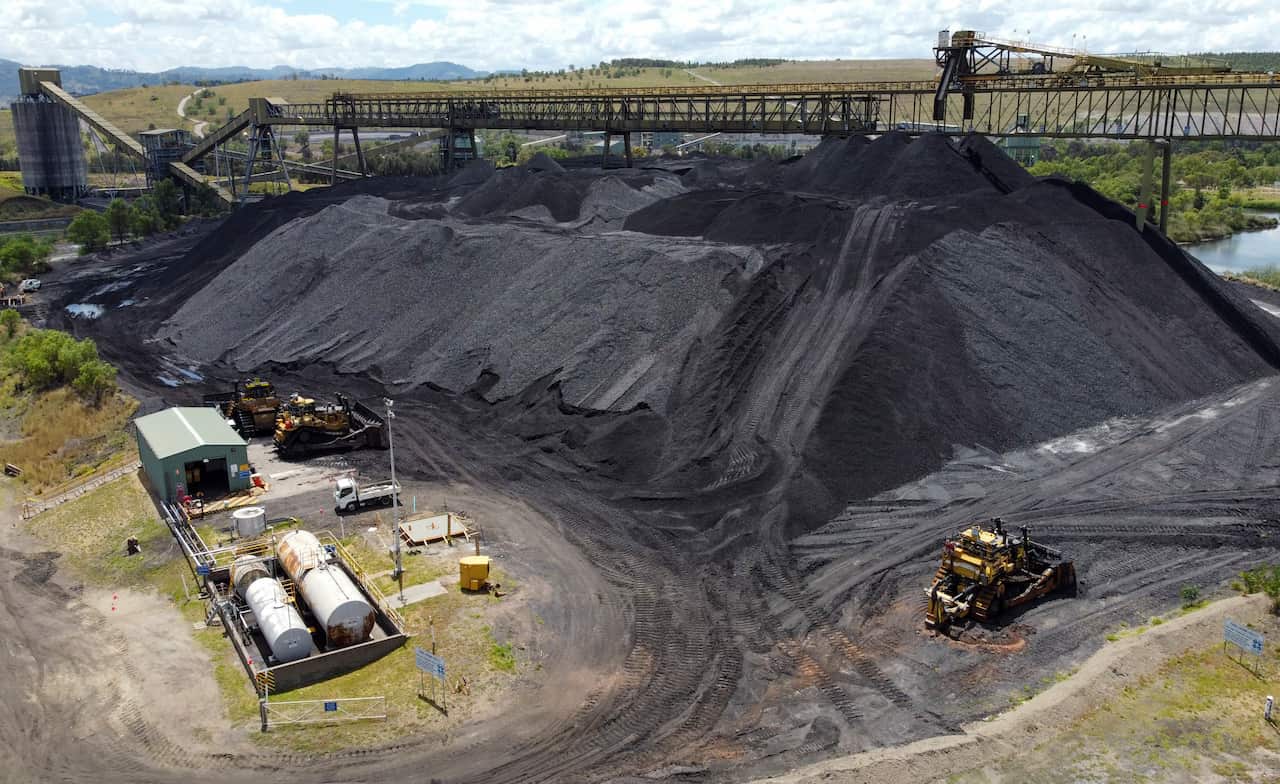
The Mt Arthur mine is the biggest thermal coal mine in the southern hemisphere and spans more than 7,000 hectares — that's around 10 times larger than Sydney's CBD.Days after SBS News visited the region, coal producer and one of Australia's largest coal exporters Yancoal also announced its Ashton mine near Singleton would close in early 2028, almost eight years earlier than expected due to factors "undermining Ashton's viability as a sustainable ongoing operation".
These include "significant technical challenges and operational risks, as well as evolving market conditions (increasing input and regulatory costs) that will impact Ashton's financial performance into the future".
The announcement, which could result in hundreds of jobs being lost over the next 18 months, was a blow to a community already on tenterhooks about the imminent closures of Mt Arthur and Mangoola.
Drayton warns "12,000 jobs will soon turn into 20,000 jobs" if approvals are not granted for a further three mines.
The NSW government is currently considering Glencore's application to extend operations for its two Hunter Valley Operations mines, while a previously approved extension for MACH Energy's Mount Pleasant open cut mine — which is set to become the biggest open cut mine in the state — has been blocked by a High Court challenge. All three mines were due to close before 2030.
Environmental groups, including Lock the Gate Alliance, have opposed the extension of licences for these mines.
"Communities across New South Wales are already paying the price for climate change through rising food, energy and insurance costs," Lock the Gate Alliance's NSW coordinator Nic Clyde says.
"If NSW continues to allow new coal projects, it will lock in more climate pollution, and more frequent bushfires, floods and heatwaves."
Old power station sites being transformed
As traditional energy industries close down, the concept of living in a renewable energy zone (REZ) remains largely abstract for many Hunter residents, with the changes taking place at Liddell and other sites generally invisible to the public.
The Hunter-Central Coast was declared one of five REZs by the NSW government in 2022. These zones have been identified as areas where clusters of large-scale renewable energy projects can be efficiently developed because of close access to transmission connections and other factors.
Old power stations once fuelled by the region's abundant supply of coal are now being transformed into energy hubs linking batteries, renewable energy and energy-dependent industries such as manufacturing.
Since 2012, three coal-fired power stations in NSW have been decommissioned and four others will close over the next 15 years. Three of these — Bayswater, Eraring and Vales Point — are based in the Hunter-Central Coast REZ.
But it's looking increasingly likely that these sites will continue to play a role in the state's energy generation for many more decades.
At least five Hunter coal-fired power station sites have been earmarked for batteries, also known as Battery Energy Storage System (BESS) projects.
This year Eraring — Australia's largest power station — switched on the first stage of a BESS, which operators say will be the largest of its kind in the southern hemisphere once all four stages come online in 2027.
There are also plans for battery and solar energy generation on the Vales Point site.
At Liddell, energy company AGL is building the Hunter Energy Hub, which will also include the neighbouring Bayswater power station when it closes in 2033. The planned site will span 10,000 hectares — 10 times the size of Sydney Airport — and house the Liddell Battery, along with businesses such as advanced manufacturing, recycling of electronic waste and solar panels, data centres and renewables.
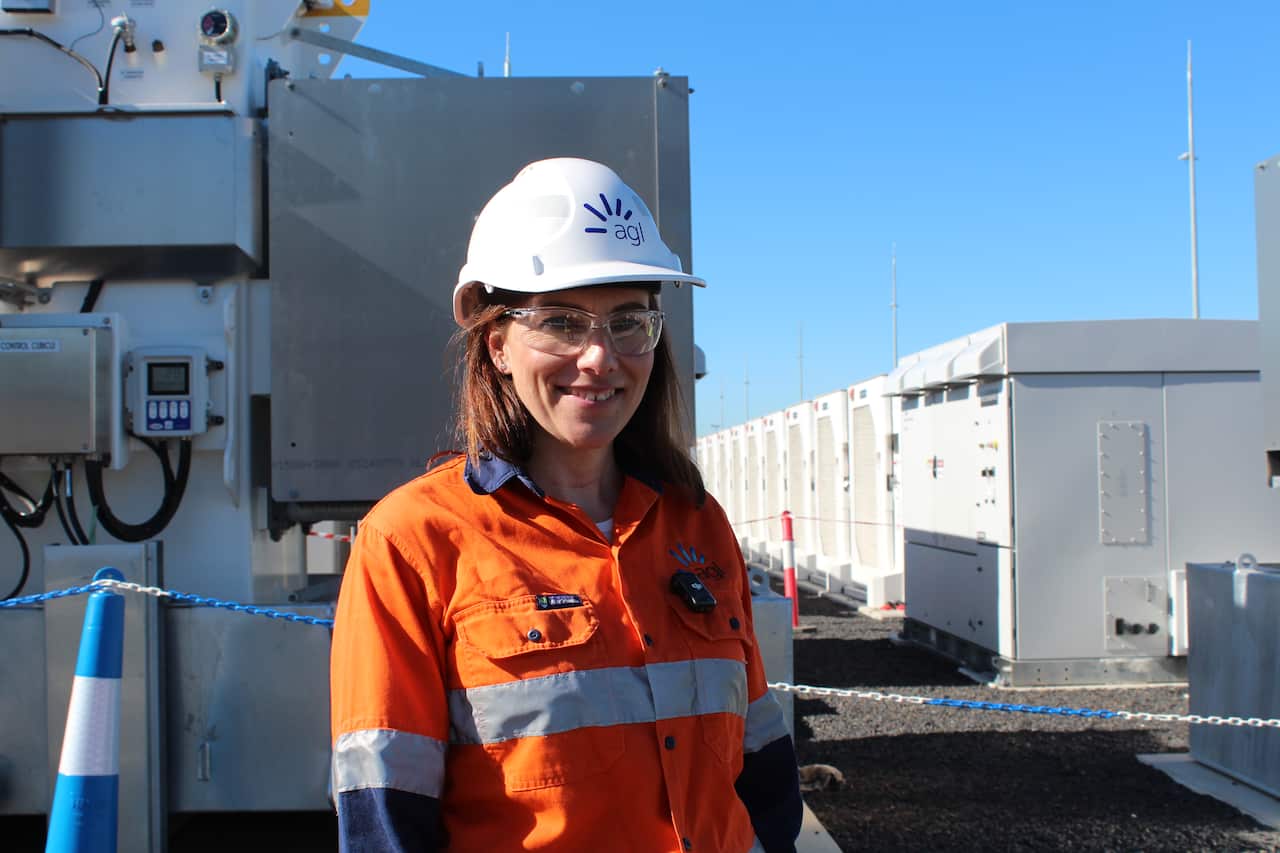
Liz Perrone, general manager of energy hubs for AGL, explains that former power station sites such as the one at Liddell offer land within proximity to the power grid and access to water, which has traditionally been used for cooling power stations.
"All of these things make this site really attractive for future industrial purposes."
Repurposing old power station sites also reduces planning, environmental and community impacts compared with greenfield development (projects on undeveloped land), although other risks such as fire safety of battery sites still require consideration.
One of the world's most powerful batteries
On the shores of Lake Macquarie within the Hunter-Central Coast REZ, the site of the former Munmorah Power Station is also being given a new life.
The power station itself closed in 2012. Now, land that was once used to store coal piles has made way for the Waratah Super Battery, which began operations last year. According to EnergyCo executive project director Phil Bratby, it functions as the state's "insurance policy" in case of blackouts.
The Energy Corporation of New South Wales (EnergyCo) is a NSW Government agency leading the delivery of REZs for the state.
The battery is one of the biggest in the world, it's the most powerful currently in Australia, but it operates not quite like a lot of batteries do.
Once it's fully operational, Waratah will have a discharge capacity of 850 megawatts (MW) and 1,680 megawatt-hours (MWh) of storage. That’s enough to power around 500,000 homes for two hours. It's currently functioning with 700MW capacity due to a transformer fault that is expected to be resolved by the end of the year.
Waratah is not the biggest battery project in the world, other projects such as a giant BESS project in Saudi Arabia will dwarf Waratah at 7.8 gigawatt-hours (GWh) of storage once complete. But these larger overseas projects are generally spread over several sites. The Saudi project will take in 11 sites, each one with a discharge capacity of 500MW and storage of 2,000MWh.
Waratah's discharge capacity of 850MW, generated on one site, makes it the most powerful in Australia and one of the most powerful systems in the world.
Even the neighbouring Eraring Battery, which will have 3,160MWh of storage capacity once complete — almost twice the storage of Waratah — features a lower discharge capacity of 700MW.
This is partly a reflection of Waratah's special role within the electricity system.
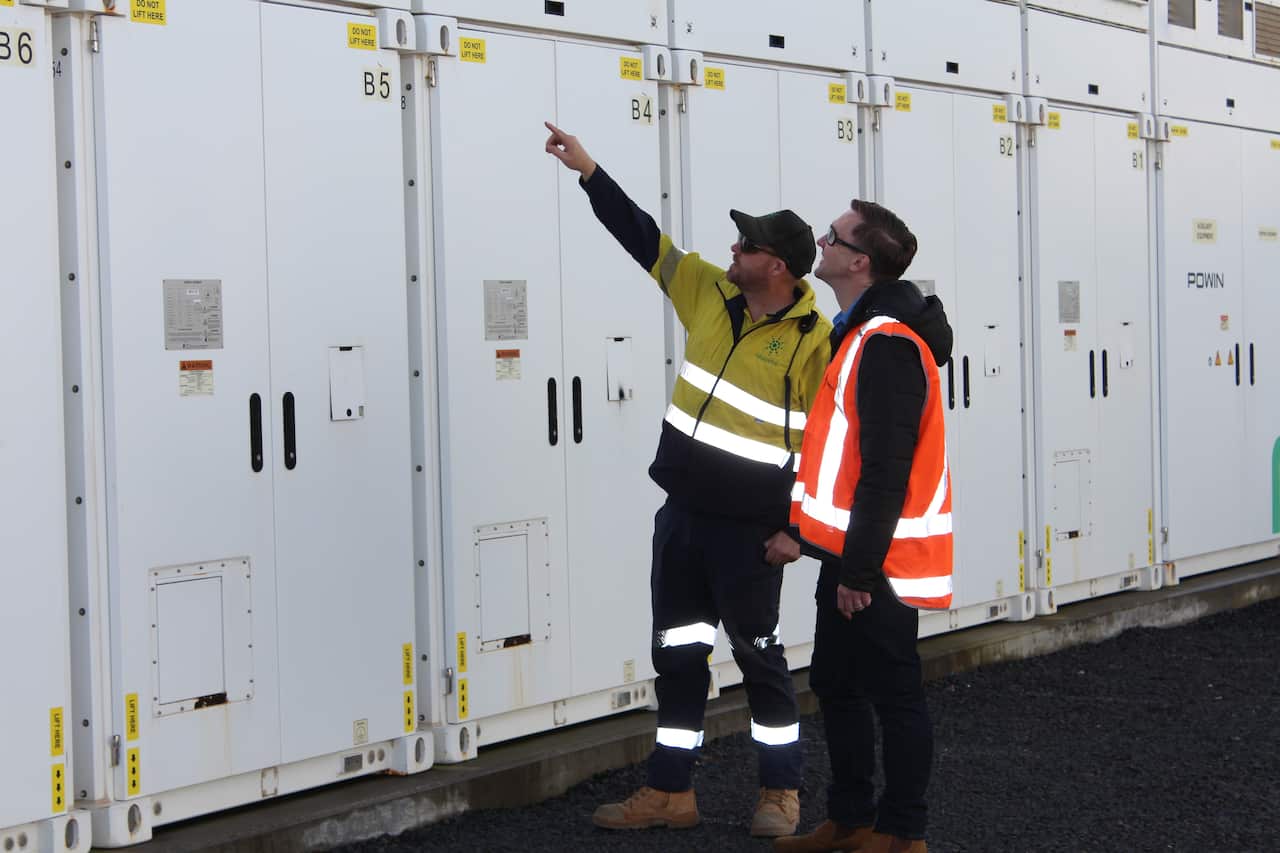
Batteries like Liddell and Eraring generally store electricity generated during the day and discharge this at night when people return home from work and turn on lights, heating and cooling.
But most of Waratah's power is stored and not released.
"[Waratah] hasn't actually exported power into the grid yet, which is actually not a bad thing," Bratby explains.
The battery will be triggered automatically by the System Integrity Protection Scheme (SIPS) — which monitors electricity lines in real time — to inject huge amounts of electricity when needed, such as when a lightning strike causes a failure in the system.
"It only actually injects power if something goes wrong," Bratby says.
It's almost like an insurance policy sitting there.
The battery is designed to provide emergency power for two hours, allowing time for other generators — such as the nearby gas-fired Colongra Power Station — to start dispatching, or for the network to be reconfigured to deal with the outage and the fault resolved.
The NSW government says it now has enough projects signed up to achieve more than 75 per cent of the minimum 12 gigawatts of renewable energy generation required by 2030, and has contracted enough projects to meet the 2030 and 2034 minimum objectives for long-duration storage.
Broad support for renewables but concerns remain
Most Muswellbrook residents SBS News spoke with — even those whose livelihoods depend on mining — were open to the idea of renewables, although some expressed doubts about whether the new industries could replace coal mining and several were opposed to mines closing altogether.
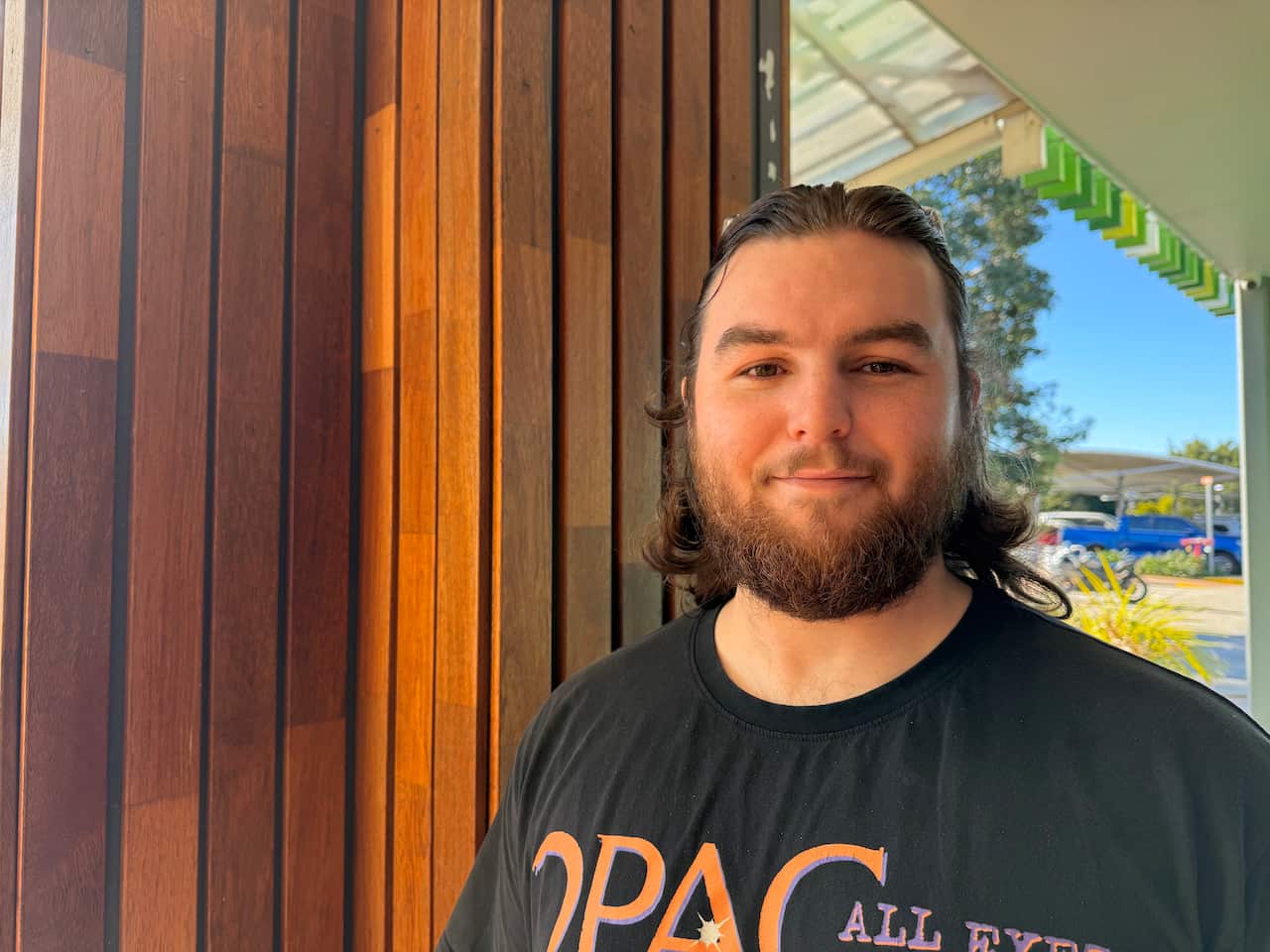
Jordan, 28, who has lived in Muswellbrook since he was a teenager, has worked for four years as a haul truck operator at Mt Arthur and says he was attracted to the work because of the money.
"Me and my partner found out we were going to have our second child, and I was working as a chef then," Jordan tells SBS News.
"The money [wasn't] financially stable enough to support two kids in this economy."
But since the mine announced it would close by 2030, he's been feeling anxious.
Money's good and now it feels like there's a clock.
Jordan acknowledges climate change as an issue and says he would be happy to work in the renewables industry.
"I understand that I may be part of the problem … but you have got to do what you have got to do for your family at the end of the day."
Scott, owner of Fiesty Bean Café in Muswellbrook and a former mine worker, believes the renewables transition is inevitable but is also supportive of the mining industry continuing.
"It supports small businesses like ourselves and a lot of other businesses," he says.

Jennifer, 76, whose three sons and grandson all work in the mines, believes the mines should continue operating despite concerns about climate change, arguing that the environment has already been destroyed.
"I grew up on a dairy farm and now that's all gone because of the mines," she says.
While she's not opposed to the transition to renewables, Jennifer is concerned about where her grandchildren, in particular, will work.

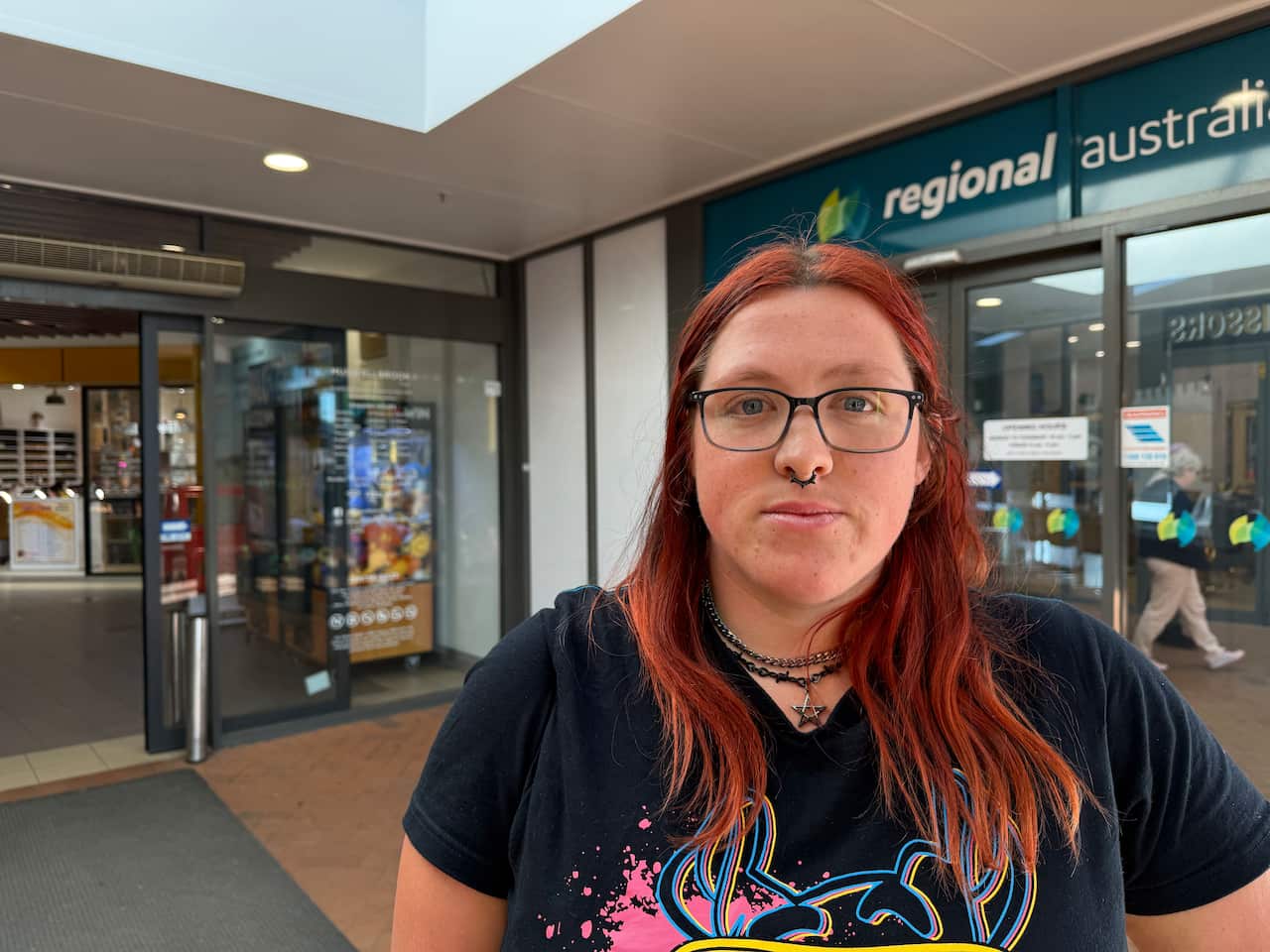
Jaimmy, 30, who moved back to Muswellbrook after a stint in major cities, is still hoping to find a job in the mines.
Many mines have proved to be resilient and have had closure dates delayed, Jaimmy notes.
"Most of the rural towns around here are resilient, they'll find a way to keep going."
Industry may be decimated in 10 years
Some who have grown up in Muswellbrook don't believe the coal mines will ever shut down. They've heard the warnings and panic too many times before.
Drayton says this is a common belief in an area where mines have provided jobs across generations. His father worked in the mines, he has spent time in the mines, and so have his kids.
The industry itself has been the lifeblood of our town and our community for as long as anyone that's alive … can remember.
The large-scale change that's happening in the region can be difficult for many to accept, but Drayton believes it's something they are somewhat powerless to stop.
He points out that 93 per cent of the thermal coal mined in the Hunter is exported rather than burned in Australia.
NSW government statistics from 2023/24 show around 13 per cent of the state's total coal sales went to NSW power stations or other Australian consumers, with the rest sent overseas, including 35 per cent to Japan, 24 per cent to China and 10 per cent to Taiwan.
Some in the coal industry have expressed concerns that China could stop importing coal by 2035, Drayton says. The country has not publicly announced any changes to its Australian coal imports, but the rapid uptake of clean technologies in China is fuelling speculation that it may come to rely more heavily on domestic production in future.
"If [China as well as other countries in Asia, and India] make those decisions [to stop importing coal], we don't have a coal industry in 10 years, let alone 15 or 20 years."
While Drayton's unsure whether jobs from the upcoming pipeline of renewables-related projects can fully replace the 12,000 expected to be lost from mining in the next four years, he is confident they can put a decent dent in it.
"We've had extraordinary interest [from businesses] in moving to the area, and that certainly gives us confidence that we can put a pretty good hole in 12,000 jobs."
Liz Perrone from AGL says there's a lot of emotion attached to old coal assets like Liddell, which have been part of the community for more than 50 years.
But she says these assets are reaching the end of their lives.
"[Liddell] needed to be retired and we will need to have investment in new energy, renewable energy and firming assets," she says.
"This is really a once-in-a-generation opportunity — the potential of this site is immense."
For more on this story, watch World News on SBS at 6.30pm tonight or catch up on SBS On Demand.
For the latest from SBS News, download our app and subscribe to our newsletter.







