
This audio is voiced by AI and may occasionally mispronounce words.
Share your feedback and help us improve this feature. Read more about how we use AI at SBS here.
On a sun-drenched farm near Dubbo in western NSW, Tom Warren has been combining sheep grazing with solar energy production. Known as agrivoltaics, it's a practice he has been honing for more than a decade.
He says taking the leap 11 years ago has been an "absolute win-win".
"Initially, I was a bit sceptical," Warren tells SBS News.
"But it's been proven, the enterprise of solar farming. The price of sheep, the price of wool, the price of crops, all that going up all the time, regardless of the weather, regardless of the market, the income from the solar farm is consistent."
Data from the Australian Bureau of Agricultural and Resource Economics and Sciences shows that farm incomes can vary significantly from year to year, driven by the combined impacts of weather, input costs and global commodity prices.
News that makes sense
Your trusted source for staying up-to-date with the world around you. Get free daily news updates and analysis, straight to your inbox.
But this is about more than one farm.
As renewable energy expands across regional Australia, projects like this are reshaping how land is used, bringing opportunity, but also fuelling debate in some regional communities.
Agrivoltaics gains ground across Australia
Across Australia, farmland like Warren's, in one of the sunniest regions of the country, receives abundant solar radiation year-round. Yet much of that potential goes untapped.
Farmers are increasingly experimenting with agrivoltaics, hosting solar panels alongside livestock to generate a stable second income stream while continuing traditional agricultural activities.
Results suggest benefits for both energy production and farming productivity, but the approach is still relatively new in Australia and not without challenges.
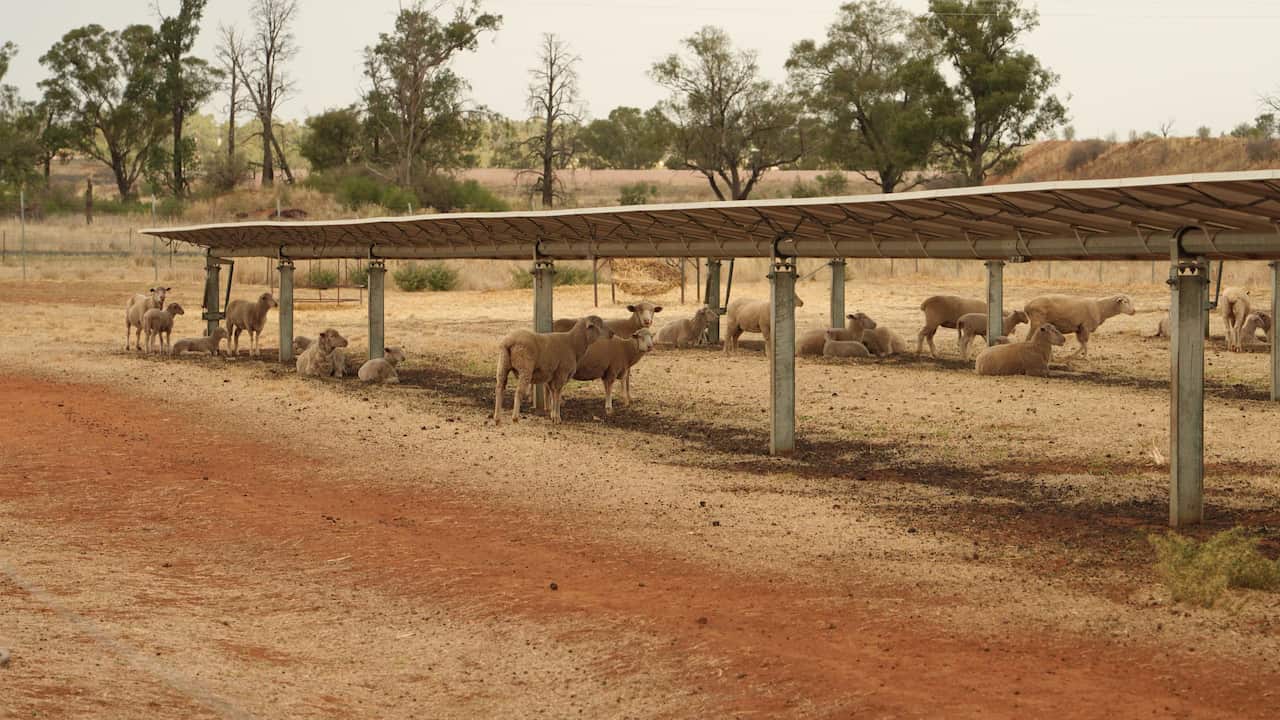
Warren was initially approached by a French solar developer to lease part of his land, a decision that would fundamentally change how the property runs.
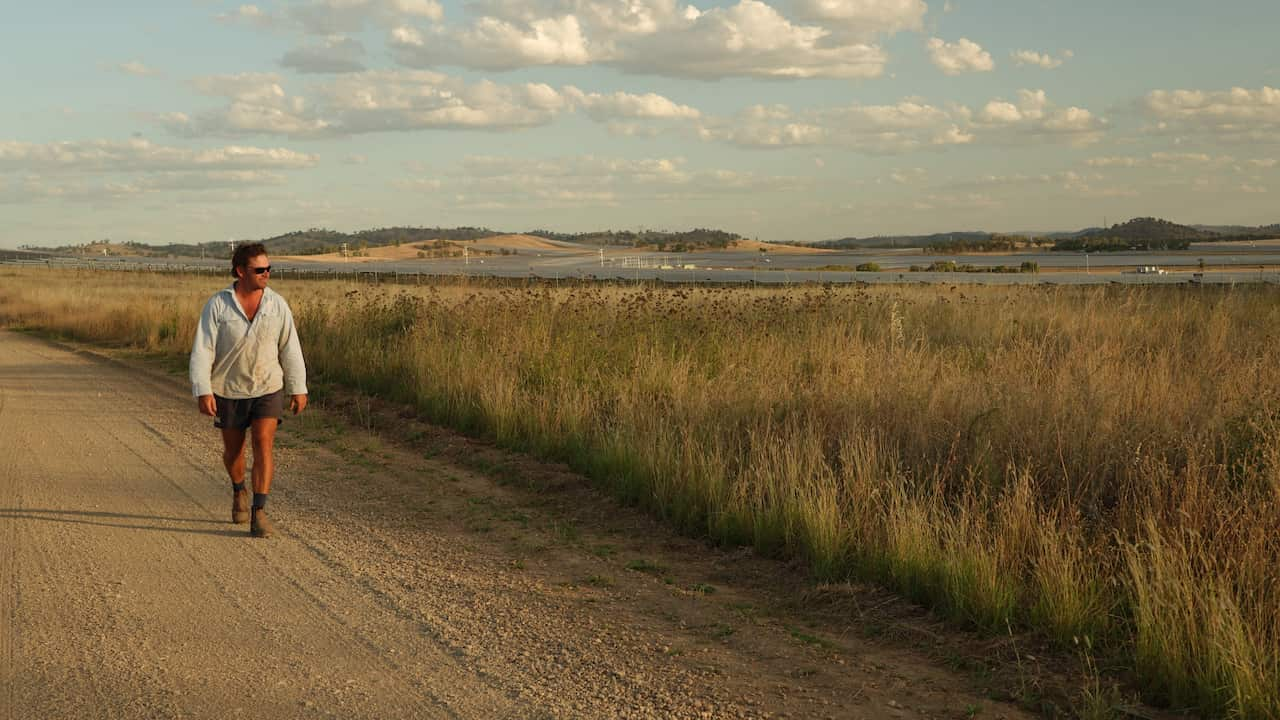
They built 64,000 solar panels, under which his sheep now graze.
He says he earns income from the energy fed into the grid, as well as from wool quality, thanks to increased shade and moisture created beneath the solar arrays, along with lower feed costs.
"When you have a shower on the solar panels … it magnifies the amount of rain … and there are strips of green [grass] right along the array," Warren says.
"So, the sheep were eating green feed during the drought … and the number of sheep that I can run per hectare has increased because of the solar farm.
"The financial gain … turned out to be roughly 15 per cent greater for the sheep running under the farm than the ones running beside the farm."
Warren says the solar farm helps drought-proof his income, while the 20-megawatt system can power much of nearby Dubbo on sunny days.
Projects like this are typically based on long-term land lease agreements, often spanning decades, which means land use decisions can extend well beyond a single farming generation.
Renewable energy zones lead the way
Warren's property sits within the first of five NSW Renewable Energy Zones, areas earmarked for large-scale solar and wind development.
Other states and territories are also developing their own zones as Australia moves towards net-zero targets, though progress and timelines vary.
Hannah McCaughey is the CEO of EnergyCo, the NSW government statutory authority responsible for delivering the state's renewable energy zones.
She says NSW is leading the country on renewable energy.
"We are constructing two [Renewable Energy Zones] now in NSW, whereas in Victoria, they do have renewable energy designs, but they haven't started constructing any as yet," she tells SBS News.
"So, we're really seen as leading the way … in terms of replacing aging coal-fired power stations with these new renewable energy designs."
McCaughey says increased renewable generation is already putting downward pressure on electricity prices.
"We just had the third hottest summer on record, and we didn't have any blackouts," she says.
It's really showing that the combination of renewable energy and batteries is providing this reliable, secure, and affordable energy source.
According to the Australian Energy Market Operator, renewables and batteries supplied more than half the national grid in the December quarter for the first time, helping drive wholesale prices to record lows.
However, lower wholesale prices do not always translate directly into cheaper power bills. Network costs, market volatility and the timing of coal plant retirements remain key factors shaping what households ultimately pay for electricity.
At the same time, global instability, including the war in the Middle East, which has pushed up fuel prices, has sharpened the focus on energy security. Expanding domestic renewable energy is often seen as a way to insulate Australia from swings in global fuel prices, though it still brings challenges in managing supply and maintaining reliability.
The NSW government says the renewable energy zones are carefully planned and necessary to replace coal-fired generation.
Large-scale solar projects spark community debate
As agrivoltaics and large-scale solar projects expand, debates over land use, consultation and environmental impact are intensifying across rural communities.
For many regions, the challenge is no longer whether the transition will happen, but how it unfolds on the ground, where land is not just an economic asset but is often deeply tied to identity, livelihoods, and generational legacy.
"For some landholders, it's a very emotional experience to have major infrastructure on their property, and we are really committed to working through them," McCaughey says.
"But we're also seeing that in the central-west, we now have over 500 local people employed on the transmission infrastructure build out, that's over 34 per cent of the workforce."
Despite these reported benefits, concerns about how projects are being rolled out have been mounting.
Submissions to the NSW parliamentary inquiry into the impacts of the renewable energy zones — established in July 2024 — have highlighted growing concerns about the pace and scale of development across the state's regional communities and industries. Many submissions raised concerns that consultation processes were often not meaningful.
Others pointed to broader knock-on effects, including strain on social cohesion within regional communities, and wider pressures on farmers, local industries and councils.
These concerns echo findings from an earlier community engagement review conducted by the Australian Energy Infrastructure Commissioner a year before the inquiry, which also found many participating landholders and community members were largely dissatisfied with engagement from project developers.
As noted in the inquiry's first interim report published in August last year, James Armstrong, owner of a sheep breeding operation near Cassilis, a village in north-west NSW, told the inquiry: "The majority of people I've spoken to [are] feeling as though their voices are not being heard in the decision-making process, or that decisions are made before consultation has even begun."
He said fears about compulsory land acquisition and its impact on property values are contributing to growing resentment towards the government.
The report has also recommended mental health support for impacted communities.
Farmers for Climate Action's acting CEO Verity Morgan-Schmidt told the inquiry that "trust has been eroded" in many communities, and that she advocates for "mechanisms that are actually going to help heal some of the division that has arisen in rural communities".
But she noted findings from the network's research on community sentiment showed "a quiet majority of farmers … do want to see this shift to clean energy".
Safety, land management and on-the-ground realities
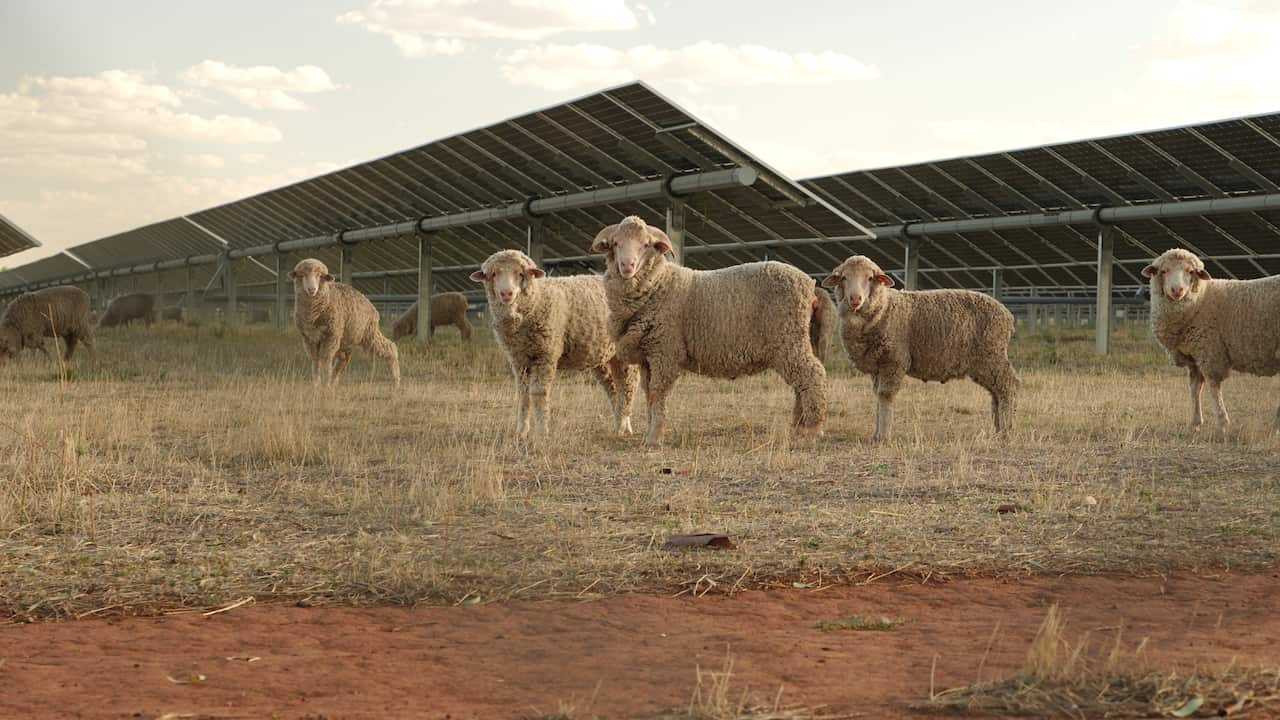
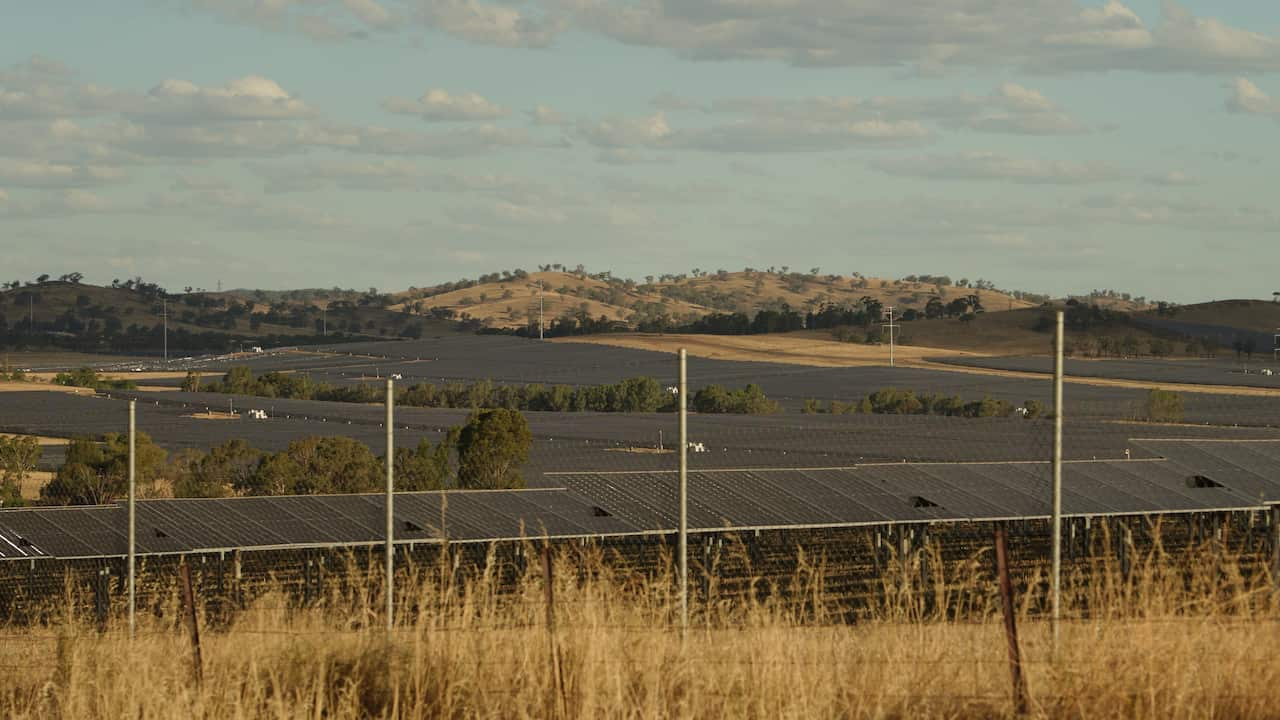
Matt Farley's property borders the Wellington Solar Hub, one of the state's largest solar facilities, approximately 50km south-east of Dubbo.
Among his main concerns are environmental impacts and fire risk. In December, a grass fire burned around 100 hectares at the solar hub, raising alarm among neighbouring landholders.
"It becomes a bit of a menace when there's security fences where there never used to be," Farley tells SBS News, describing the initial panic when the fire broke out at the solar hub.
"It's not the same as going to a rural farm and putting out fires."
Commissioner Jeremy Fewtrell of Fire and Rescue NSW told the inquiry in late March that risks posed by renewable energy infrastructure have been identified and response mechanisms have been established to deal with incidents.
First Nations communities eye renewable opportunities
While parts of regional Australia are pushing back, others are seeking to capitalise on new opportunities.
A report published last year — Local Aboriginal Land Council Powershift — based on joint research from the University of New South Wales and the University of Technology Sydney, suggests the renewables transition presents a significant economic opportunity for First Nations communities.
The report estimates that 43 per cent of the new renewable infrastructure needed to meet federal targets could be located on land held collectively by First Peoples in Australia.
Professor Heidi Norman, lead author and a Gomeroi woman from north-western NSW, says: "In our analysis, we have found that even though it's small, fragmented, and there's a significant backlog of land claims in NSW, that land should be significant in not just renewable energy, but also in responding to climate change pressures."
Wellington's Local Aboriginal Land Council is the first in the state to negotiate an equity share in a new battery being built next to the solar hub.
Through the Aboriginal community-led corporation, Wambal Bila Limited, the local Wiradjuri community has an option for a 5 per cent stake in the Bulabul Battery.
Keiyana Guihot, director of the Wambal Bila corporation, says the stake gives the community a direct financial and governance role in the battery project.
"To progress this opportunity, we've been required to source finance, making it a commercial transaction. And then if successful, the investment will generate ongoing revenue for the life of the battery," she tells SBS News.
This opportunity provides us with a genuine seat at the table, and it creates the ability to build and leave generational wealth for future generations.
"It's a legacy, really, that we can hopefully leave behind."
Guihot says the community is excited and hopes it will become a model for others.
"The focus really at the moment is just on making sure that we have everything set up so that this is a success for Wellington and that we have all of the proper governance structures in place,” she says.
Norman stresses it's important the "mistakes" made during Australia's mining boom aren't repeated in the renewables transition.
"There are some unique features in relation to the energy transition that should ensure that the bad experiences with the mining sector [aren't repeated], including [the] destruction of cultural heritage.
"But [it's hoped] much greater benefits, like the distribution of wealth and employment, are realised in this revolution."
Community-led solar projects take root
Beyond equity partnerships, some communities are taking the renewables transition into their own hands through community energy projects, where local investors join forces with corporate developers.
One such project is the Yiray Clean Energy Park, currently under construction just outside Orange in NSW's central-west.
More than six years in the making, the project is being driven by a group of locals who formed Energy Democracy, a community cooperative aimed at enabling collective investment in renewable energy.
Board member Dave Manning says most of the people involved are individuals who wanted to invest in renewables, but didn't have the option to buy their own rooftop solar.
"Their investments vary from $1,000 up to tens of thousands of dollars … 125 investors have invested $1.35 million into this project," he tells SBS News.
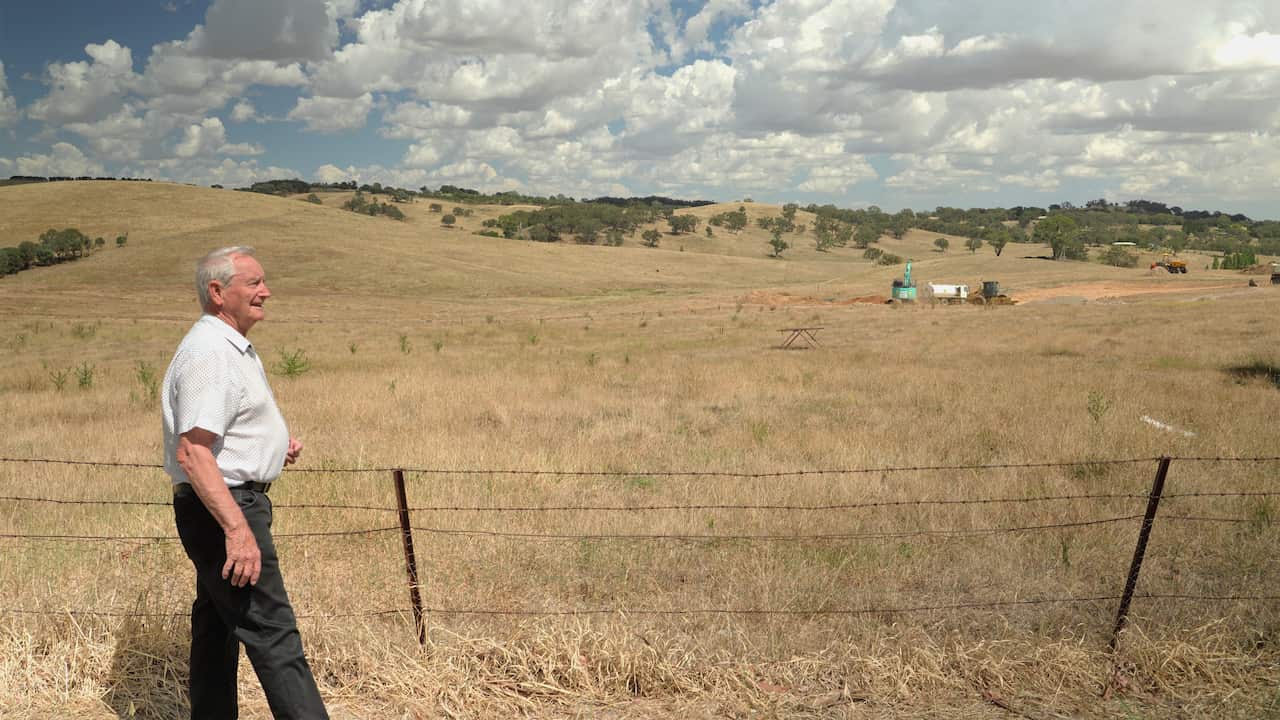
The project is co-funded by the NSW government and Singapore-based developer EDP.
Once complete, Yiray Clean Energy Park will be Australia's largest community co-owned solar farm.
Community investors expect dividends once the 11,500 solar panels and on-site battery are operational.
Energy Democracy chair Granton Smith says the cooperative model helps unlock investment in renewables for people who wouldn't otherwise be able to do so.
"It's able to make a bigger impact on the local energy grid," he tells SBS News.
"Whereas if the cooperative members were just going alone, then the scale of the project would have been much more modest."
Smith says the project is designed to benefit the local environment and the economy.
"The cooperative is very invested in making sure that sheep are grazing on that land," he says.
So we're changing a degraded piece of farmland that's been underutilised for many years into a more productive piece of land that's farming electrons as well as fibre at the same time.
While still emerging in Australia, community co-ownership has been successfully implemented overseas for decades, particularly in Europe.
Australian not-for-profit worker cooperative, Community Power Agency's (CPA), director Kim Mallee says: "Denmark, the country, actually pioneered community ownership after the 1970s oil shocks and they put in place a lot of really excellent policies that meant that renewable energy projects needed to have an option for communities to participate financially."
Mallee says similar models are now gaining traction in Australia, ranging from small-scale local initiatives to fully community-owned energy assets that can improve grid resilience and reduce electricity costs.
She notes community investment can also reduce opposition to renewable developments.
"Community participation through co-ownership and co-investment are a fantastic way to be able to make that happen," she says.
However, even within community-led models, not all nearby residents feel they share in the benefits.
Rob Green lives beside the Yiray Energy Park development and has been campaigning against it.
The retired teacher says it has ruined his livelihood.
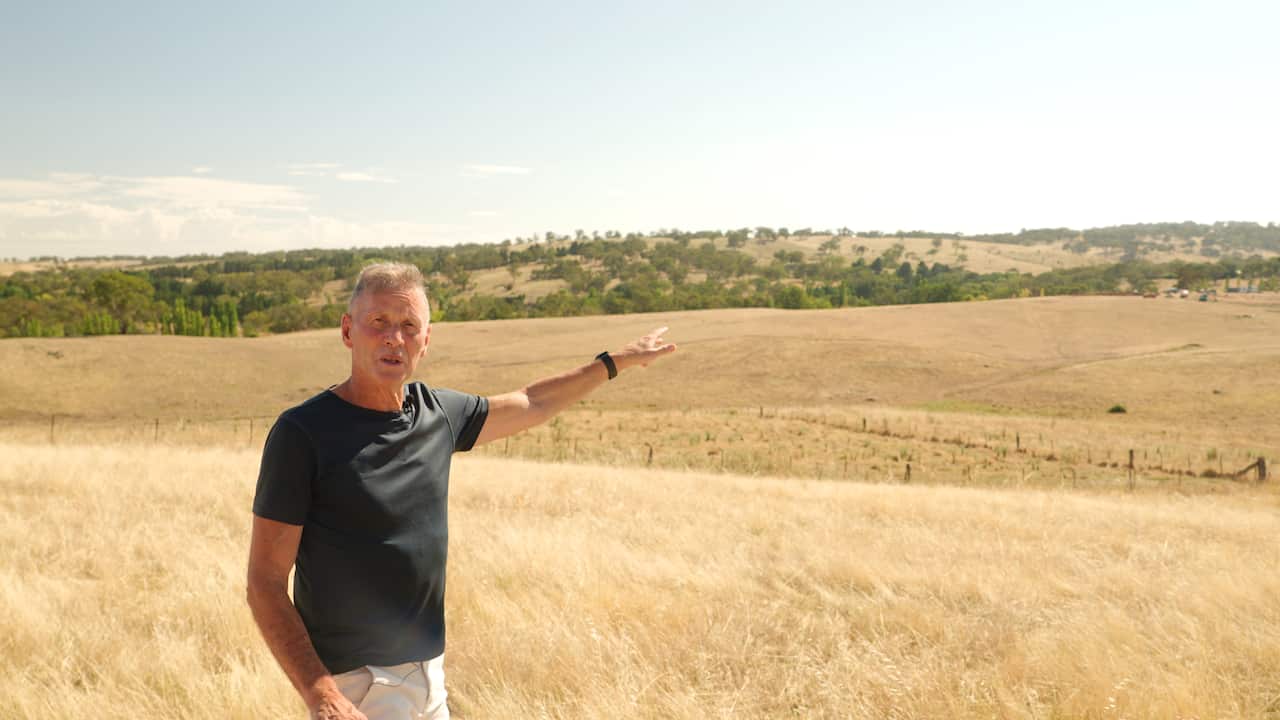
Green showed SBS News a letter he received from the NSW Valuer General, stating that his property value has dropped by millions of dollars.
"They came and they did an assessment and they said, 'Oh my gosh, we're taking it from $8 million to $3 million'," he says.
Green says he's taken his objections as far as he can through government agencies and is still weighing his legal options.
While he says he supports renewable energy in principle, he believes this project is too close to a residential area.
"No matter where I go on my property, I'm going to look down to these ugly solar panels and that's so wrong, but who am I? I'm just one person."
Orange City Council says: "Development on the edge of growing cities can be challenging for neighbours and we understand the concerns Mr Green has raised."
Board member Dave Manning says these concerns are valid, but argues that the transition to renewables requires some trade-offs.
"I understand [it's] not in my backyard … perhaps I would complain if I lived out here."But equally, we can't sit and do nothing, and this is obviously the cheapest way of producing power in the future."
Readers seeking support with mental health can contact Beyond Blue on 1300 22 4636. More information is available at beyondblue.org.au. Embrace Multicultural Mental Health supports people from culturally and linguistically diverse backgrounds.
For the latest from SBS News, download our app and subscribe to our newsletter.







