
This audio is voiced by AI and may occasionally mispronounce words.
Share your feedback and help us improve this feature. Read more about how we use AI at SBS here.
As missiles fly and tensions escalate across the Middle East, global attention has been focused on the United States, Iran and Israel — the powers shaping events on the ground.
But far from the frontlines, countries like Australia are also being drawn into the crisis, forced to weigh in on a war they did not consent to but cannot ignore.
Prime Minister Anthony Albanese has stressed Australia is "not a protagonist" in the conflict, framing recent military deployments to the United Arab Emirates (UAE) as "defensive" rather than offensive.
Yet even a limited role underscores a broader reality: geographic distance offers little insulation from a conflict that touches energy markets, trade routes and security alliances central to Australia's interests.
News that makes sense
Your trusted source for staying up-to-date with the world around you. Get free daily news updates and analysis, straight to your inbox.
The current crisis has renewed discussion about how countries like Australia — often described as "middle powers" — respond to major geopolitical conflicts, especially as the US ramps up its unilateral decision-making.
Australia and the 'middle power' identity
Australia's foreign policy has often been framed around the idea of middle-power diplomacy.
Middle powers sit below great powers — such as China, France, Russia, the United Kingdom and the US — but still exert meaningful influence over global politics.
While there is no standard definition or agreed international list of middle powers, they are typically characterised by their ability to leverage diplomatic reach, economic weight, participation in multilateral institutions and, at times, military contributions to shape international outcomes, according to a World Economic Forum white paper.
The concept has historical roots in Australia's post–World War Two diplomacy, including its involvement in the creation of the United Nations.
Today, as a G20 member and one of the world's 15 largest economies, Australia wields more power than it often acknowledges, says Allan Behm, international and security affairs program adviser at the Australia Institute.
"It is true that Australia often describes itself as a 'middle power' even though, as a member of the G20, with the sixth largest land mass and 14th largest economy [approximately the same as Russia's], enormous natural endowments and one of the highest standards of living in the world, it enjoys considerable national power and the agency that goes with it," Behm tells SBS News.
Behm says if Australia were bolder, "it could exercise commensurate influence on the world stage".
Jessica Genauer, associate professor in international relations at Flinders University, says the war in the Middle East tests how Australia exercises its middle-power role amid global pressures and strategic dependencies.
"On the one hand, the conflict highlights the extent to which Australia is still dependent on the US as a stronger power with greater military capability," she says.
"On the other hand, it shows that Australia is part of a group of middle powers around the world who are in a similar situation of re-stabilising, looking after their domestic populations, and reorienting their foreign policy to respond to an increasingly fragmented emerging world order."
Why the Middle East matters to Australia
At first glance, the Middle East may seem far removed from Australia's strategic focus in the Indo-Pacific. Yet the region remains central to global energy supply and trade, which has a flow-on effect for domestic markets.
Around 20 per cent of global oil shipments pass through the Strait of Hormuz. In 2025, about 20 million barrels of oil moved through Hormuz each day, according to estimates from the US Energy Information Administration.
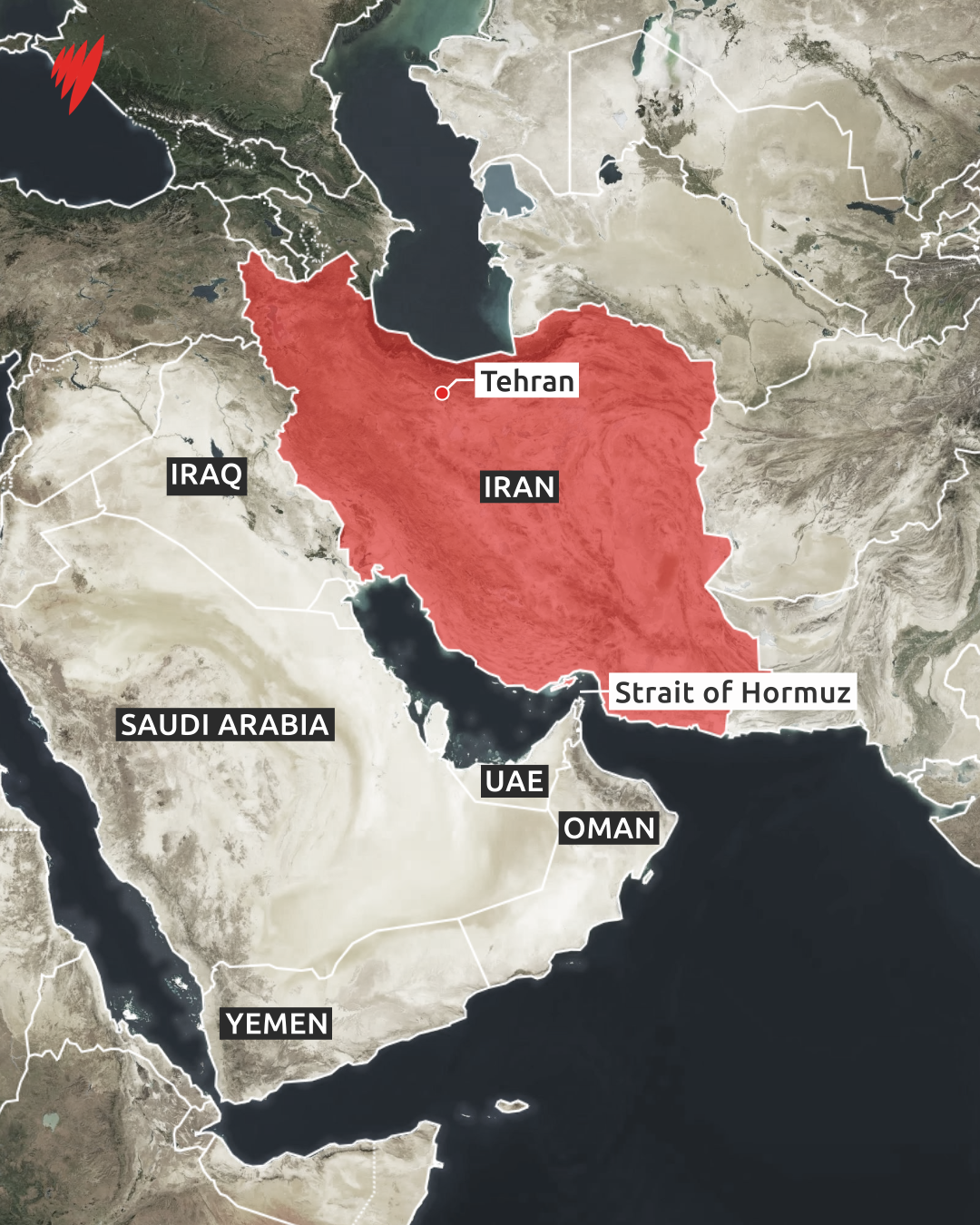
Disruptions to these routes can drive volatility in global energy prices and shipping costs.
For Australia, these global shocks translate quickly into domestic pressures — from rising fuel prices to disrupted supply chains.
Behm says distance does little to shield Australia from these dynamics, pointing to both economic and social links with the region.
As a globally connected nation, Australia has clear economic, political and strategic interests in the Middle East.
"And as a nation dependent on migration for its economic and social development, Australia enjoys extensive cultural, ethnic and familial links with the Middle East, extending principally from Egypt in the west to Iran in the east."
Those connections increasingly intersect with Australia's national security concerns.
In recent weeks, the government has taken concrete steps in response to rising tensions in the region.
Earlier this month, the Albanese government announced it would deploy an E-7A Wedgetail surveillance aircraft, provide medium-range air-to-air missiles, and send around 85 Australian Defence Force personnel to the UAE to support Gulf states following Iranian missile and drone attacks.
Albanese said the deployment was designed to protect civilians, including Australians, stressing Australia was not taking part in offensive operations against Iran.
"The first priority of my government is and always will be to keep Australians safe. There are around 115,000 Australians in the Middle East, around 24,000 of those in the UAE," he said at a press conference last week.
"Helping Australians means helping the UAE and other nations to defend themselves."
Economic ripple effects
Exposure to economic shocks is another key impact. Australia imports roughly 90 per cent of its liquid fuel, making it vulnerable to disruptions in global oil markets and shipping routes.
Energy Minister Chris Bowen announced a reduction in the minimum stock obligations for diesel and petrol earlier this month, saying the move would "make a difference going forward" amid "understandable" concerns around rising fuel costs.
The obligations for diesel will reduce from 2.7 billion litres to 2.2 billion litres, and for petrol from 1 billion litres to 700 million litres, allowing the release of up to 762 million litres from domestic reserves.
Hayley Channer, director of the Economic Security Program at the United States Studies Centre (USSC) at the University of Sydney, says the greater risk lies not in short-term price spikes, but in prolonged disruption to global energy flows.
"A bigger concern than higher prices is a potential long-term disruption to global oil supply and negative flow-on impacts for some of Australia's largest trading partners — China, Japan, Korea and India," she tells SBS News.
"This is the consequence of such an interconnected global economy, which served Australia's interests for decades but no longer does because trade has been weaponised."
She says the impact is already being felt across supply chains, with costs likely to build over time.
"We've already seen an immediate impact on fuel, but there's a compounding impact of this oil crisis on Australia's supply chains, more broadly. Not only is supply disrupted, [but] shipping has to be rerouted, shipping insurance goes up and emergency conflict surcharges are introduced," Channer says.
"So, longer shipping times, extra insurance, extra danger pay — that all adds costs that will push prices up for all goods."
The economic ripple is also affecting policy decisions, with rising oil prices linked to the war in the Middle East influencing the Reserve Bank of Australia's decision to raise interest rates to a 10-month high.
Channer says the outlook demands a shift in how both governments and businesses prepare for global shocks.
All of this points to the need for the Australian government to have a stronger strategy around dealing with economic security shocks and risks, which are the new norm — not a blip.
"This isn't just the responsibility of the government, though. Australian businesses needs to engage with these risks more genuinely," Channer says.
Security considerations have also shaped Australia's engagement with the region. Over the decades, instability in the Middle East has been linked to terrorism and prompted international military interventions.
Australia has previously deployed personnel to conflicts in Iraq and Afghanistan and continues to cooperate with partners on intelligence sharing, maritime security and counter-terrorism operations linked to the region.
Diplomacy and humanitarian engagement
When crises erupt abroad, Australia leans on diplomacy and multilateral coordination, often aligning with other US-aligned middle powers.
Genauer says this approach reflects both strategic caution and practical limits on Australia's hard power.
"Australia's diplomatic role in the crisis primarily concerns pursuing a coordinated approach with other middle power partners around the world, such as Canada, France, the United Kingdom and Japan."
Genauer says this model has become more complex as US foreign policy shifts, requiring middle powers to adapt their approach across multiple conflicts.
Humanitarian aid remains another pillar of Australia's response.
"Although Australia has reduced its international development assistance over the past couple of decades, Australia remains a significant contributor in the Pacific and in Asia," Behm says.
"Our efforts in international humanitarian assistance are well-targeted and well-coordinated with other donors. We could and should do better, however."
Lavina Lee, director of the Foreign Policy and Defence Program at the USSC, cautions that any expanded role will depend on how the conflict unfolds on the ground.
"There will be a role for Australia in terms of humanitarian assistance to populations affected in the region once active hostilities are over — but there is a big question over when this might be and whether the Iranian regime will capitulate," Lee tells SBS News.
Security and alliances
Australia faces strategic choices in the coming weeks and months, especially if tensions continue to threaten key shipping routes.
Defence Minister Richard Marles confirmed on Tuesday that the US has not explicitly asked Australia to contribute naval forces to operations in the Strait of Hormuz, reiterating Australia's focus on defensive support.
However, experts say the government may still consider a more direct role if conditions deteriorate, even though its capabilities are constrained by its fleet.
Lee says Australia has "limited" naval assets it can deploy to the Gulf.
"Australia is behind on developing its own integrated air and missile defence capability. It's possible the government might consider sending one of our three air warfare destroyers to protect oil tankers and shipping around the Strait of Hormuz," Lee said.
Nevertheless, Australia's response to conflicts beyond its immediate region remains shaped by its close alliance with the US.
Behm says this can narrow Australia's room to act independently.
We generally follow the lead of the US, representing ourselves as a representative of US interests rather than our own; and we constrain our agency by playing too subservient a role under US leadership.
Domestic politics can also shape Australia's stance, though Behm suggests the government's more "muted role" in the Middle East is unlikely to spark significant public debate at this stage.
"Though a growing number of members of Australia's Middle Eastern community would like to see Australia adopt more assertive and self-confident stances on key humanitarian issues, especially the treatment of displaced persons in Palestine and refugees more generally."
For the latest from SBS News, download our app and subscribe to our newsletter.







