
This audio is voiced by AI and may occasionally mispronounce words.
Share your feedback and help us improve this feature. Read more about how we use AI at SBS here.
Since the end of World War Two, the United States has billed itself as a force for geopolitical good, pledging to champion democracy and international stability.
Australia has been grateful to call the country an ally.
But the war in the Middle East is the latest in a string of events to challenge this image of the US, which has been rocked even further by actions taken during US President Donald Trump's second term.
"What we're seeing is the death of that era ... when the US was a bit of a global policeman," professor of strategic studies at the Australian National University, Peter Dean, says.
The international rules-based order — a system of institutions and alliances with shared liberal democratic values — has traditionally been enforced by US power, says Dean. It was adopted in the post-war years and basically sets out "the rules of the world".
News that makes sense
Your trusted source for staying up-to-date with the world around you. Get free daily news updates and analysis, straight to your inbox.
But the rise of autocratic theocracy in Iran, a more aggressive and authoritarian Russia and the growing dominance of China have all challenged this status quo.
"[Previously] the US was the dominant and only superpower in the world, [now] we have a balance of power spread through different regions, by different states who are competing for interest and competing for power," Dean says.
What's happening in the Middle East is an outcome of what we're seeing more globally — a re-ordering of power [and] the emergence of this multi-polar world.
"This is something we're going to have to test and adjust to."
US-backed global institutions
After the Second World War, the US played a key role in creating an international system aimed at preventing future world wars, as well as another collapse of the global economy (following the Great Depression in the 1930s), and the horrors of the Holocaust that saw millions of Jews killed by the Nazis.
University of Melbourne professor of international relations Christian Reus-Smit says the United Nations was at the centre of this new international order, along with major financial institutions, such as the International Monetary Fund and the World Bank, human rights organisations, and later environmental protection organisations.
While the US had "vastly more power" than other countries, Reus-Smit says it was willing to accept the constraints of these institutions, knowing that they embodied its liberal values.
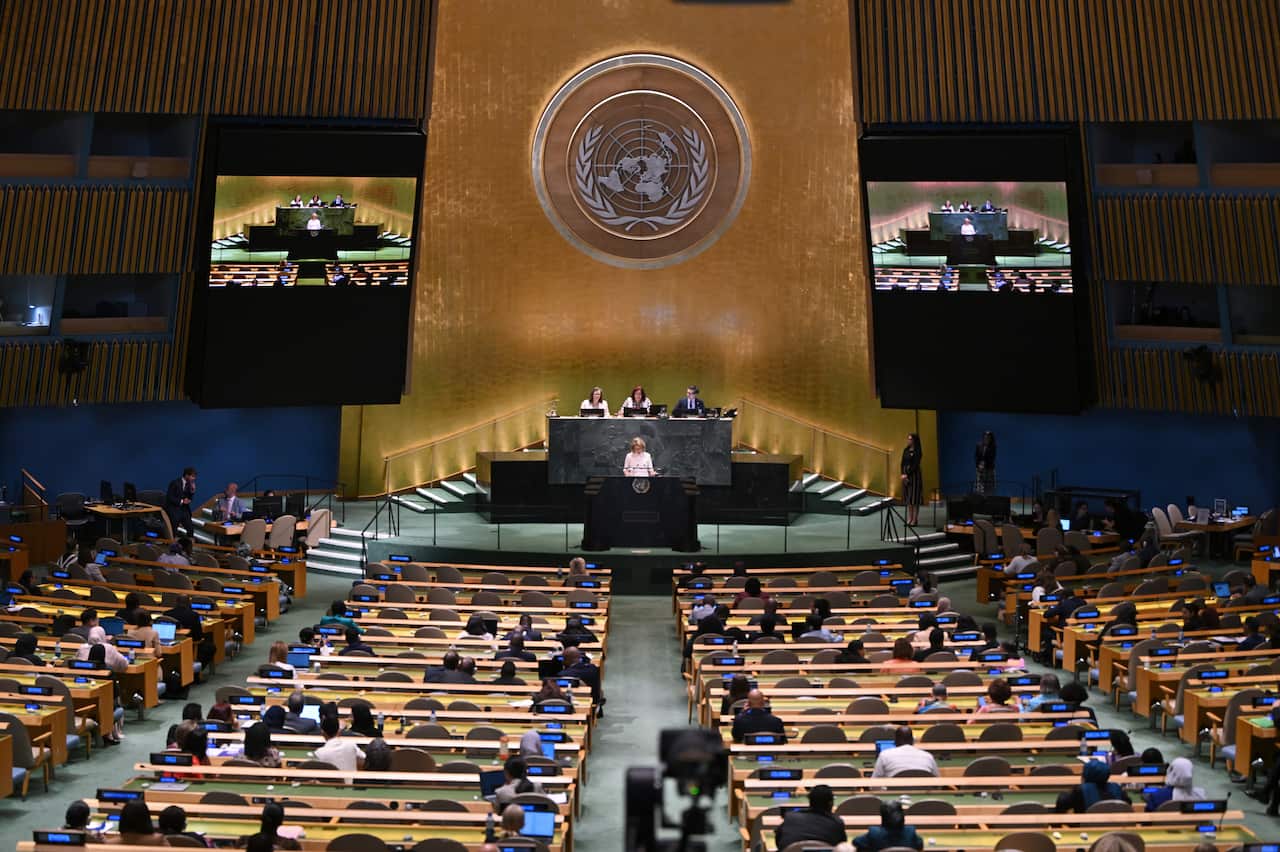
He says one of the most remarkable achievements of the international community since 1945 has been the dramatic decline in interstate war during a time when the number of recognised sovereign states has multiplied from about 50 to nearly 200 today.
"There are many reasons for that, but most people would agree that one of [these] was the legal prohibitions that states accepted on the use of force."
While the US did not always adhere to international laws in this period, including instances of unauthorised military intervention and unilateral force, successive administrations continued to frame its global peacekeeping goals as synonymous with its national interests.
However, after the 9/11 attacks in 2001, Reus-Smit says US policies began to swing dramatically, reflecting polarised views within American society over the country's place in the world and how it should use its power.
Erosion of norms
In response to the terrorist attacks that brought down the World Trade Centre towers in New York, former US president George W Bush went to war in Iraq in 2003 without UN approval, claiming the country had weapons of mass destruction — a claim that later turned out to be untrue.
Since then, both the Obama and Biden administrations have tried to reinstate US support for multilateral institutions and international law, while Trump has accelerated the move away from them.
Trump has withdrawn the US from several international agreements, including the Paris Climate Agreement and the Iran nuclear deal, and from bodies such as the UN Human Rights Council and the United Nations Educational, Scientific and Cultural Organization.
As of this year, it is no longer a member of the World Health Organization.
The president has also been a vocal critic of the North Atlantic Treaty Organisation (NATO), a military alliance with Canada and Western European nations, which says that it considers an attack on one member to be an attack on all.
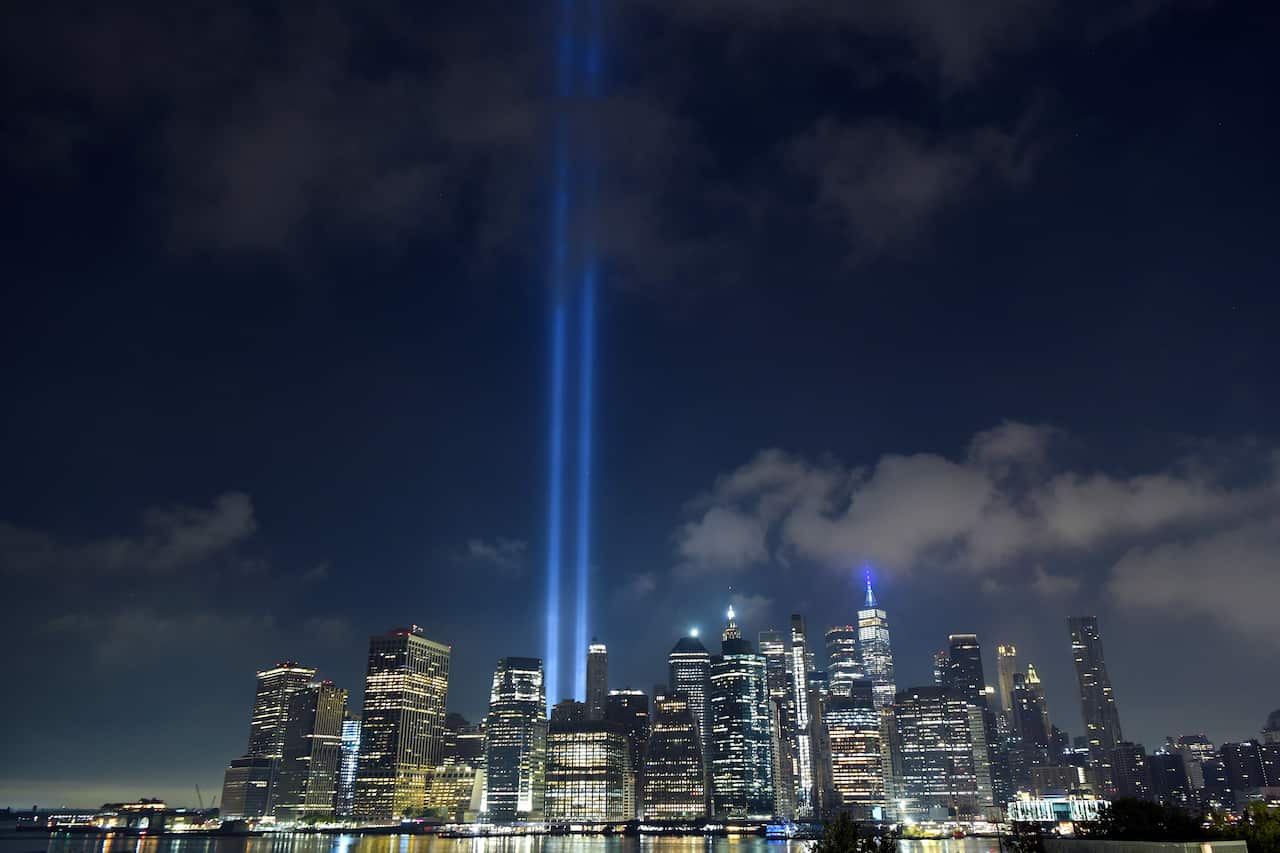
Reus-Smit says the Iraq war, Russia's invasion of Ukraine in 2022, and Israel's retaliation in Gaza following the October 7 terrorist attack in 2023, show that basic constraints on the use of force have collapsed.
"In the past, people might have looked to the US to help bolster and support the international order," he says.
"[But] people no longer believe that it either has a will to do that or is capable of doing it."
Dean says another issue many are grappling with is the incoherence of Trump's actions.
While the US has exercised raw power in the past, Dean says these instances were largely in support of the rules-based international order, and were actions with a clearly articulated rationale and set of objectives and aims.
For example, a US campaign to target Islamic State in the Middle East, starting in 2014, was aimed at destroying that particular group.
The Trump administration can't seem to articulate why, what the purpose [and] what the [Iran] war aims are. Is it regime change? Is it weapons of mass destruction? Is it countering terrorism?"
"Destruction of the Iranian regime seems to be the main goal, but airstrikes may not achieve that," Dean says.
He says Trump appears to do whatever he wants and then offer many different rationales until one sticks.
"It seemingly is a raw exercise of power by the US, and by a US president, in ways that we just haven't seen."
System is in 'severe crisis'
When asked whether America can still be relied on to be the "world's policeman" as it has been described in the past, Reus-Smit says the system that has maintained international order — helping constrain the use of violence and facilitate economic stability over many decades — is now in "severe crisis".
"I think that the US is no longer a force for good in that process."
Reus-Smit points to Trump's own words in an early-2026 New York Times interview where he said, "I don't need international law", and the only constraint on his power is "my own morality, my own mind".
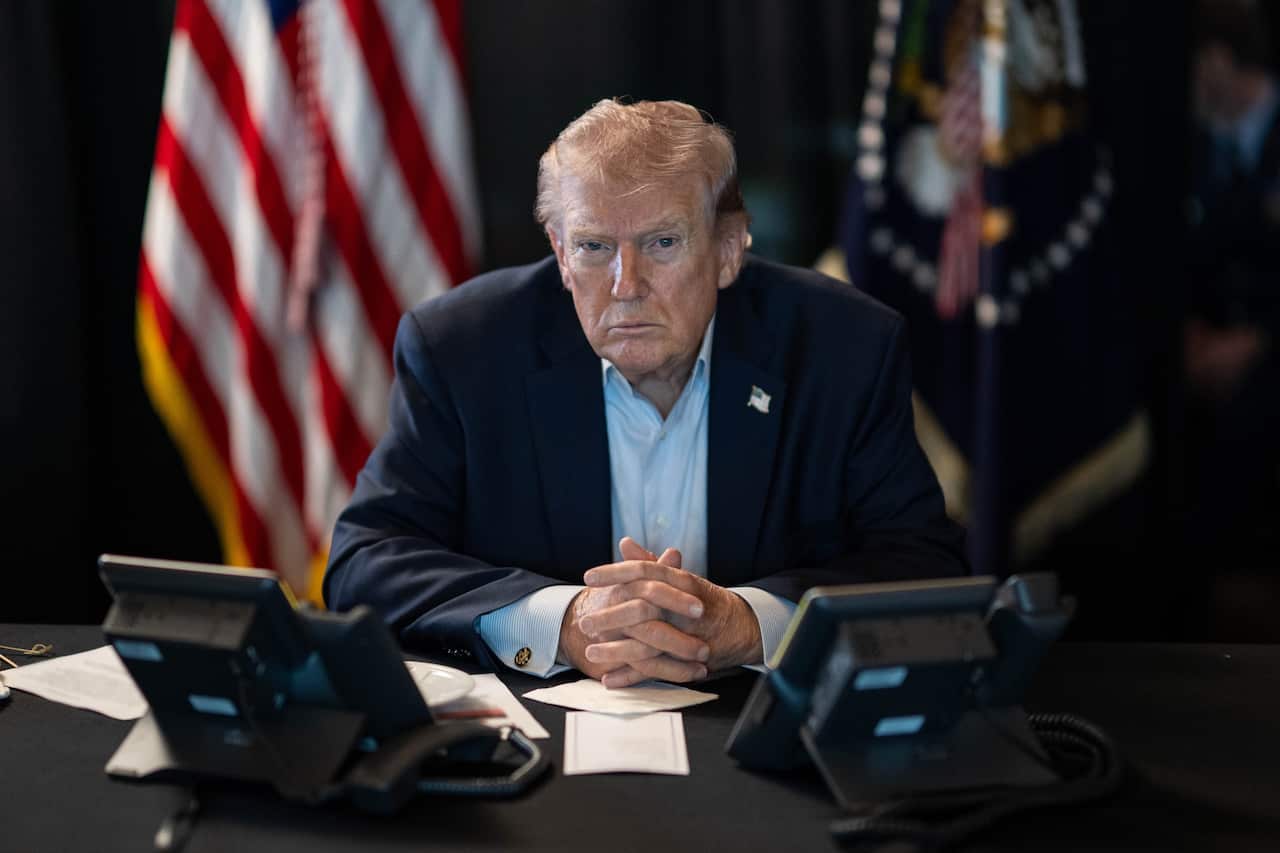
"We've never heard an American president say that — and his actions bear out his words," Reus-Smit says.
Dean agrees and says the old rules-based international order under which Australia flourished is "dead".
We're in a multi-polar order now, and what's being written now is what's going to be the new rules of the road, so to speak, for that new order.
Dean believes organisations such as the UN are now essentially defunct and there is a shift to smaller groupings of states that come together on common interests, such as the security pact between Australia, the United Kingdom and the US (AUKUS); the Quadrilateral Security Dialogue between Australia, India, Japan and the US (often referred to as the Quad); and the Australia-Japan-US partnership (AJUS).
While a new US president may choose to support parts of the old system, Dean believes what's happening now is a fundamental change in global and regional power dynamics.
"This is what happens unfortunately in history, when you have periods of global reordering.
"You often see conflicts break out. You often see struggles for power."
He points to Russia's invasion of Ukraine, and even the October 7 attacks, which were supported by Iran through its funding of Hamas.
Revisionist states are far more willing to accept risk around the use of direct military force, and "what we're seeing is the US respond to that", Dean says.
"[The US is] reserving the right to unilaterally use [its] own power to punish those states."
In the case of Iran, Dean says it has launched constant military attacks on Israel, cyber attacks on the US, and has been trying to develop weapons of mass destruction.
Trump's rise reflects deeper divisions
Many Americans still have positive views of international organisations such as the UN, with the latest survey findings from the Pew Research Centre reporting 57 per cent had a favourable opinion of the body.
Reus-Smit says many are still committed to the idea of the US maintaining its power in collaboration with other states, and the legitimacy it commands internationally.
But right-wing movements have been pushing for a narrower conception of American interests, he says, and have attacked the idea of "one worldism" — essentially the creation of a world government — casting organisations such as the UN as institutions "hell-bent on destroying American sovereignty".
Dean doesn't think Trump's actions are driving these changes but instead reflect this shift.
He says the Make America Great Again (MAGA) movement has essentially cast the US as a victim, and the sense that the world needs to be reordered again to advantage America.
[Trump is] rejecting so much of the order that the US built and [which] has made the US rich and prosperous.
But while Trump campaigned on an isolationist position — that the US should stay out of international conflicts and be more concerned with its own national interests — he's since pursued muscular use of American power to achieve interests.
"The best you can say is that there are contradictions between an isolationist US and a highly aggressive interventionist US," Reus-Smit says.
"And the problem for Australia is that none of those things serve Australian interests."
'Australia always has choices'
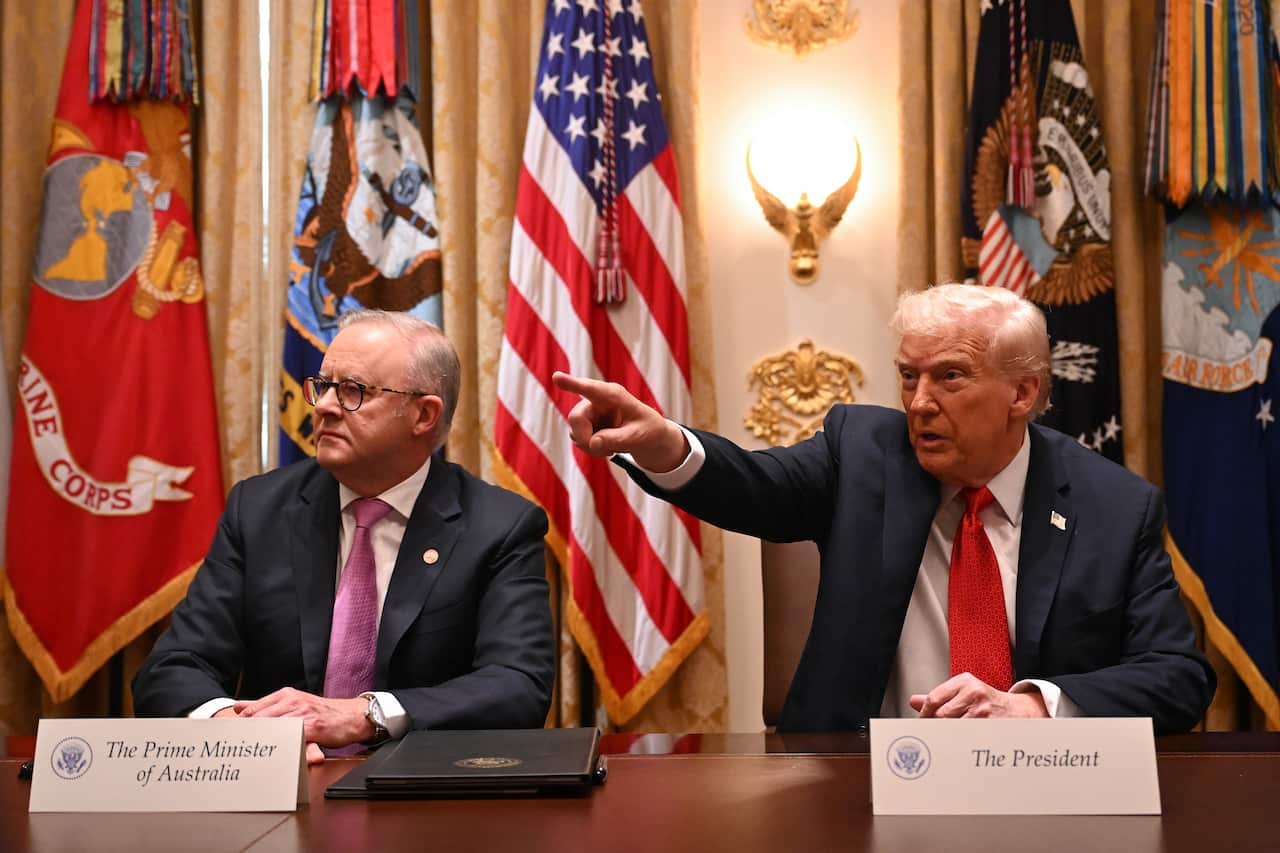
Australia must adjust its view of the US, Reus-Smit says, and under President Trump, the US is not a reliable or predictable ally.
But he says Australia always has choices and there's still room for diplomacy; it just has to be exercised.
"Laws don't crumble when someone violates them, they crumble when somebody won't stand up for them."
Reus-Smit believes the Australian government is reluctant to step out of line with the US, partly due to fears it could impact the AUKUS agreement.
So we've bound ourselves into a relationship of dependence with the US that is affecting the independence of our foreign policy.
But he believes there's still scope for a creative, smart Australian government to develop a policy and a set of objectives for creating a world order that will suit Australian interests, and the interests of other countries.
Dean notes there are costs and risks involved in any partnership, and the US remains absolutely central to the broader Asia Pacific region. He says Australia will need to be pragmatic about how it responds to American behaviour in other regions.
"We need to know when we have to stand up for Australia's specific national interests."
If the government can help maintain regional strategic balances of power, and other countries see that their objectives can't be achieved through military force, they may become less willing to embrace military conflict.
"Russia has learnt the hard way — its six-day special military operation to punish Ukraine, is into [four] years now," Dean says.
He agrees Australia needs to invest more in its statecraft, diplomacy and defence forces, as the world becomes more dangerous.
"We're in this big period of re-ordering, so we can expect more disruption, more chaos [and] more uncertainty.
"The US is searching and groping for its role, and its approach to this new multipolar world in the same way that China, Iran, North Korea, Russia, Australia and everybody else is."
For the latest from SBS News, download our app and subscribe to our newsletter







