
In Brief
- Ripple effects of the war in Iran will be felt in Australians' hip pockets.
- The RBA has said a "supply shock" could add to inflationary pressures.
Australians could be paying $1 a litre more for petrol if a key oil shipping route near Iran remains closed for up to three months, according to Australian economists.
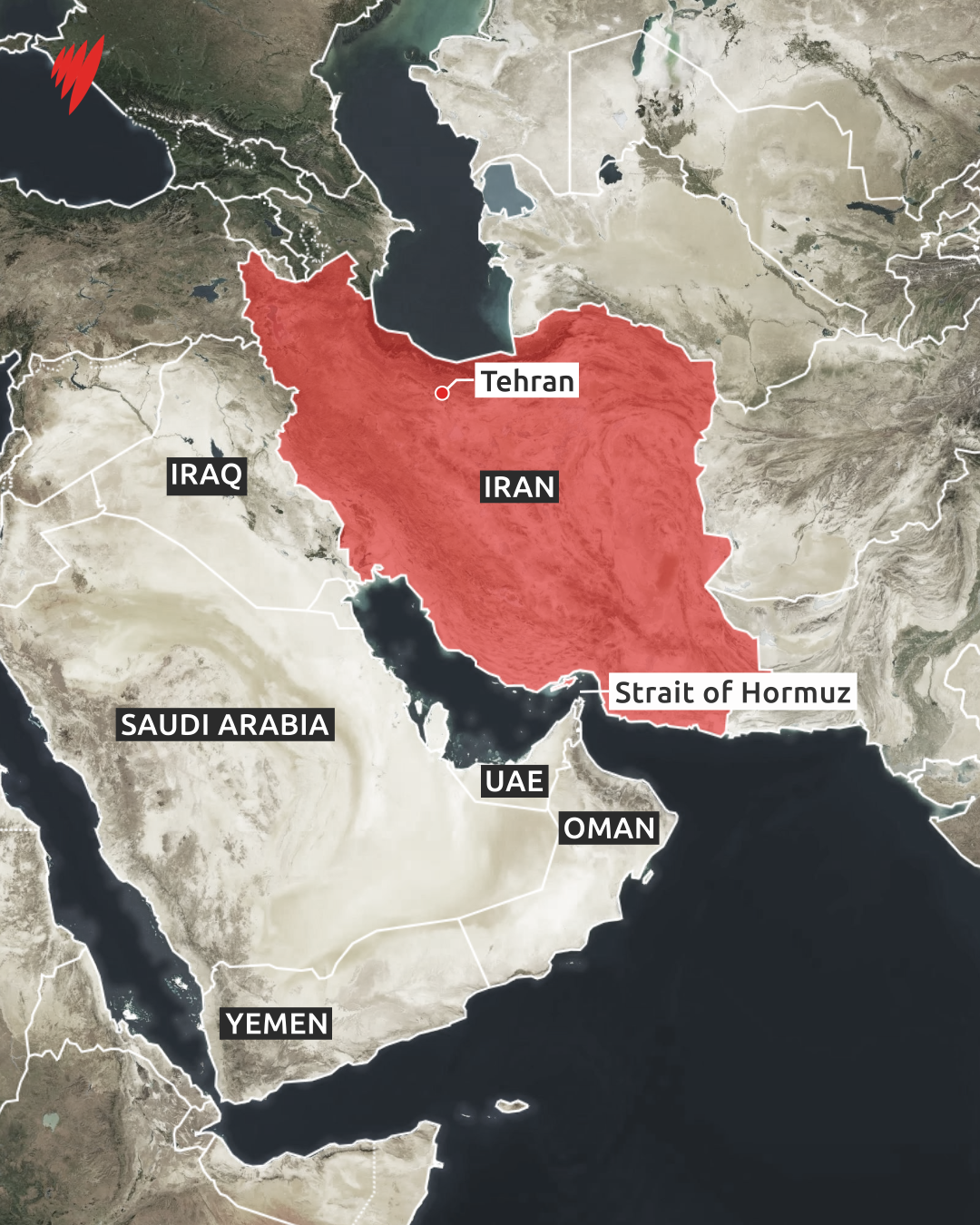
The Strait of Hormuz — the shipping lane on Iran's southern border through which about 20 per cent of the world's oil and gas is shipped — has been effectively closed as Iran retaliates against the US-Israeli strikes.
Iran has threatened to fire on any ship trying to pass the key waterway, according to Iranian media reports and on Monday a Revolutionary Guards official said a fuel tanker was burning in the Strait after being hit by two drones.
The US-Israeli war with Iran has sent oil prices surging for a third consecutive day — on Monday prices spiked as much as 13 per cent to their highest since January 2025.
Economists at Westpac warn the longer the conflict goes on, the worse the effects on the Australian economy and consumer hip-pockets will be.
News that makes sense
Your trusted source for staying up-to-date with the world around you. Get free daily news updates and analysis, straight to your inbox.
The three scenarios that could affect Australians
In its latest economic advice, Westpac assessed the potential implications of the Middle East conflict based on three different scenarios.
If only Iranian production was disrupted — of which accounts for 4 per cent of global oil production — the bank said the price of oil could rise another US$25 ($35) a barrel to around US$100 ($141).
If shipping through the Strait of Hormuz is affected for up to a month, Brent oil prices could spike to US$113 ($160) a barrel.
But a three month disruption could mean the price of oil rises to US$185 ($262) a barrel.
These scenarios could hike prices by between $0.25 to $1.00 a litre, dependent on movements in the Australian dollar and refinery margins.
They are also best case scenarios — assuming there won't be damage to oil, LNG (liquefied natural gas) production and freight facilities. Already though, Iran has targeted ports and energy infrastructure across the region including Saudi Aramco's Ras Tanura plant, which was shut after after a drone strike.
"A permanent loss of supply would prolong the cost to the real economy and financial markets via the price of oil and related energy products," Westpac said.
"As for oil, the longer the disruption the greater the cost."
Other economists have different predictions. In a research note, AMP chief economist Shane Oliver said the worst-case scenario — in which the US becomes mired in a prolonged conflict with Iran and oil supplies are disrupted for longer — could see oil prices could double to about $US150 ($210) a barrel.
A widely accepted rule of thumb is that every US$10 ($14) increase in the price of a barrel adds 10 cents to the fuel pump in Australia.
The average price for regular unleaded fuel in Sydney is 201.8 cents a litre as of Monday, according to the NRMA.
The NRMA expects prices at the pump to increase by around 10 per cent, but urged Australians not to panic.
"Whatever happens overseas takes about seven to 10 days to flow on here at home," spokesman Peter Khoury told journalists in Sydney.
"So we should not see an impact on the bowser immediately and only then if things are sustained over a period of time and we don't see that jump stabilise and prices come back again."
He said NRMA hoped prices would stabilise but if the situation did not de-escalate higher prices could flow on to the Australian market.
OPEC+ nations agreed on Sunday to boost oil production slightly by 206,000 barrels a day for April, with its leader Saudi Arabia already having increased production ahead of the conflict in preparation.
The intervention means oil prices shouldn't rise in the same way that they did in 2022 after Russia launched its full-scale invasion of Ukraine, said Saul Eslake, an independent economist and vice-chancellor's fellow at the University of Tasmania.
But, he said, nobody knows how long the conflict will last.
"If the conflict escalates, or if Iran succeeds in doing a lot of sustained damage to oil production in Arab states on the other side of the Gulf, then it's possible that fuel prices could go to $2.20 or even higher, but it's a bit of a leap at this stage."
Broader financial pain
Beyond pain at the petrol pump, consumers have been warned a protracted conflict could lead to broader price increases — and strengthen the case for interest rate rises.
Reserve Bank of Australia (RBA) governor Michele Bullock says the escalating conflict in the Middle East could exacerbate inflation although the overall impact remains unclear.
"It's too early to say what the impact will be. Events are moving rapidly and there are different ways this can play out," Bullock told the Australian Financial Review Business Summit on Tuesday.
"A supply shock could, for example, add to inflation pressures. And the potential implications for inflation expectations are something we are very alert to.
"But at the same time, a prolonged impact on energy markets could have adverse effects on global economic activity and result in downward pressure on inflation. It is not obvious how this might play out."
Westpac said a one-month disruption to supply from the Strait of Hormuz would lift Australia's Consumer Price Index — a common measure of inflation — by around one percentage point, with GDP growth about 0.2 percentage points lower. A three-month disruption could see the CPI temporarily spike by around 1.5 percentage points at its peak, with GDP 0.5 percentage points lower by the end of 2026.
If oil hits US$100 ($141) a barrel, interest rates could settle around 0.25 percentage points higher over the longer term. If it rises to US$150 ($211) a barrel, the higher inflation effect on spending could allow the RBA to leave rates on hold.
Bullock acknowledged borrowers would "like more certainty about the direction of interest rates", but said the central bank would not claim greater certainty than it had.
While the Reserve Bank of Australia doesn't factor in volatile goods like fuel and air fares — often rising with petrol — if the conflict drags on for "two to three months", higher petroleum costs will start to impact domestic transportation, the cost of plastic, and consumer goods, Eslake said.
"If that were to come to pass, if the Reserve Bank were to find itself revising up materially its forecasts for the underlying inflation rate — which excludes these volatile items — then almost certainly they would have to contemplate additional increases in interest rates."
— With reporting by the Reuters news agency and the Australian Associated Press.
For the latest from SBS News, download our app and subscribe to our newsletter.







