
We're closing the blog for today
We're going to wrap up the blog for today.
Here were a couple of the major developments as the conflict moved into its fourth day, with little end in sight.
- Israel launched fresh strikes on Iran and Lebanon, and Israeli defence minister Israel Katz said he had authorised Israel's military to advance and "take control of additional strategic positions in Lebanon in order to prevent attacks on Israeli border communities"
- Iran continued to target US bases in the Gulf, including a US air base in Bahrain, while the US embassy in Riyadh, Saudi Arabia was hit by two drones
- Israel issued several more evacuation warnings for residents in Lebanon's south. The United Nations refugee agency said more than 30,000 people in Lebanon displaced by the conflict had sought shelter
- Defence Minister Richard Marles confirmed that an air base housing Australian soldiers was hit by a military strike. Marles said there were no injuries and the Australian personnel at the Al Minhad base near Dubai were all "safe and accounted for"
- United Kingdom Prime Minister Keir Starmer said the UK would not join the US and Israel's offensive strikes, with US President Donald Trump later appearing to criticise Starmer and saying the US-UK relationship was "not like it used to be
- US secretary of state Marco Rubio insisted the joint US-Israeli strikes against Iran were pre-emptive, as the US had learned Israel was planning to strike Iran and the US believed Iran would retaliate against the US
- Foreign Minister Penny Wong said she had spoken with her United Arab Emirates counterpart and confirmed Australians impacted by travel disruptions in the UAE were being accommodated and provided meals. Wong said the number of Australians stranded in the Middle East represented the largest consular operation the Department of Foreign Affairs and Trade has ever faced
Thanks for joining us.
UN says at least 30,000 displaced people are in shelters in Lebanon
The United Nations' refugee agency says that at least 30,000 displaced people have sought protection in shelters in Lebanon since hostilities between Israel and Hezbollah began on Monday.
"Conservative estimates suggest that nearly 30,000 people were hosted and registered at collective shelters," said UNHCR spokesperson Babar Baloch.
"Many more slept in their cars on the side of roads or were still stuck in traffic jams on the roads," he added.
— Reuters
Saudi Arabia condemns Iran's strike on US embassy in Riyadh
Saudi Arabia has condemned Iran's attack on the United States embassy in Riyadh.
Iran has been targeting US bases in the Gulf in retaliation for the US and Israeli strikes on Iran which began on the weekend.
AFP reports that the Saudi foreign ministry expressed its "strongest condemnation and rejection of the heinous attack that targeted the US Embassy building in Riyadh", calling it "cowardly and unjustified" in a statement.
The embassy was hit by two drones, resulting in a limited fire and some material damage. There were no reported injuries.
— Alex Gallagher and AFP
Israel strikes Iran's presidential office as Iran targets Israel and US base in Qatar
Israel and Iran have both said they launched attacks targeting the other.
The Israeli military said it had carried out air strikes on Iran's presidential office and the National Security Council building in Tehran as part of its ongoing campaign against the Islamic Republic.
"The Israeli Air Force ... struck and dismantled facilities within the leadership compound of the Iranian terrorist regime in the heart of Tehran" overnight, the military said.
"During the strike on the compound, numerous munitions were dropped on the presidential office and the building of the Supreme National Security Council," it added.
Iran's army says its forces launched attacks on Israel and a United States military base in Qatar.
"The destructive combat drones of the army's ground, air, and naval forces ... targeted the military areas of the Zionist regime in the occupied territories and the bases of American forces in Al-Udeid, Qatar," said the army in a statement carried by Shargh daily.
— AFP
Albanese speaks with UAE and New Zealand counterparts
Prime Minister Anthony Albanese has spoken with his counterparts in the United Arab Emirates and New Zealand this evening.
SBS News understands Albanese spoke with the UAE president, Sheikh Mohamed bin Zayed Al Nahyan, acknowledging the distressing time facing the UAE and the Middle East broadly.
Albanese emphasised that the Australian government had called for Iran to cease attacks against the UAE and other countries in the region. He also thanked him for the hospitality shown to Australians stranded in the UAE due to the conflict, and discussed the importance of commercial flights resuming as soon as possible.
Albanese also spoke with New Zealand Prime Minister Christopher Luxon, with the pair discussing the consular challenges brought about by the conflict and, similarly, the importance of commercial flights quickly resuming.
— Alex Gallagher
Lebanese official says Israel carrying out incursion along some parts of border
Reuters is reporting that a Lebanese official has told the news agency that Israeli troops were carrying out incursions along some parts of the Lebanese border.
Witnesses said the Lebanese army had pulled out of at least seven forward operating positions along the border.
— Reuters
Israeli military authorised to seize additional positions in Lebanon
Israel's defence minister Israel Katz says he's told the Israeli military to take control of more positions in Lebanon.
Katz said in a statement on Tuesday that he and Israeli Prime Minister Benjamin Netanyahu had authorised the Israel Defense Forces (IDF) to "advance and take control of additional strategic positions in Lebanon in order to prevent attacks on Israeli border communities".
That came shortly after IDF spokesperson Nadav Shoshani told journalists the military had positioned soldiers on the "border area in additional points to defend our civilians" and "prevent Hezbollah from attacking them".
— AFP
In case you missed it
As we head into the evening, we're continuing to see fire exchanged in the Middle East.
Embassies, military bases and missile silos have reportedly been targeted as Australians in the United Arab Emirates are warned to shelter in place.
Here are a few of the latest updates from this afternoon:
- Israel's military says it's begun a simultaneous wave of strikes against Iran, and Hezbollah in Lebanon. It's issued new evacuation orders for dozens of locations in Lebanon's south
- Foreign Minister Penny Wong has told parliament "the number of affected Australians dwarfs any consular operation the Department of Foreign Affairs and Trade has ever conducted"
- Australians in the Saudi Arabian cities of Riyadh, Jeddah and Dhahran are being urged to shelter in place until further notice following the widespread cancellation of flights throughout the region
- Israeli Prime Minister Benjamin Netanyahu has described the war in Iran as "the gateway to peace", saying the offensive is "not going to take years"
- Netanyahu also claimed Iran's nuclear and ballistic missile sites had been moved to new underground locations that would make them "immune within months", saying this made the strikes on Iran pre-emptive
- US secretary of state Marco Rubio has argued the US' strikes against Iran were pre-emptive and designed to safeguard US forces from retaliation
— Cameron Carr
Israel launching strikes in Iran and Lebanon
Israel's military has said it's conducting "simultaneous targeted strikes" against military targets in Iran's capital Tehran and Lebanon's capital Beirut.
In a post on its Hebrew-language X account, it said the Israeli air force had "begun a wave of extensive strikes" against Iran's regime and Hezbollah in Lebanon.
— Alex Gallagher
Iran and US continue to trade blows
The Islamic Revolutionary Guard Corps (IRGC) have targeted a United States air base in Bahrain, the Iranian regime's elite force said in a statement seen by local media, reported by the Agence France-Presse.
"The IRGC announced that ... its naval forces carried out a large-scale drone and missile attack at dawn on the US air base in the Sheikh Isa area of Bahrain," the organisation said in a statement on Tuesday.
The group said that 20 drones and three missiles were launched, "destroying the base's main command headquarters".
Meanwhile, the US military says it has destroyed IRGC command and control facilities, air defence installations, as well as missile and drone launch sites and airfields.
"We will continue to take decisive action against imminent threats posed by the Iranian regime," the US Central Command wrote in a social media post on Tuesday afternoon.
Neither Iran nor the US has provided evidence of the magnitude of the attacks.
— AFP
Israel issues new evacuation orders in Lebanon
Israel's military has issued new evacuation orders for dozens of locations in Lebanon, primarily in its south.
In a separate warning, residents in two of Beirut's southern suburbs, Ghobeiry and Haret Hreik, were told they were "located near Hezbollah facilities and interests" that the Israel Defense Forces would be operating against "in the near future".
Israel similarly issued evacuation orders to residents in around 50 towns in Lebanon to evacuate yesterday.
It bombarded Beirut's southern suburbs and dozens of villages in south Lebanon on Monday, in response to Hezbollah announcing it had launched rockets and drones towards Israel earlier that day.
Lebanon's health ministry says 31 people were killed in Israel's strikes on Lebanon yesterday, with 149 wounded.
— Alex Gallagher and AFP
Largest consular operation DFAT has faced, Wong says
Foreign Minister Penny Wong has described the huge task the government faces in aiding Australians stranded in the Middle East.
"The number of affected Australians dwarfs any consular operation the Department of Foreign Affairs and Trade has ever conducted," she said during Question Time in the Senate earlier this afternoon.
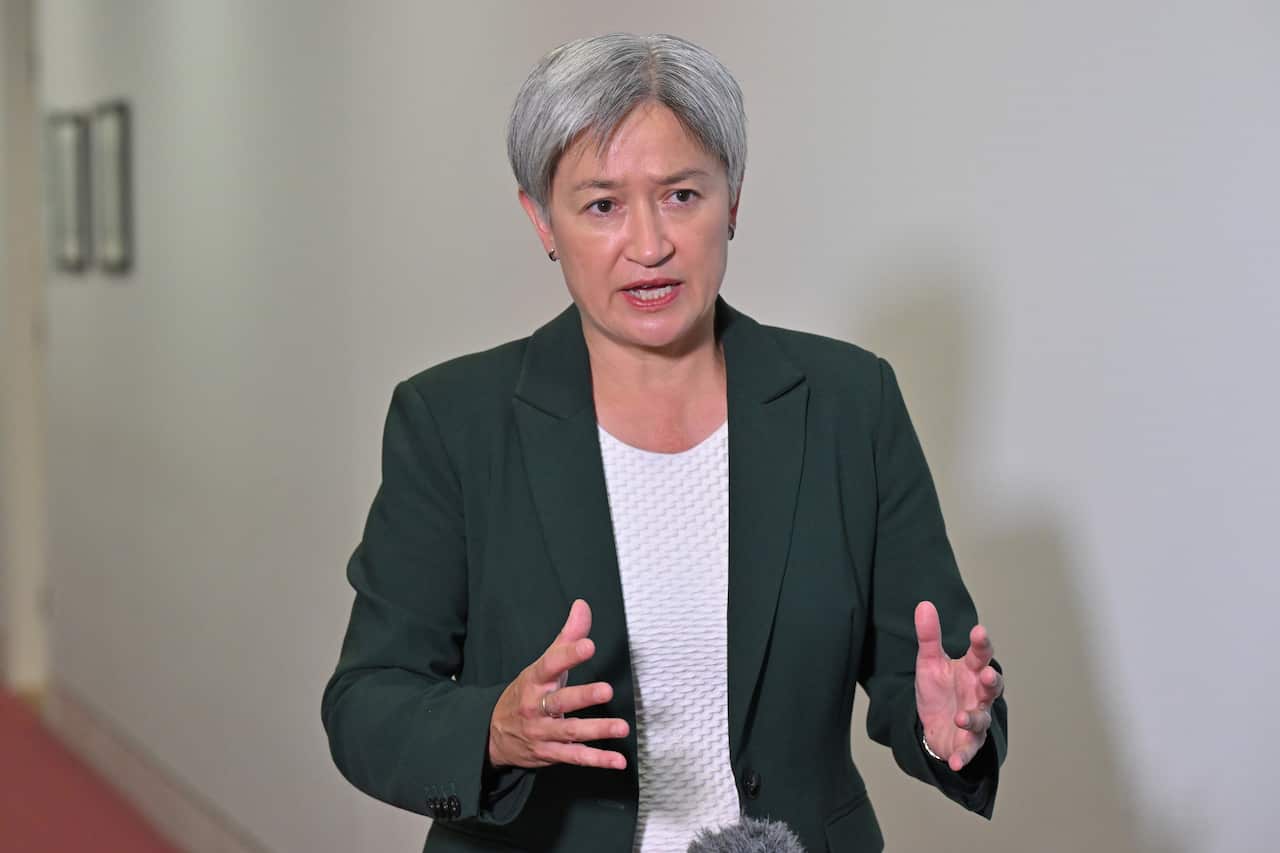
She said that the government is working with the United Arab Emirates to help evacuate Australians.
"The UAE and airlines are working hard to put flights on for travel when it's safe to do so, and we will continue to work with airlines in the region to support Australians," Wong said.
"I am advised that a small number of commercial flights to other destinations were able to depart overnight; however, the unfortunate reality is that immediate resolution to this situation is unlikely."
— Cameron Carr
Watch: Netanyahu says Iran's nuclear ambitions led to strike
Israeli Prime Minister Benjamin Netanyahu has described Iran as "unreformable" and "fanatic" in comments made to Fox News' Hannity program today, claiming the nation was continuing to develop nuclear weapons, following lethal strikes against its nuclear facilities last year.
Netanyahu claimed Iran's nuclear and ballistic missile sites had been moved to new underground locations that would make them "immune within months", saying this made the recent United States-Israeli strikes on Iran pre-emptive.
"If no action was taken now, no action could be taken in the future," he said.
"Then they could threaten America ... then they could threaten us."
US secretary of state Marco Rubio similarly insisted the joint strikes on Iran were pre-emptive earlier today, saying they were designed to safeguard US forces from retaliation after discovering Israel was preparing to carry out an attack.
"The imminent threat was that we knew that if Iran was attacked, and we believed that they would be attacked, that they would immediately come after us," Rubio told reporters.
Experts have pushed back on the notion that the strikes were pre-emptive, with Emily Crawford, a professor of international law at the University of Sydney, telling SBS News: "There was no evidence to suggest that Iran was going to strike the US in any way such that it would justify the US striking them."
The Iranian regime has always denied it is pursuing nuclear weapons, saying its program is aimed at developing civilian nuclear power.
— Cameron Carr
Shelter in place warning issued for Australians in Saudi Arabia
Australians in the Saudi Arabian cities of Riyadh, Jeddah and Dhahran are being urged to shelter in place until further notice.
An alert issued by the Australian embassy in Saudi Arabia said the body is "aware of security alerts" in those affected areas.
The Department of Foreign Affairs and Trade's Smartraveller service has advised Australians to reconsider their need to travel to Saudi Arabia.
Airport closures have led to the widespread cancellation of flights and sent global air travel into turmoil.
— Cameron Carr
What does international law say about the strikes on Iran?
Iran's United Nations ambassador, Amir Saeid Iravani, says the US and Israeli strikes against Iran on the weekend were unlawful, a position shared by many international law experts.
SBS News' Rayane Tamer spoke with Tamer Morris, senior lecturer at the University of Sydney, about what international law says about the strikes.
Listen to that below:
Several international law experts interviewed by SBS News on Sunday also shared the view that the strikes breached international law.
Emily Crawford, a professor of international law at the University of Sydney, said the actions were "not even close" to being compliant with international law.
Ben Saul, Challis Chair of International Law at the Sydney Law School, said US President Donald Trump "doesn't feel bound by international law. He's only bound by his own morality and whatever strategic objectives the United States has".
— Alex Gallagher / Zacharias Szumer
Netanyahu says action against Iran won't be 'endless war'
Israeli Prime Minister Benjamin Netanyahu has described the US and Israeli-led offensive in the Middle East as "the gateway to peace", saying the war in Iran is "not going to take years".
"This is not an endless war," Netanyahu said on Fox News' Hannity program.
When asked if he saw a lasting path to peace in the Middle East, Netanyahu replied: "Yes, I do."
He went on to say that "it's up to the people of Iran" to change the government in the wake of the killing of Ali Khamenei.
— Cameron Carr
Australians brace for war-fuelled petrol pain
Petrol stations are being urged not to use the war in Iran as an excuse to rip off Australian drivers, amid warnings global oil prices could skyrocket after the reported closure of a major trade route.
Iran said it had shut the Strait of Hormuz — through which around one-fifth of the world's oil supply passes — and threatened that any ship which tried to use the route would be set on fire.
Some retailers in Sydney, Melbourne and Brisbane are selling E10 petrol for well over $2 a litre, with diesel prices even higher in some areas.
However, NRMA spokesperson Peter Khoury warned that the high costs were driven by the regular price cycle, and further cost increases from the Middle East war hadn't hit Australian commuters yet.
"It takes seven to 10 days for prices overseas to flow on and impact prices at the bowser," he told AAP on Tuesday.
"Our message to oil companies is... do not use this as an excuse to rip off Australians."

While the conflict has the potential to send oil prices skyrocketing, it hasn't done so yet, AMP chief economist Shane Oliver said.
"So far we haven't seen the horror scenarios where it surges through $100 (a barrel) yet, but that may still happen," he told AAP.
— Caroline Riches with the Australian Associated Press
US embassy in Saudi Arabia hit by drones, Trump vows to respond
The US embassy in Riyadh, Saudi Arabia, has been hit by two drones, resulting in a limited fire and some material damage, the kingdom's defence ministry said in a post on X.
Three people reported a loud blast and flames, while black smoke was seen rising over Riyadh's Diplomatic Quarter, which houses foreign missions.
Reuters was not immediately able to confirm the circumstances of the incident.
There were no reported injuries, two of the people familiar with the matter said, given the building was empty in the early morning hours.
US President Donald Trump has already vowed to respond, telling NewsNation that people would find out soon what the retaliation would be for the Riyadh embassy attack — and the deaths of US military personnel during the conflict, a reporter at the media outlet posted on X on Monday, citing an interview with him.
An embassy spokesperson did not immediately respond to a request for comment, nor did the Saudi government media office.
— Caroline Riches with Reuters
Messages received by SBS News capture the mood inside Iran
As smoke billows over buildings in cities across Iran, airstrikes flash and fighter jets roar, many Iranians question their country’s future.
SBS News journalists Jennifer Scherer and Niv Sadrolodabaee spoke to those living in the shadows of war about how they're feeling.
Some have rejoiced over the killing of their supreme leader, while others continue to mourn.
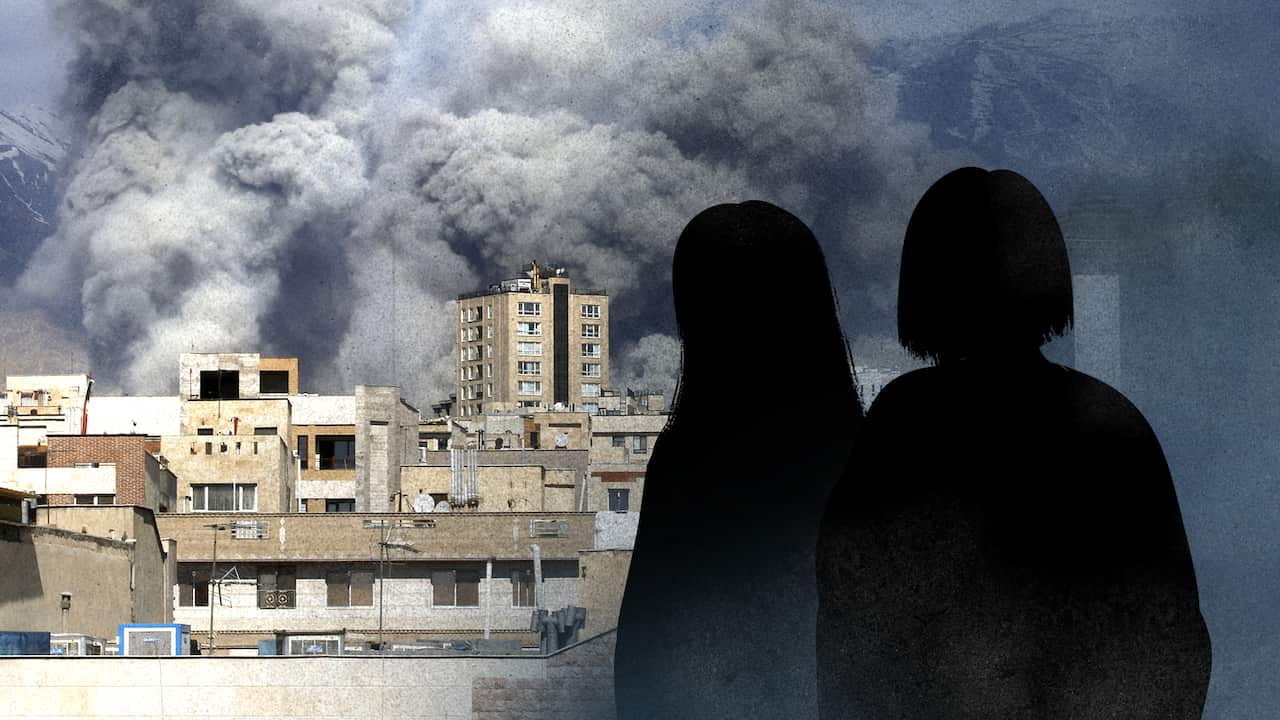
In her home in Tehran, Rana (not her real name) is caught in the middle. She told SBS News she is not "afraid", but instead feels "full of hope".
"The news of Ali Khamenei's death … felt like a weight of darkness lifting from our bodies," she said.
"Now we are dancing and celebrating — filled with a deep sense of joy we had long wished for.
"Although we had hoped to see him stand trial in court, his death has given people new energy and a renewed sense of life."
Maryam (not her real name) told SBS News she has "extremely complex feelings".
"[I am] very worried about the future and deeply happy about the weakening of the Islamic Republic of Iran, at the same time, hopeful for positive changes."
Maryam also said, "unstable conditions, the uncertainty of the future, are very worrying" for her.
To hear how Rana and Maryam see Iran's future unfolding and who they want to lead their country, read our story here.
— Caroline Riches, with Jennifer Scherer and Niv Sadrolodabaee
Fresh strikes and renewed threats: The day so far
Developments are coming in thick and fast from the Middle East, as strikes continue throughout the region, while several senior United States officials have made statements about the conflict.
Australians have been left stranded, and an air base housing ADF personnel has reportedly been attacked by drones.
As the clock ticks past midday AEDT, here's some of the biggest news of the day so far:
- Israel's military has launched strikes on Hezbollah targets in Beirut, after warning it would press ahead with its campaign against the Iran-backed group
- Foreign Minister Penny Wong has spoken with her United Arab Emirates counterpart, confirming Australians impacted by travel disruptions in the UAE are being accommodated and provided meals
- Defence Minister Richard Marles confirmed this morning that an air base housing Australian soldiers has been hit by a military strike. Marles said the Australian personnel at the Al Minhad base near Dubai are all "safe and accounted for"
- The US Department of State has urged American citizens to leave much of the Middle East, including Egypt and Gulf states, due to the war
- US secretary of state Marco Rubio has argued the US' strikes against Iran were pre-emptive and designed to safeguard US forces from retaliation, while defence secretary Pete Hegseth said the conflict would not be "endless" and criticised the notion that the US was on the verge of becoming bogged down in another long war.
- In Australia, DFAT has today added Bahrain, Israel and Yemen to its 'Do not travel' list, which already includes UAE, Qatar, Afghanistan, Iran, Iraq, the occupied Palestinian Territories and Lebanon among other nations
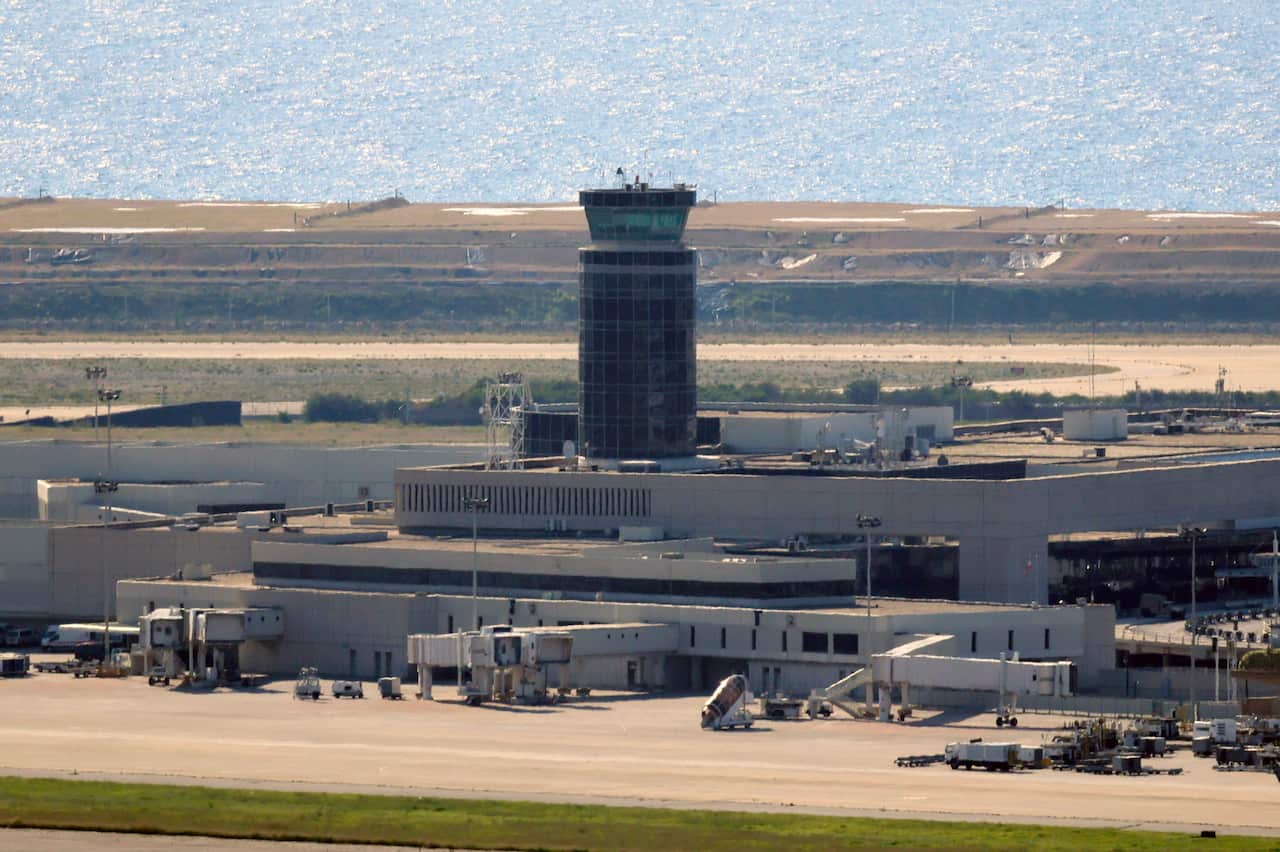
- Airport closures have led to the widespread cancellation of flights and sent global air travel into turmoil
We will continue to bring you the latest news throughout the day. Stay with us.
— Cameron Carr







