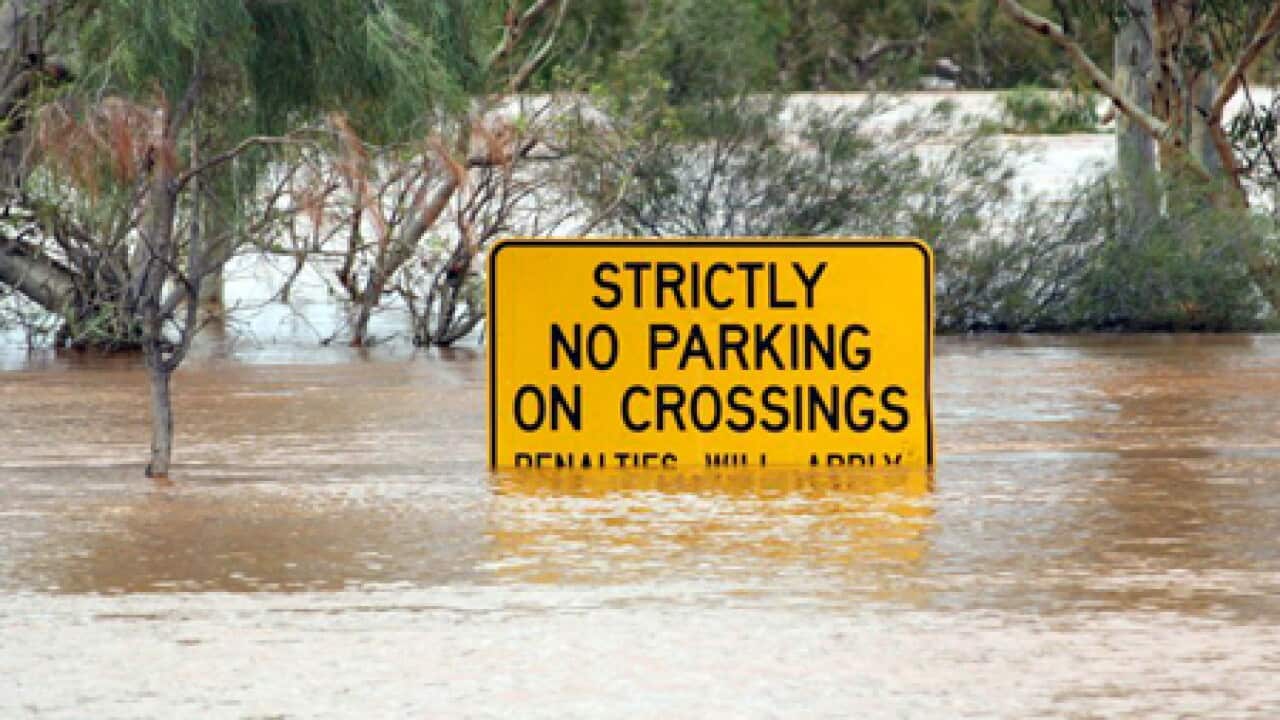
The Gascoyne River near flood-hit Carnarvon is receding after record rains swamped the region at the weekend, forcing dozens to evacuate and badly damaging outlying rural properties.
West Australian Premier Colin Barnett on Monday declared a natural disaster in the Gascoyne, parts of the Pilbara and Mid-West after Carnarvon, about 900km north of Perth, received its annual rainfall in 22 hours over the weekend.
Bureau of Meteorology (BoM) hydrologist Katrina Annan said the river level peaked at 7.8 metres at 4am (WST) on Monday at the Nine Mile Bridge.
News that makes sense
Your trusted source for staying up-to-date with the world around you. Get free daily news updates and analysis, straight to your inbox.
The river level was down to 7.5 metres by 2pm and 6.3 metres by 7pm.
She said water levels would continue in a "downward trend" over the next few days.
"The worst is definitely over," she said.
FESA spokesman in Carnarvon Les Hayter told AAP 49 people were evacuated by State Emergency Service crews from the Capricorn Caravan Park after it flooded on Sunday night, while crews had sandbagged houses to avoid further evacuations.
About 160 people were staying in the Carnarvon Civic Centre last night.
"Hopefully the water will dry up inland in the next few days so people can drive on the roads to deliver supplies so we won't need the helicopters for the whole area," he said.
Federal and state government assistance will be offered to those affected by the floods.
Pastoral station owner Tim D'Arcy, whose son manages the family property near Carnarvon, said up to nine stations that had never been flooded were now under water, including some built more than 100 years ago.
"The homesteads are mud-brick or mud-stone type buildings and the damage caused to them could almost be irreparable," he told AAP.
"There's significant damage to a lot of those majestic, old, homesteads, it's devastating."
Mr D'Arcy said damage to machinery, plants and cattle would cost the community millions of dollars.
Shire president Dudley Maslen told AAP there would be millions of dollars in livestock and crop losses in the region, including mangoes and melons.







