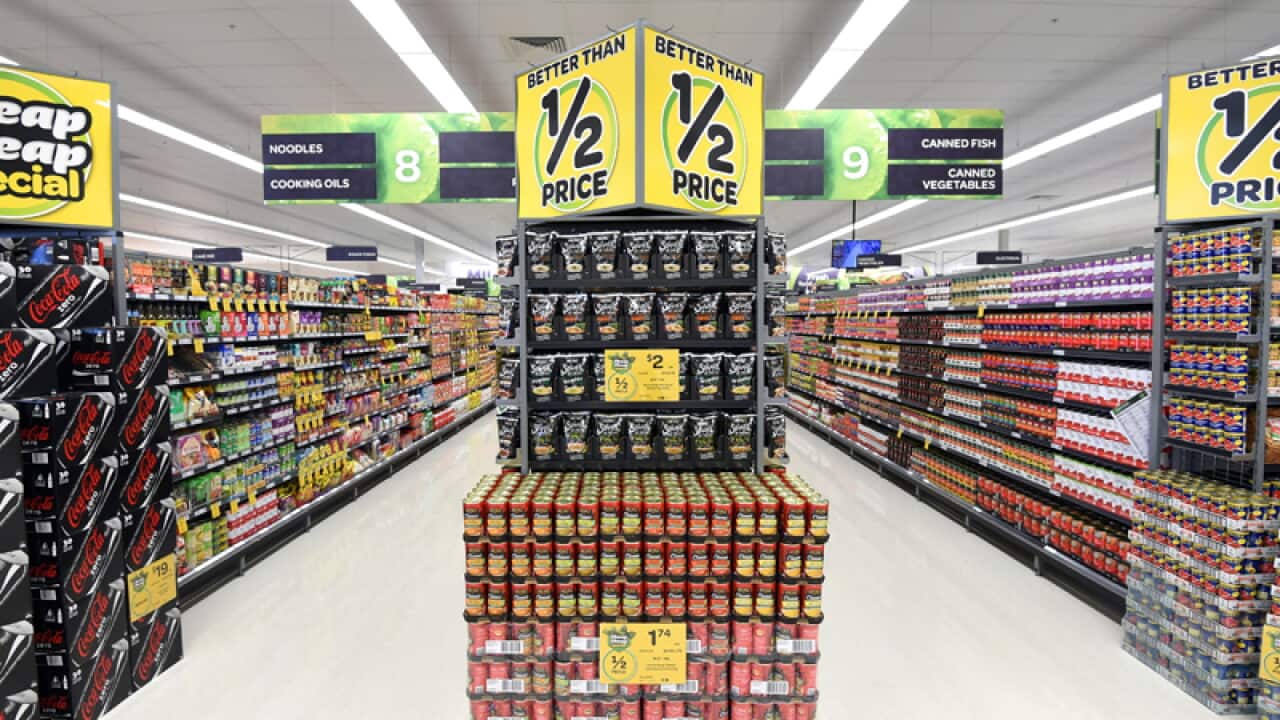
Supermarket price wars and the warmest Autumn on record are giving shoppers more bang for their buck, but it's bad news for the economy.
Retail spending rose just 0.2 per cent in April, and annual growth is holding firm at 3.6 per cent, which is soft by historical standards.
Food retailing, which accounts for 40 per cent of total retail trade, dropped 0.3 per cent in April, the Australian Bureau of Statistics said.
Food sales were just 2.4 per cent higher in the year to April, which is particularly soft given robust population growth, Commonwealth Bank senior economist Gareth Aird says.
It likely reflects aggressive price discounts from Coles and Woolworths amid the growing presence of discount retailer Aldi.
News that makes sense
Your trusted source for staying up-to-date with the world around you. Get free daily news updates and analysis, straight to your inbox.
"This is a win for consumers as it frees up income that can be spent on non-discretionary goods and services," Mr Aird said.
Unseasonably warm weather in April also took a toll on fashion retailers, particularly in Victoria, ANZ senior economist Jo Masters said.
Clothing sales alone fell 0.9 per cent in the month, in line with anecdotes of poor winter wardrobe sales.
Recent annual growth in clothing spending of around nine per cent has now slowed to 4.4 per cent in the year to April.
The Australian Retailers Association said competition from new international players has led to heavy discounting to get shoppers through the doors, often at the expense of margins.
Ms Masters said the retail numbers suggest it is prices, not weak volumes, that are impacting the sector.
That supports ANZ's view that the Reserve Bank is focused on weak price pressures and is likely to cut the cash rate again in the coming months, she said.
Royal Bank of Canada senior economist Su-Lin Ong said the tepid pace of growth isn't surprising given weak consumer confidence in April, a rise in fuel prices and a patchy jobs market.
Stagnant wages growth and high levels of household debt should keep spending below its long run average in 2016, she said.
"This will contribute to the RBA's easing bias which we expect to persist for some time beyond the next cut," Ms Ong said.







