Ready to sing morning prayers, they shuffle into their unique single-room classroom - a remodelled shipping container.
Following a landmark Right to Education Act in 2009, which guarantees free education till the age of 14, civic officials in Thane tried to force parents of street children to send them to regular state schools. The kids showed up late or not at all, and dropped out quickly.
"If we immediately take away these kids to a school, say for five to six hours, firstly because of their socio-economic set up, they will oppose us, and secondly, since they are the earning hands, they will oppose us", said Manish Joshi, a deputy commissioner at the Thane municipal corporation.
"So, instead, officials decided to bring a small school "directly to their doorsteps- on the street where they live, near a traffic signal. This time, the kids stayed."
This 'signal school' was the first of its kind, opening in June last year. To set it up, civic officials cleared a space under the flyover and fenced it off. They set up a small play area at one end with a swing set and a slide, and placed a guard at the gate.
News that makes sense
Your trusted source for staying up-to-date with the world around you. Get free daily news updates and analysis, straight to your inbox.
The container, 30 feet by 10 feet, is painted in bright colours, with the alphabet and numbers, and is fitted with fans and lights. The classroom can accommodate about 35 children, and there is also a teacher's room, and shelves against the walls.
There is a book library and a toy library, and a wash area so the children can bathe every day. There are lockers to keep their uniforms and books, so they don't get damaged or stolen on the street. A doctor comes for regular checks, and a barber gives the boys a haircut every month. The kids' nails are cut.
"Here, we go outside, we get good food, we sleep here and everything is good", said 10-year-old student, Vishal Rajendra Pawar.
At the school, the doors and windows muffle the sounds of the traffic outside. Inside, the children sit on the floor cross-legged in groups, with a teacher, going over their Math, English and writing exercises.
"I want to become a pilot, fly in the skies and see other countries, see the world", said 12-year-old Kalpana Satish.
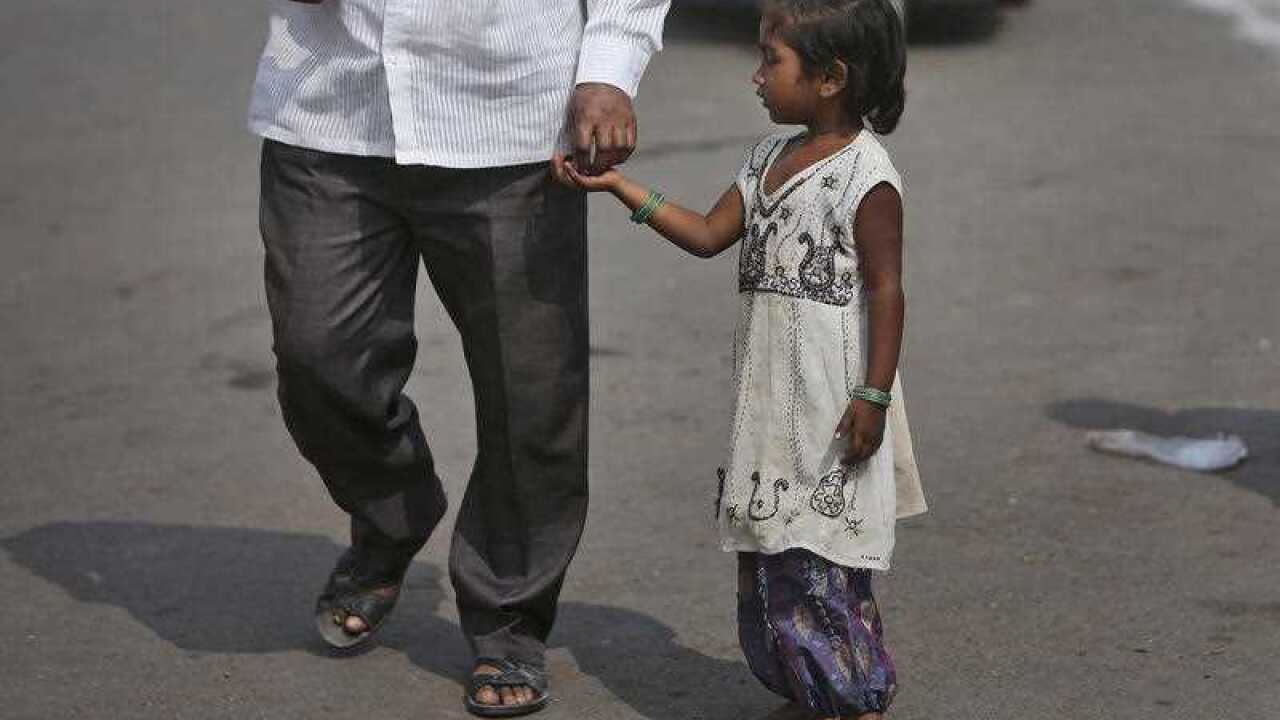
The staff say they spent the initial months teaching the kids about the importance of cleanliness and grooming, to not fight over food or hold out their palms as they were taught to by their parents when they were sent to beg.
"Childhood was missing from these children, so we started with that...(they) used to behave like grown ups, mature boys and girls. They used to abuse each other, fight with each other. So, we tried to teach them how to behave, we didn't start with education", said Aarti Sushant Param, who trains the four full-time teachers at the school as well as a handful of volunteers.
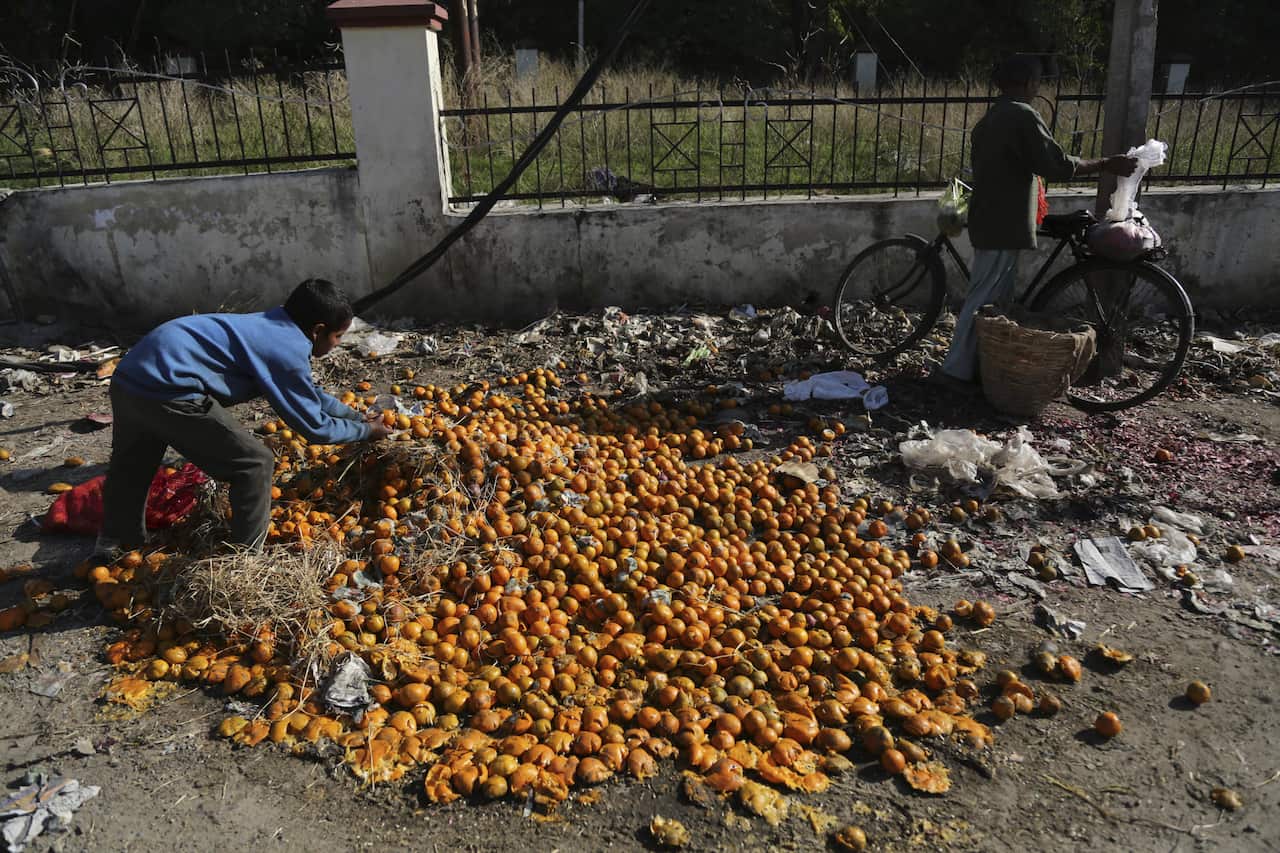
Right opposite the school, the children's relatives and other migrants who came to the city in search of a better life live under the shelter of the flyover, doing odd jobs, selling trinkets and begging at traffic signals to make ends meet.
Since the kids help their parents earn extra money during the rush hour in the morning and evening, the school operates from about 10:30 a.m. to 5:30 p.m.
There is no official data for the number of street children in India, with some charities estimating it to be about 1 million. Most street children accompany their families as they migrate from rural areas to the cities.
Mumbai, India's financial hub and a magnet for migrants, has more than 37,000 street children in the city, according to a 2013 study by charity ActionAid and the Tata Institute of Social Sciences. Unable to afford even the cheapest housing, migrants often spill into nearby cities like Thane.
Bhatu Sawant, the head of the non-profit Samarth Bharat Vyaspith, said signal schools are intended to be temporary, as it is hoped the children will be able to integrate into society.
"The day this school is closed down, I will perhaps feel on that day that our mission has been accomplished",he said.
India's literacy rate rose to 73 percent in 2011 from 65 percent a decade earlier, and enrolment rates in schools have climbed. But at least 6 million children aged six to 13 are still out of the school system, according to a 2014 survey.
Sawant has asked civic officials for two more remodelled containers for a pre-school and a high school. He also plans to bring children at other traffic signals on a school bus from June.
The municipal corporation is considering skills training for the parents, and may help them find jobs and homes. But in a city of high rents and little affordable housing, this is a challenge, Joshi said.