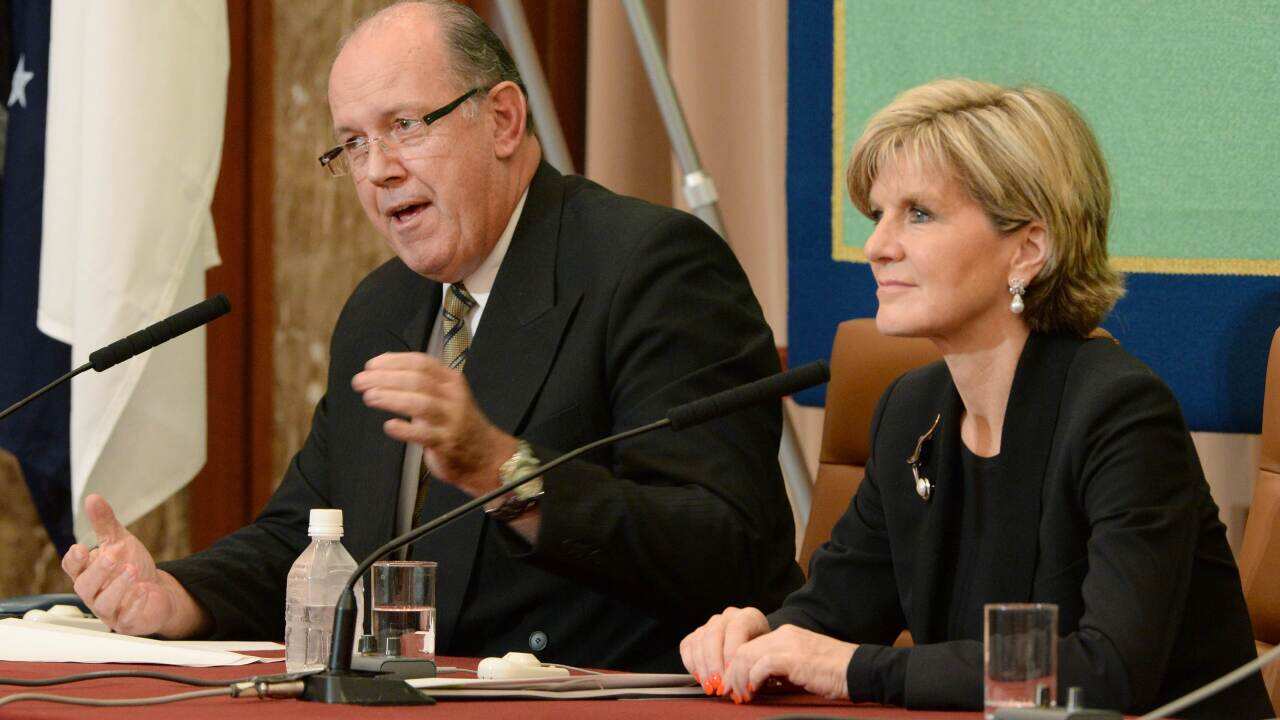
In a National Press Club address today, Foreign Minister Julie Bishop is set outline the government's "aid for trade" agenda for the $5 billion dollar aid budget, including new benchmarks to link funding to program performance.
Ms Bishop says she wants high standards in value for money in 85 per cent of aid investments or they will be cancelled within a year.
"To ensure not only that we meet those benchmarks but that recipient governments also take responsibliity for the delivery of aid and the implementation of aid programs," Minister Bishop told the ABC.
"...We recognise that aid alone is not a panacea for poverty and so we're bringing a whole new fresh approach to it."
The government's "aid for trade" mentality has been well canvassed by the foreign minister, who sees Australia's assistance program not as charity but an investment in the region.
The new strategy will stress stronger partnerships with the private sector, including by encouraging companies to devise innovative ways of reducing poverty.
It's also likely gender programs will be made a priority, with Ms Bishop placing particular emphasis on the economic empowerment of women and girls in past policy speeches.
ANU Professor Stephen Howes said these two initiatives looked set to feature prominently in the government's new strategy.
"I wouldn't be surprised if there were a couple of announcements on new sorts of aid projects, perhaps with the private sector or gender (programs) to kickstart the new strategy," he told AAP on Tuesday.
The funding for these initiatives could come from a large yet-unexplained $380 million allocation in the federal budget for "cross regional programs".
It was one of the few programs spared in this year's aid budget, with the government slashing overall spending by $7.6 billion over five years.
The biggest question mark hangs over the benchmarks policy, with charities concerned the region's poorest will only suffer more if funding is cut because performance targets aren't met.
It's also not clear how the success of programs linked to less tangible outcomes like governance and civil society will be measured.
"How you actually link allocations to performance is actually very difficult," Professor Howes said.
Share


