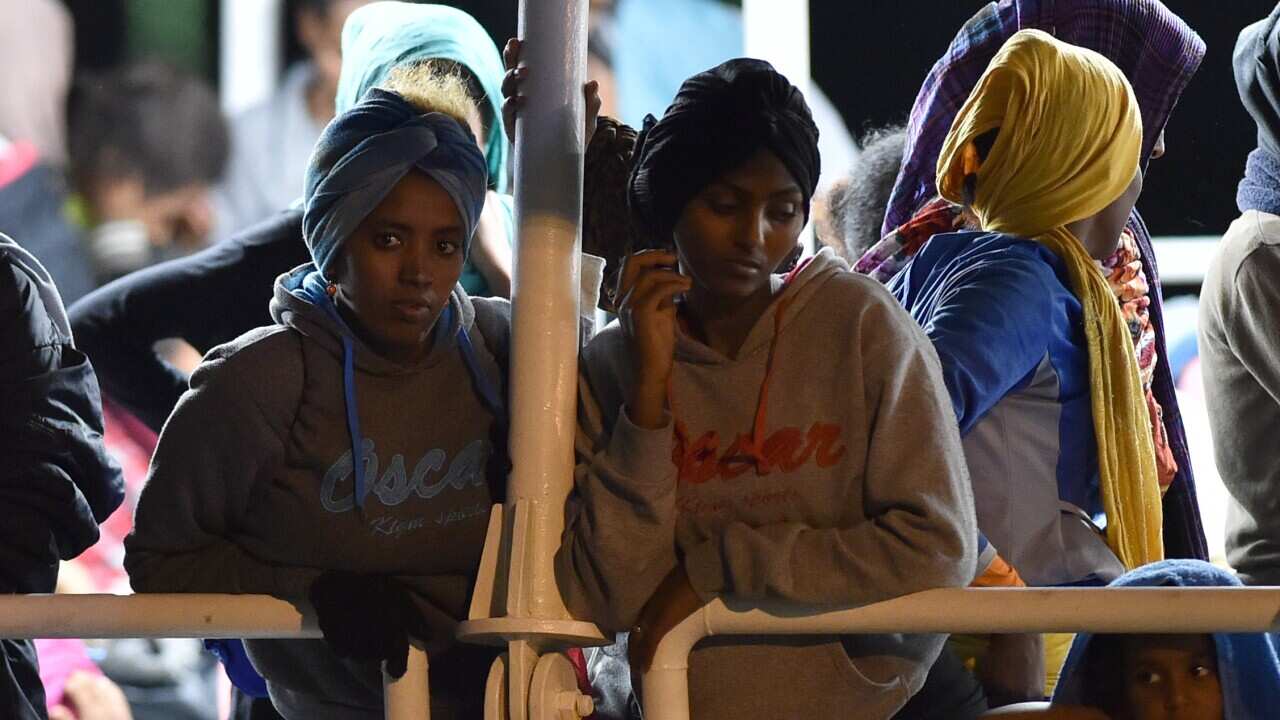
Ministers from the three countries put on a show of unity after the arrival in Europe of thousands of migrants, who make perilous Mediterranean crossings from Libya, strained the resources of Italy and Greece and raised tension with northern European states that are the destinations of many migrants.
"You have three friends in front of you," French Interior Minister Bernard Cazeneuve said at a joint press conference with his Italian and German counterparts in a gesture to defuse the simmering spat.
"France, together with Germany and Italy support a relocation and readmission mechanism," Cazeneuve said during a break from a meetings of EU interior ministers in Luxembourg to discuss a plan to tackle the migrant emergency.
As they deliberated, police began removing mainly African migrants from makeshift seaside camps on the Italian-French border. Around 300 had collected on the Italian side in hopes of proceeding into France and onwards to northern Europe where relatives live and job chances might be better.
France and Austria have stepped up border controls on migrants coming from Italy, turning back hundreds and leaving growing numbers camped out in railway stations in Rome and Milan.
In a sign of persisting discord over how to deal with the migrant crisis, Italian Prime Minister Matteo Renzi threatened "retaliation" if other EU countries did not agree to take their fair share of refugees that land on Italy's shores.
In an interview with state broadcaster RAI, Renzi said he was confident a deal would be reached for half of all asylum-seekers to be distributed around the EU on a quota system. However, if none was reached, Italy would consider the "retaliatory weapon" of issuing migrants with temporary permits of stay which would allow them to move freely inside the EU.
The European Commission has proposed that EU governments relocate 24,000 asylum-seekers from Italy and 16,000 from Greece over the next two years.
Distinguishing refugees from economic migrants
The plan envisages that potential refugees should be immediately sorted out from illegal economic migrants in EU-managed "hotspots" in Italy and Greece, where European officials would make sure that migrants are fingerprinted.
In a letter to ministers, the EU migration commissioner, Dimitris Avramopoulos, outlined new measures to make such repatriations more effective.
He proposed changing the mandate of the EU border protection agency, Frontex, to allow it to repatriate migrants on its own initiative and to support an individual EU government that wished to do so itself. At the moment, Frontex can only coordinate operations involving several EU countries.
To make the return policy more effective, the EU needs to sign agreements with the countries of origin of migrants in Africa or Asia, which to date have mostly been reluctant to take their citizens back.
Despite the steps forward on the handling of illegal migrants, EU ministers remain divided over the major sticking points blocking the approval of the relocation plan.
Eastern and central European countries insist on a voluntary mechanism to take in refugees, contrary to the mandatory quota proposed by the EU executive.
The criteria for allocating asylum seekers to EU countries also remain disputed and will require further discussions among EU leaders at their summit in Brussels on June 25-26.
Share


