In brief
- A summer of record-breaking heatwaves and drought has taken a toll on France.
- The unusually hot and dry conditions have started to affect France's beloved and protected cheesemakers.
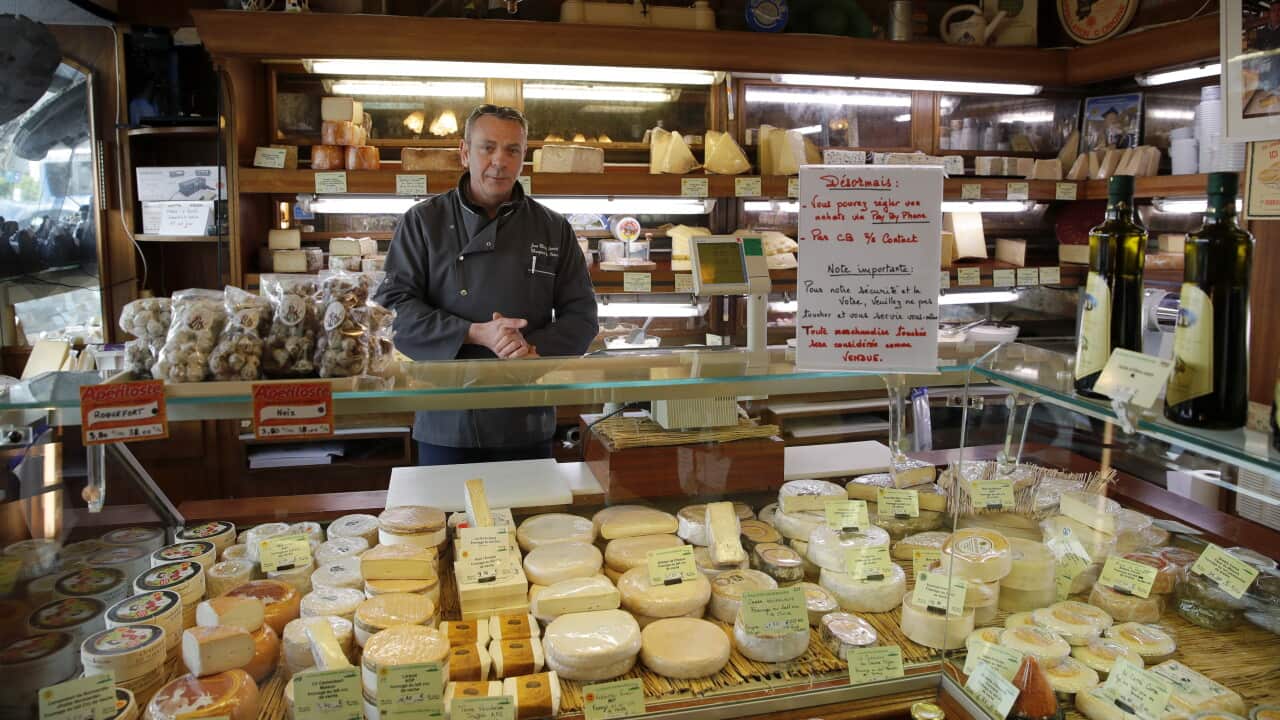
Widespread drought and record-breaking heatwaves have forced France to relax some of its famously strict rules on cheese production, with authorities announcing special measures for abondance, beaufort and comte.
France's vast array of local cheeses are a source of national pride, and authorities go to great lengths to protect traditional production methods and ensure authenticity.
To earn a coveted "appellation d'origine protegee" (Protected Designation of Origin) label — and the right to give their cheese a particular protected name — producers must follow rigid rules on where their animals graze and what they eat.
But the summer's drought, which affected 95 per cent of mainland France in July, has left normally rich pastures dry and bare.
In response, the government said this week that producers of abondance, beaufort and comte, hard cheeses made from the raw milk of cows grazing in the Alps and Jura mountains, can supplement the animals' diet with more fodder and grain brought in from elsewhere.
News that makes sense
Your trusted source for staying up-to-date with the world around you. Get free daily news updates and analysis, straight to your inbox.
Growth on permanent grasslands as of 10 August is a third less than the 1989-2018 average, according to the agriculture ministry's statistical service.
The fodder situation is "highly degraded" in almost all regions, the ministry said earlier this month.
The National Institute of Origin and Quality (INAO), the government agency that administers and enforces rules of origin, says it will also grant temporary relief for several other cheeses including reblochon, cantal, bleu d'Auvergne, and fourme d'Ambert.
Europe's record-breaking summer heat has caused thousands of excess deaths, set wildfires blazing and seen major rivers drop to record lows.
In France, farmers are bracing for their smallest corn crop since 1980, and winegrowers are reporting some of the earliest harvests on record.
Scientists say human-caused climate change has intensified the drought, with extreme heat rather than low rainfall driving the dry conditions.
For the latest from SBS News, download our app and subscribe to our newsletter.







