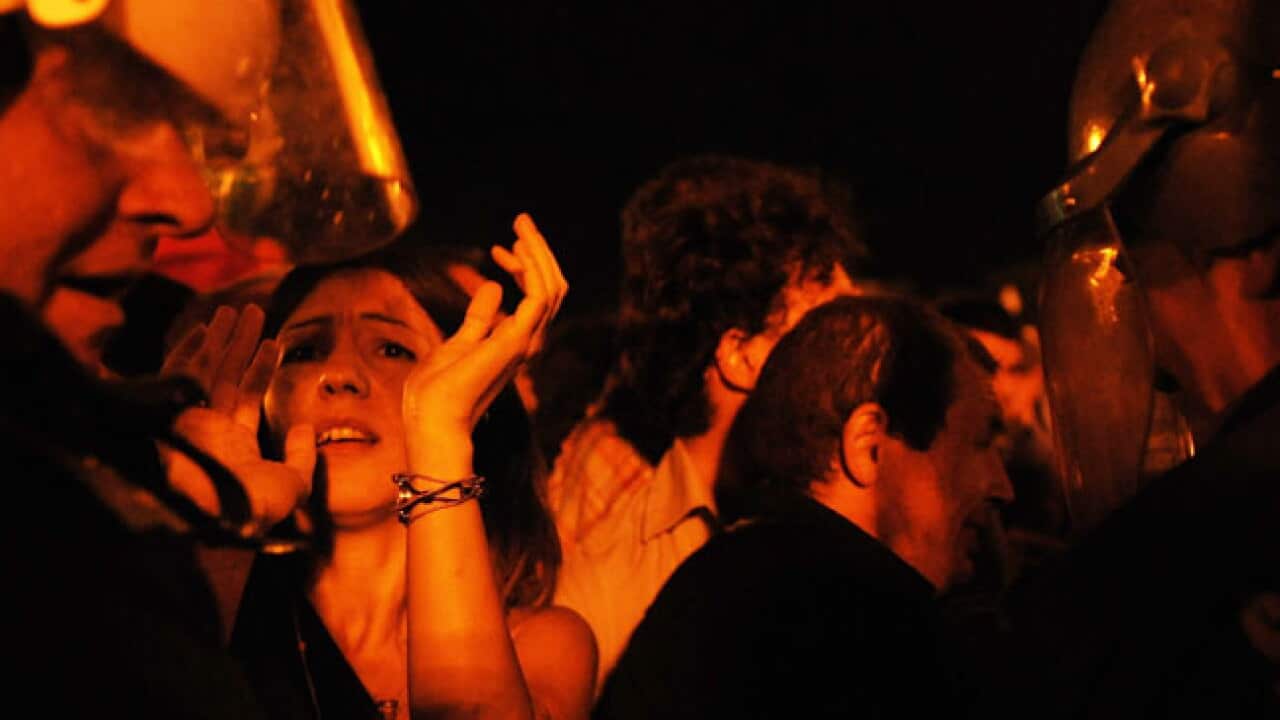
Calls grew for fresh elections in the EU's poorest country Bulgaria on Wednesday after a 40th straight day of anti-government protests turned violent, leaving at least 20 people injured.
The clashes broke out overnight as riot police tried to bring out a bus to evacuate some of the 109 ministers, MPs, journalists and others trapped inside parliament during a blockade by some 2,000 protesters.
Shouting slogans such as "Mafia", the demonstrators hurled stones and water bottles at the bus, smashing several windows which were lined with police shields, an AFP reporter at the scene said.
News that makes sense
Your trusted source for staying up-to-date with the world around you. Get free daily news updates and analysis, straight to your inbox.
Several hours later and after repeated attempts the stately parliament building in downtown Sofia was finally emptied at around 5:00 am (0200 GMT) after police with helmets, shields and batons broke up the crowd into smaller groups.
Eighteen people, including three police officers -- one of whom suffered a concussion -- were treated in hospital for head injuries and bruises. Several others were treated at the scene.
Heavy construction machinery moved in to tear down barricades made of park benches, garbage containers and paving stones as protesters dispersed, clearly outnumbered by police by daybreak.
Protests have been held in Sofia every evening since June 14 by thousands of people fed up with poverty and corruption and calling for the government to resign. Until now they have been peaceful.
The government, backed by the Socialists and headed by non-partisan Prime Minister Plamen Oresharski, has only been in office following elections on May 12.
The previous right-wing administration of Boyko Borisov resigned in February, brought down by nationwide protests that saw eight people set themselves on fire, six of whom died.
The new premier has so far resisted calls to resign and call yet another round of elections, saying doing so would exacerbate the crisis and further damage the fragile economy.
But analyst Tsvetozar Tomov told AFP that fresh elections now seemed inevitable, though the result would most likely be similar to the May 12 vote.
"This would exacerbate the crisis," Tomov said. "There is a political war being waged between the people and those in power."
The head of the Socialists, Sergey Stanishev, slammed "the ugly scenes" outside parliament and urged the prosecution and interior ministry to punish the instigators and guarantee the normal functioning of the legislature.
At a news conference at party headquarters -- while a small group of protestors demonstrated outside -- Stanishev also accused Borisov and his GERB party of stirring up the rallies. Borisov has called for new elections.
Rifts inside the Socialist party ranks deepened however on Wednesday with party grandee and ex-foreign minister Ivaylo Kalfin -- now an MEP -- calling for an early vote for next May to coincide with European elections.
Bulgaria's two main trade unions have also declared themselves in favour of early elections.
Speaker of parliament Mihail Mikov urged lawmakers to stay away from the legislature on Wednesday. The chamber had been due to debate a revised 2013 budget.
"Parliamentarians were not elected to work under ultimatums and pressure," Mikov told a press conference.
Brussels has long taken former communist Bulgaria, which joined the EU in 2007, to task over its slow progress in tackling graft and organised crime.
One of the demonstrators' key demands has been for changes to electoral laws in order to get new parties untainted by corruption represented, but progress has become bogged down and no such changes have been introduced yet.
The minority technocrat cabinet has support from just 120 Socialist and Turkish minority party lawmakers in the 240-seat legislature.
GERB has boycotted parliament for the past month and the passing of new legislation hinges on backing from the unpredictable ultra-nationalist Ataka party.
The European Commission on Wednesday said it had followed Tuesday night's events with "concern" and called on all sides "to show restraint".







