Moves in Britain to impose a tax on single-use plastic carrier bags have prompted a renewed push for a nationwide approach to their use in Australia.
Environmental advocates are calling for either a ban or a levy on the use of disposable plastic bags.
Jackie Anderson and her husband Daniel run an independent supermarket in Melbourne's inner west.
They take pride in interacting with customers; chatting about their produce, the weather or even sport.
They also like to encourage shoppers to make more environmentally friendly choices.
News that makes sense
Your trusted source for staying up-to-date with the world around you. Get free daily news updates and analysis, straight to your inbox.
Daniel Anderson said their store used only paper bags or cardboard boxes.
"We grew up in South Australia where they've actually outlawed the use of plastic bags, full stop,” he said. “I think it was a great move in that state and it certainly has stopped the waste of plastic bags all over the roadside and on the streets. I think it's a really sensible and common sense approach to use paper bags as much as possible.”
Mr Anderson said customers had welcomed the measure.
"A lot of them prefer to actually use boxes…and they actually use the bags and bring them back to recycle them. So quite often they're not just using the bags once but using them a number of times.”
Dramatic reduction
South Australia banned the use of disposable plastic bags in 2009.
The initiative saw a 45 per cent reduction in plastic waste in the state.
Since then the Northern Territory, Tasmania and the ACT have all moved to put bans in place.
Currently Victoria, New South Wales, Queensland and WA have no restrictions on disposable bags.
England recently moved to charge consumers for using plastic carrier bags, coming into line with the rest of the United Kingdom.
Shoppers there will have to pay a fee to use disposable bags as part of a government scheme to reduce litter and protect wildlife.
Jeff Angel from the environmental group Total Environment Centre said he'd like to see other Australian states move in the same direction.
"We're strongly in support of a ban on the lightweight plastic bags but we don't have any confidence that a national process would act urgently. Experience shows that it takes many years. So we're calling for each state to implement legislation like we already have in the Northern Territory and South Australia.”
But Australian Greens Senator Lee Rhiannon said it was not just a problem for the states.
"While the laws in terms of banning plastic bags are coming at a state level, clearly the federal minister driving change here can have a big impact,” she said. “So it's recognised under our national environment laws.
“We are certainly pushing the government to take a proactive role in ensuring all governments have a consistent approach to plastic debris and that can start with bringing in this uniform ban on plastic bags.”
Federal government's position
A statement from the office of the federal Environment Minister, Greg Hunt, said the government supported moves to reduce waste and increase recycling.
It said while actions to reduce plastic bag waste are best addressed by states and territories, the Commonwealth is working with New South Wales on identifying the most effective means to reduce plastic waste.
That also included ensuring effective and coordinated approaches among jurisdictions.
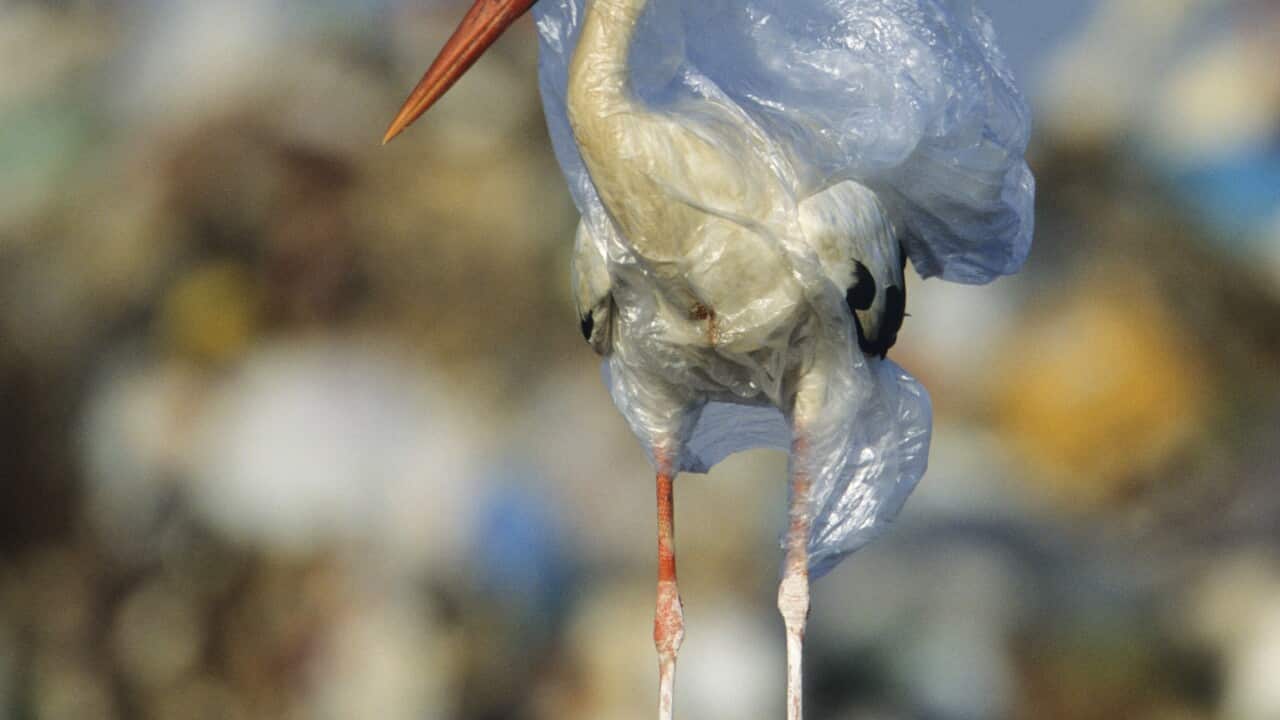
Jeff Angel said disposable plastic bags posed a very broad threat to Australia's environment.
"The facts tell us that we have about 150 million plastic bags littered every year in Australia. The plastic pollution plague in the landscape enter the food chain and marine animals, sea birds, whales, turtles, eat them and they often die from the ingestion of plastic bags.”
Environmentalists said disposable plastic bags were harmful to the environment, especially marine life.
Big numbers
It's estimated that we use about six billion plastic bags a year.
That's about 260 bags per person.
Supermarket bags make up half that figure.
Woolworths said it complied with state and territory legislation regarding shopping bags, and its customers appreciated the convenience that plastic bags offered.
Its rival, Coles, said it did not support a ban on single-use plastic bags because customers have said they would like to make an informed choice.
However German supermarket chain ALDI does support a complete ban on carrier bags, saying it has never offered free plastic bags to its shoppers.







