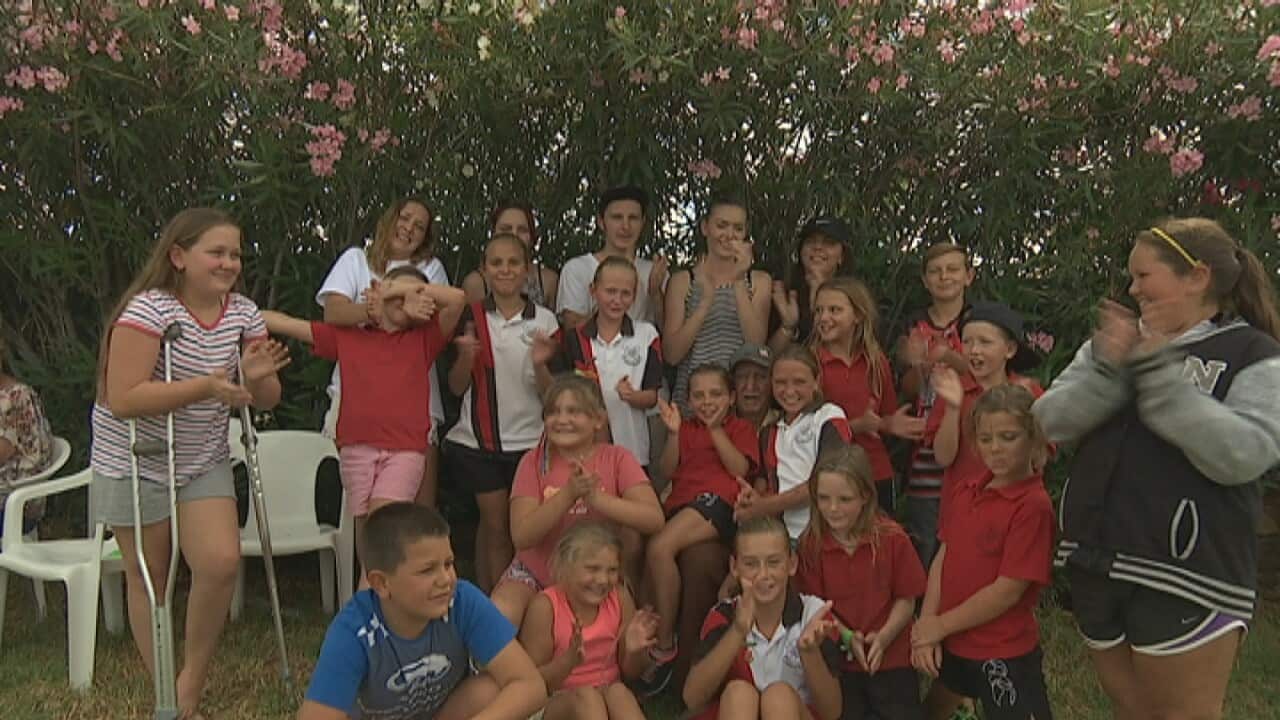
On another hot day in the NSW town of Lightning Ridge, Joe Vrtacnik's front yard resembles a playground.
Well over a dozen of his grandchildren have just finished school, and decided to pop around for some games and soft drinks.
"I love it," Mr Vrtacnik said. "They all love me, and I love all of them.
News that makes sense
Your trusted source for staying up-to-date with the world around you. Get free daily news updates and analysis, straight to your inbox.
"They keep me under control. They tell me not to smoke, not to drink. They're nice kids. All of them."
These days Mr Vrtacnik says he basks in the love of his one hundred grand- and great-grandchildren who live across the country.
With Christmas approaching the numbers posed a unique set of challenges - such as how many people would he invite over?
"Oh, there will be a lot of them. But they invited me everywhere. I could be drunk for months," he joked.
From Europe to Australia
Mr Vrtacnik, or "Scratchy" as he was eventually called, was born in 1930 in Slovenia - a land ravaged by the Nazis during the Second World War.
After fighting with the partisan army, he fled to Italy, then later joined a flood of post-war migrants bound for Australia.
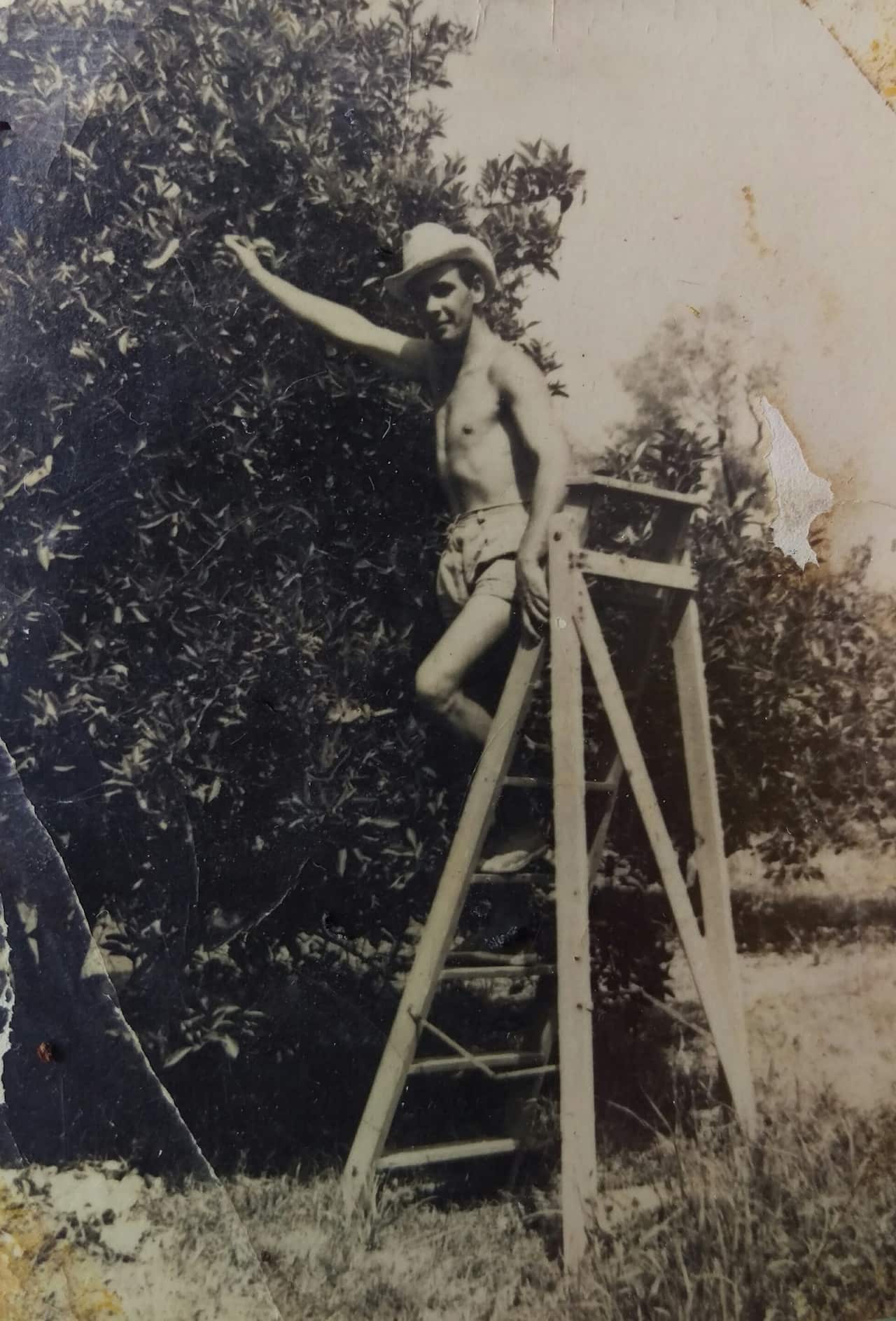
Working as a fencer in rural NSW, he eventually employed dozens of men, including other migrants and Aboriginal people.
"I look at people as they are," he explained. "Doesn't matter what colour or what religion.
"Aboriginal people, they are good at giving things, sharing things. They work one week and have a week off. Them blokes who work, they share [the work] around.
"That's a very good thing white people don't have."
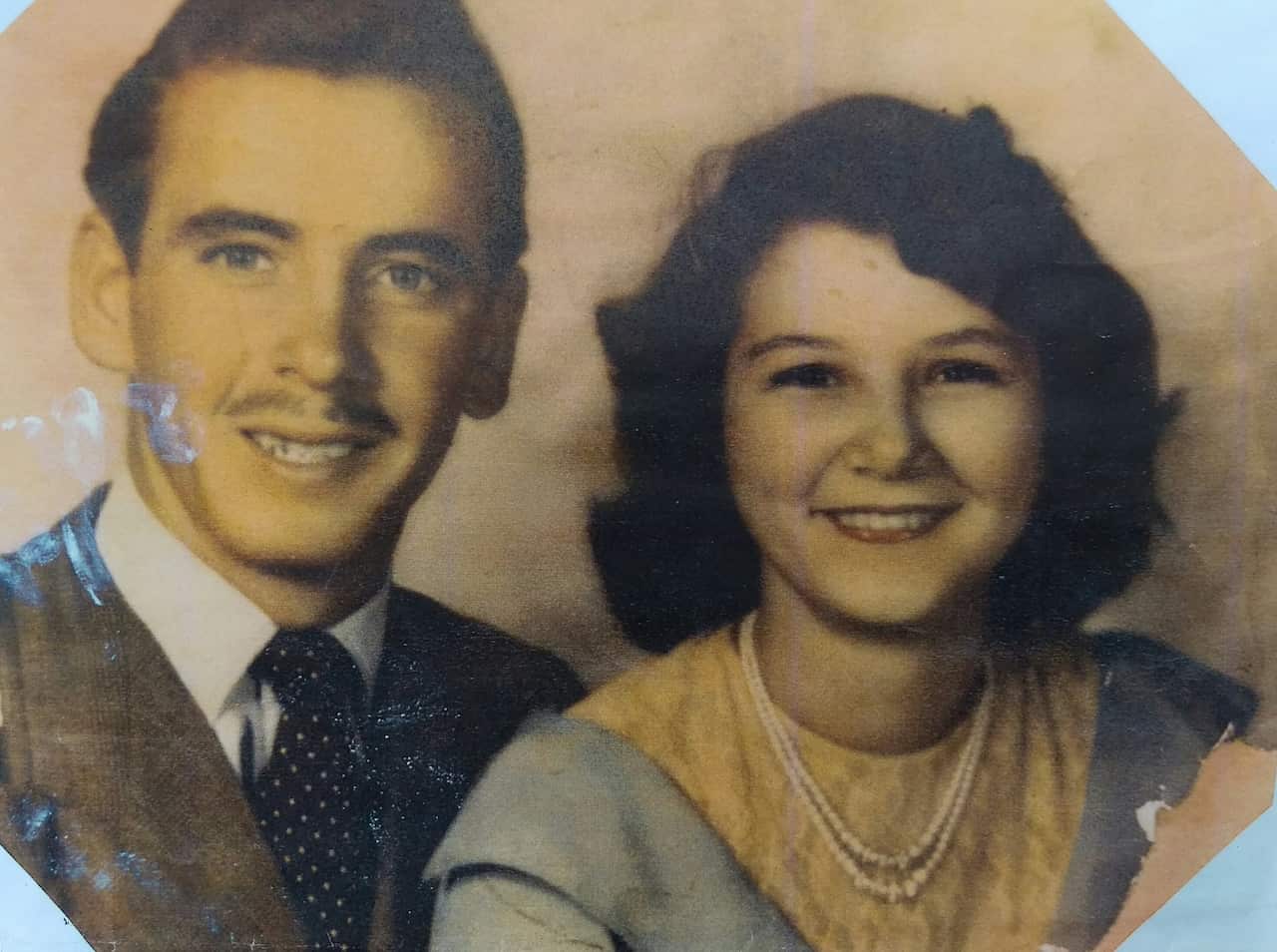
In 1950, Mr Vrtacnik met Joyce Morris, an Aboriginal woman he married and had four children with at the time when racism was the law.
"She was a very pretty girl," Mr Vrtacnik said. "In them days, Aboriginal girls couldn't go in a pub.
"I go in the pub, and I argue my point. I said, 'Alright, I won't come here, and I'll make sure that a lot of other people won't come in the pub.' So then I was allowed, and her allowed."
Mr Vrtacnik's second eldest daughter, Olga Seaton, said her father's strong work ethic rubbed off on her growing up as the family lived off the land.
"He was tough," she said.
"We were always out in the fencing camp, helping him thread the wire through the holes, even though sometimes we made a mistake and had to go all the way back and do it all over again. But we still had fun."
Mr Vrtacnik's marriage eventually ended. But even when they both started new relationships, Ms Seaton said it didn't stop her parents from remaining close.
"It was hard, but they were friends," she said.
"Mum lived here. Dad lived here. If Dad went to Charleville to live, Mum was in Charleville living, too. So we always seemed to be together."
A growing family tree
Mr Vrtacnik soon had five more children with another Aboriginal woman, Patricia Smith, before her death in the mid 1970s.
Their eldest son, Patrick Vrtacnik, said it was around that time his father took him to meet his extended family back in Slovenia.
"In the first two weeks of me being there and not even knowing the language, I was singing and talking and everything," he said.
"I learned the language like nothing. After seven months over there, I came back to Australia, and I couldn't even speak English."
Over time, Mr Vrtacnik's children spread out and began their own lives. The family tree has since branched out to towns including Wee Waa, Gadooga, Dubbo and Orange.
Olga Seaton says 35 of Mr Vrtacknik's grandchildren and great-grandchildren attend the same primary school in Lightning Ridge.
"I remember my son, when he was going to school, they asked him what nationality he was," she said.
"He said, 'Well, my grandmother's Aboriginal, and my grandfather's a Yugoslav, so I'm a Wogorigine.' She thought that was great."
Despite having such a big family already, Joe Vrtacnik said he was keen for even more children to eventually join in calling him 'Pop Scratch'.
"I look still for more," he smiled. "Let them go!"







