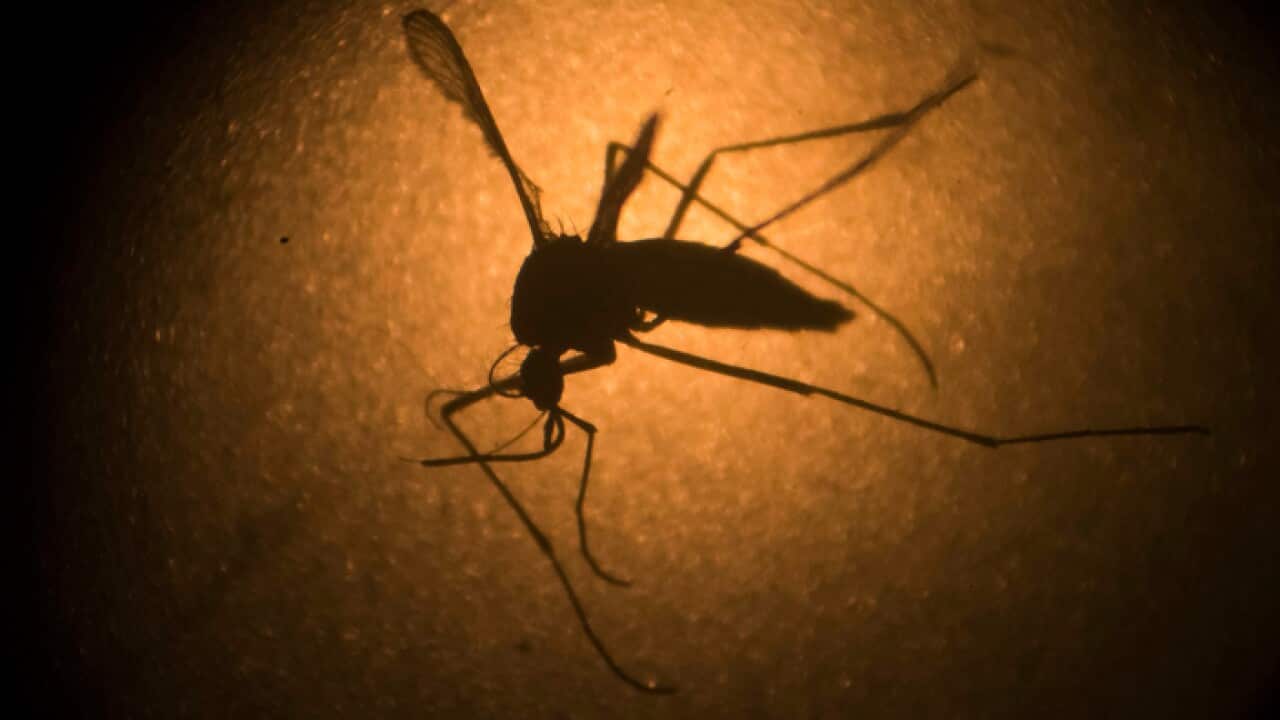
Australian researchers at the centre of the fight to eradicate key diseases transmitted by mosquitos have received a much-needed $50 million boost to further research efforts.
The donation, jointly made by the Bill and Melinda Gates Foundation and the Wellcome Trust, will provide funding for Monash University’s World Mosquito Program for at least three years.
That program is making major inroads in the global fight against dengue, Zika and the less well-known chikungunya disease.
Vice chancellor Margaret Gardner said the research could revolutionise the health of millions around the world.
“We know it’s already demonstrated what it can wipe out, how it can do it, and that we are actually going to see in our lifetimes, see one of those things that we wait for, something that transforms people’s lives,” she said.
News that makes sense
Your trusted source for staying up-to-date with the world around you. Get free daily news updates and analysis, straight to your inbox.
“People look and say once there was this disease. Once it did this, once it wreaked that devastation but, in our lifetimes, no longer.”

The deadly effects of mosquito-borne viruses have made headlines in recent years – the Zika virus outbreak triggered widespread panic, and has been linked to severe birth defects in almost 30 countries.
Dengue is regarded by the World Health Organisation as the most critical of all mosquito-borne viruses – vastly increasing its reach over the past 50 years and leaving more than 40 per cent of the world’s population at risk.
The project which operates in 12 countries uses natural bacteria to reduce the likelihood of mosquitos transmitting viruses, while also posing no risk to existing ecosystems.
Although the program has already has a positive impact in these countries, Professor Scott O’Neill from the World Mosquito Program is ambitious about what’s next.
“This intervention, we believe, will work simultaneously on all of those diseases that are all transmitted by the same mosquito,” he said.
“There’s a big need and our ambition is quite large. While we are working in 12 countries now, one of our key goals is to be able to expand that, to be in most of the countries in the world within the next 10 years where Dengue and these other diseases are a major problem.”







