

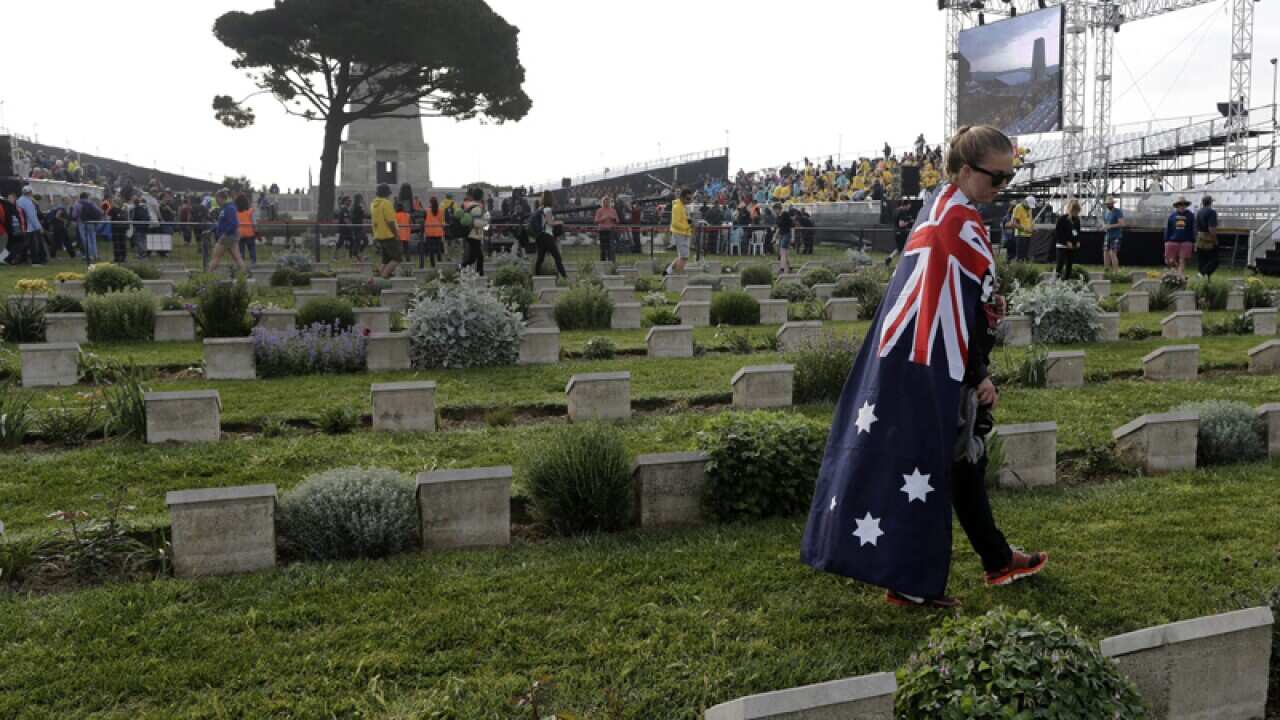
Australia has Anzac Day. Turkey has Canakkale Week.
For a lot of Australians a visit to Gallipoli is a pilgrimage to a piece of sacred Australian ground across the seas.
And for a long time, Turkey largely left the Australians and the New Zealanders to it, but things have changed in recent years.
Around two million Turks now travel to Canakkale province to visit the Gallipoli Peninsula each year, paying tribute to the nearly 87,000 Turkish soldiers who died defending their homeland during the nine months of the campaign.
On their visits, they stop at some of the many memorials to Turkish soldiers have been built on the peninsula in recent decades.
News that makes sense
Your trusted source for staying up-to-date with the world around you. Get free daily news updates and analysis, straight to your inbox.
University of Technology Sydney researcher Burcu Cevik says there has been a change in Turkish attitudes to the Gallipoli invasion over the past decade or so, with much of that in reaction to the effort shown Australia and New Zealand.
In 1990 former Australian Prime Minister Bob Hawke led a group of Anzac veterans to Gallipoli for the 75th anniversary dawn service, at which he said the place was "in one sense, a part of Australia".
That high-profile visit triggered a stream of visitors that turned into a flood of up to 15,000 pilgrims some years later.
Organisers had to cap numbers for the 2015 event to 8,000 places for Australians and 2,000 for Kiwis.
Ms Cevik, who is working on her PhD and researches the memorials and commemoration of WWI, says allied memorials at Gallipoli were built by 1926 but many of the Turkish memorials now dotting the peninsula were built after Australia started commemorations in 1990.
In 2003 the Turkish government introduced a Canakkale Week history program in schools, featuring essay writing, drawing and poetry competitions.
"Australians and New Zealanders did a better job of commemorating it so that became a bit of competition," Ms Cevik says.
The Turkish attitude was that "it was important for them but it was more important for us so we should be more present".
Gallipoli has also become an ideological battleground in Turkey.
Gallipoli - or the Battle of Canakkale as Turks know it - was the anvil on which Mustafa Kemal Ataturk, the father of modern Turkey, forged his reputation as a successful division commander of the victorious Ottoman forces.
In recent years, however, Ataturk's legacy has been played down by conservative politicians and religious groups keen to focus more on the Islamic martyrs of Gallipoli and less on the hero who created a secular republic.
"I think there isn't a monolithic Turkish version (of Gallipoli). It's a very contested place and a very contested memory," Ms Cevik says.
"There is a sort of battle for the memory of Gallipoli going on."