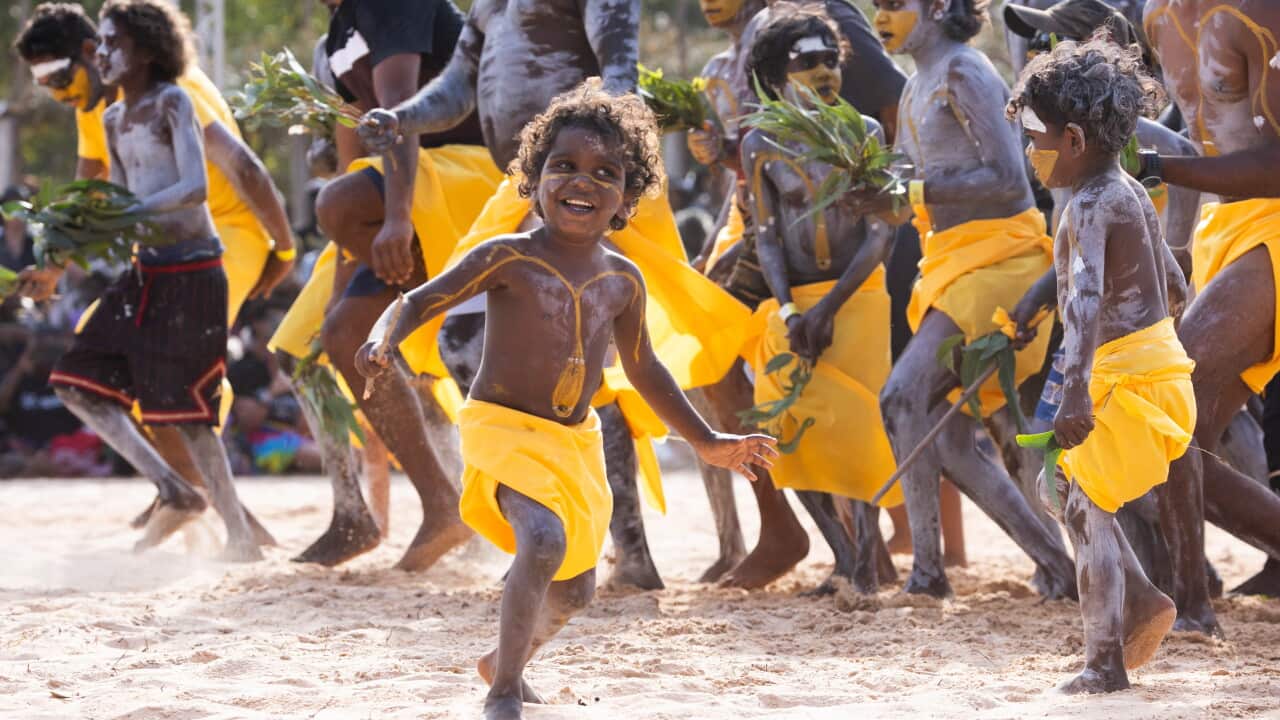
In brief
- This year's edition of Australia's largest Indigenous cultural gathering starts on Friday.
- Each year, Garma brings together Yolŋu Elders, community leaders, artists, politicians and visitors from across the country.
This article contains references to Indigenous people who have passed.
Thousands of people will travel to north-east Arnhem Land this week as the Garma Festival returns to Yolŋu Country for four days of ceremony, culture and national conversation.
Held on Gumatj Country in the Northern Territory, Garma remains Australia's largest Indigenous cultural gathering.
This year marks more than a quarter of a century since it started as a small community gathering, and will run from 31 July until 3 August.
Each year it brings together Yolŋu Elders, artists, young people, political leaders, academics, business representatives and visitors from across the country.
News that makes sense
Your trusted source for staying up-to-date with the world around you. Get free daily news updates and analysis, straight to your inbox.
It is a place where ancient ceremony sits alongside some of Australia's biggest conversations about First Nations policy.
This year, those discussions will unfold without Prime Minister Anthony Albanese, despite his commitment last year to attend every Garma while serving as prime minister.
What is Garma Festival?
Hosted by the Yothu Yindi Foundation since 1999, Garma was established to celebrate and strengthen Yolŋu culture while creating a place where Aboriginal knowledge, leadership and ideas could be shared with the broader Australian community.
The word Garma comes from Yolŋu Matha and refers to a meeting place where different ideas come together through a process of two-way learning.
The significance of Gulkula
That philosophy remains central to the festival today. While Garma is grounded in Yolŋu ceremony and tradition, it has also become one of Australia's most influential forums for discussion on Aboriginal and Torres Strait Islander affairs.
Each year, governments, community organisations, academics and industry leaders travel to Arnhem Land to listen, learn and engage directly with Yolŋu leaders on Country.
Garma is held at Gulkula, a sacred ceremonial site on Gumatj Country near Nhulunbuy in north-east Arnhem Land.
Surrounded by stringybark forest and overlooking the Gulf of Carpentaria, Gulkula has been a place of ceremony and renewal for generations.
According to Yolŋu tradition, it is where the ancestor Ganbulapula introduced the yidaki into Yolŋu life, making it one of the region's most culturally significant places.
Unlike many conferences, Garma is held on Yolŋu Country and led on Yolŋu terms.
Rather than Aboriginal leaders travelling to Canberra, governments, institutions and organisations travel to Arnhem Land, placing First Nations culture, knowledge and authority at the centre of the national conversation.
Visitors camp on Country throughout the four-day festival and are asked to observe cultural protocols guided by their Yolŋu hosts.
Where tradition is shared and strengthened
While Garma has become one of Australia's most influential Indigenous policy forums, culture remains at its heart.
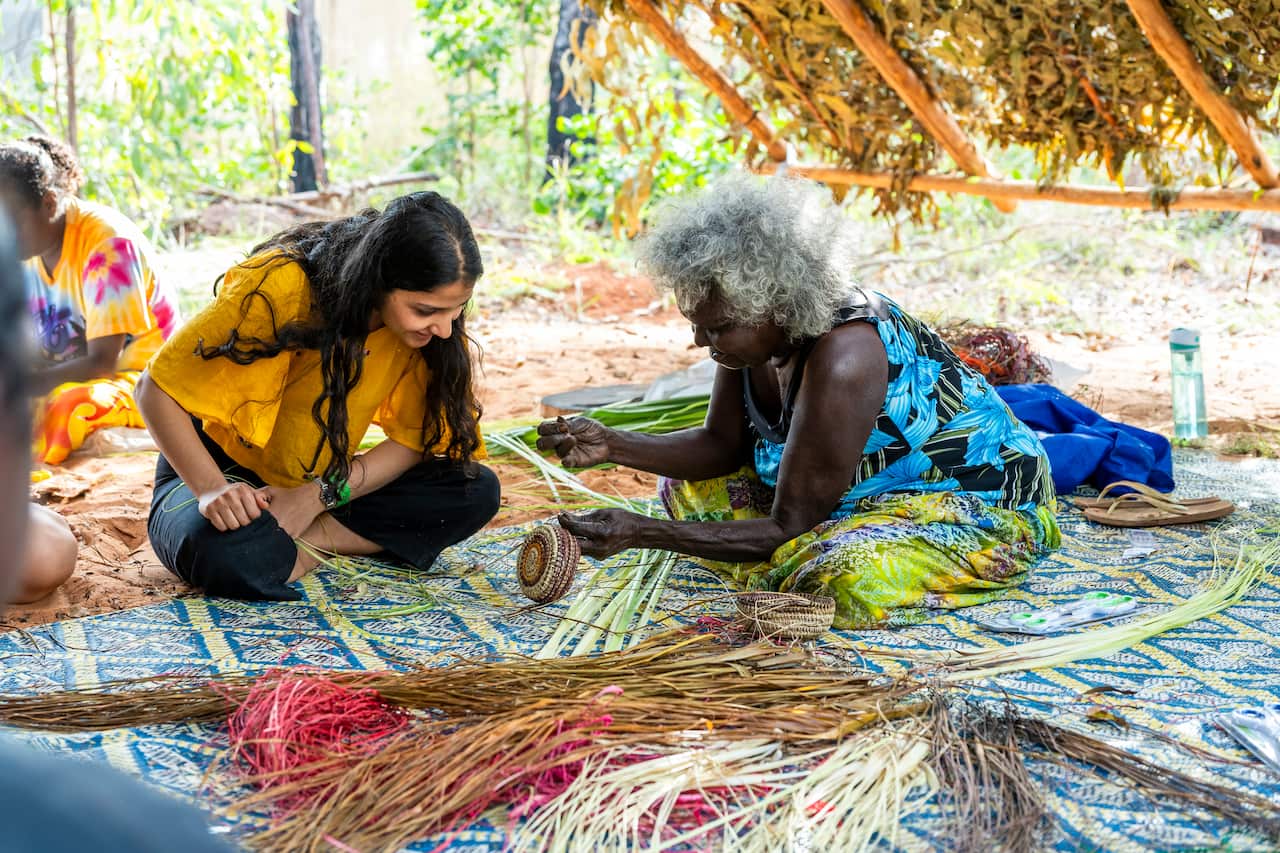
Each day features Buŋgul (ceremonial dance), manikay (song), storytelling and miny'tji (art), shared by Elders and families in the open air. Workshops, youth forums, music performances and exhibitions celebrate the strength and diversity of Aboriginal culture across Arnhem Land and beyond.
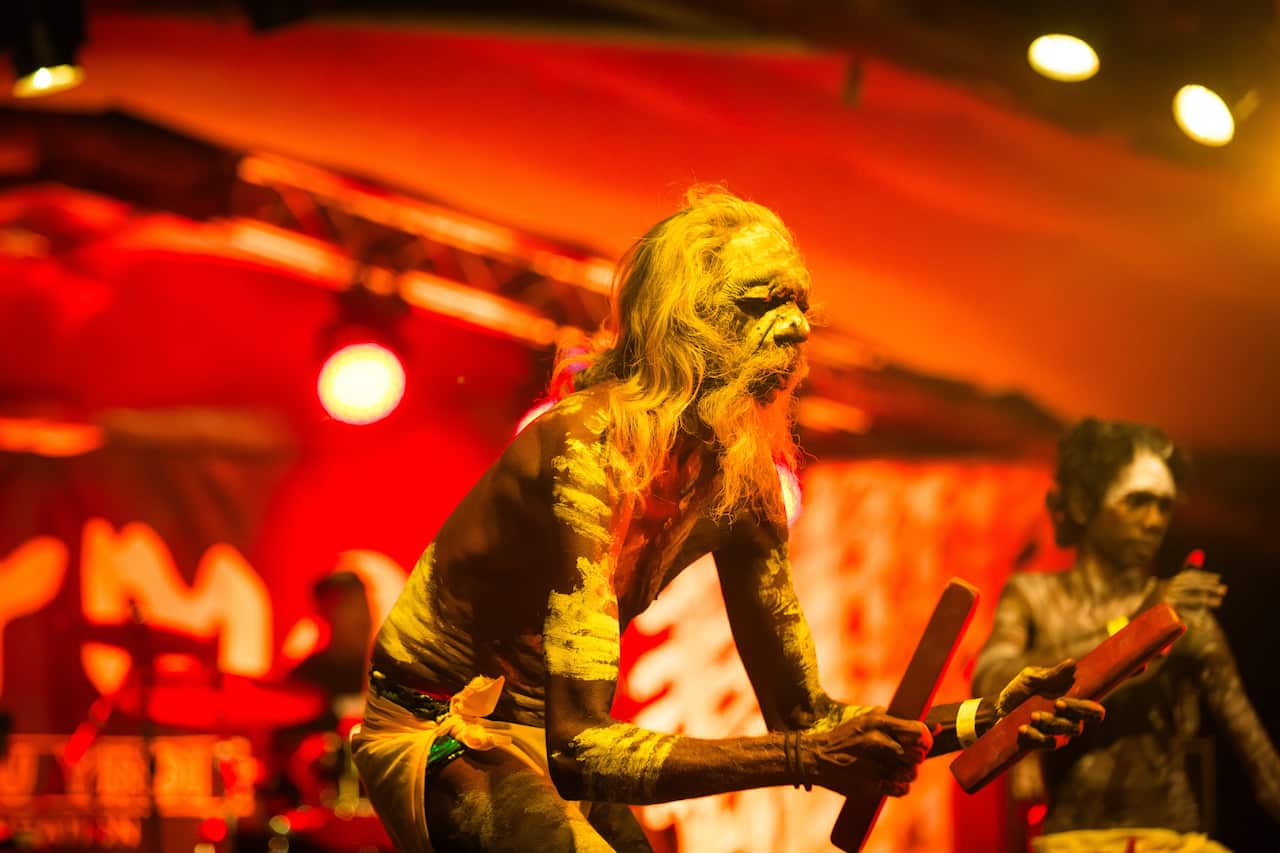
For many visitors, the nightly Buŋgul performances are among the festival's defining moments, as members of the Yolŋu clans perform songlines that have been passed down through countless generations.
The festival is designed not only to preserve Yolŋu cultural practices, but to ensure they continue to be shared with younger generations while inviting visitors to learn through respect, listening and cultural exchange.
From a backyard barbecue to a national institution
This year marks 25 years of Garma.
The festival was envisioned by the late Dr Galarrwuy Yunupiŋu AC and the late Dr M Yunupiŋu as more than a celebration of culture. They saw Garma as a place where Yolŋu authority could shape national conversations, test new ideas and bring Aboriginal and non-Indigenous Australians together through genuine dialogue.
What began as a modest gathering has grown into Australia's largest Indigenous cultural festival.
Dhapanbal Yunupiŋu, daughter of Dr M Yunupiŋu, has previously recalled the humble beginnings of the first Garma, saying: "There were no tents, two cars, and a BBQ."
Today, thousands of people travel from across Australia to attend the annual gathering.
Why is Garma so politically important?
Over more than two decades, Garma has become one of Australia's most influential Indigenous policy forums.
Politicians, academics, business leaders and Aboriginal organisations have used the festival to discuss issues including land rights, truth-telling, economic development, education, constitutional recognition and the Voice to Parliament.
Many of the conversations that begin at Garma continue well beyond Arnhem Land, influencing national debate and government policy.
Anthony Albanese skips Garma
The prime minister has said he will not attend the 2026 Garma Festival, despite a declaration he made at last year's event that he would return every year he remained prime minister.
"I commit here that every single year that I have the great honour to be Australia's prime minister, I will be here and engaged with you," Albanese said at the time.
Albanese won't attend Garma this year as he'll be on leave at the time. The prime minister has defended the decision, saying he hasn't "[had] a day off all year" and noting that he has attended each year since 2019.
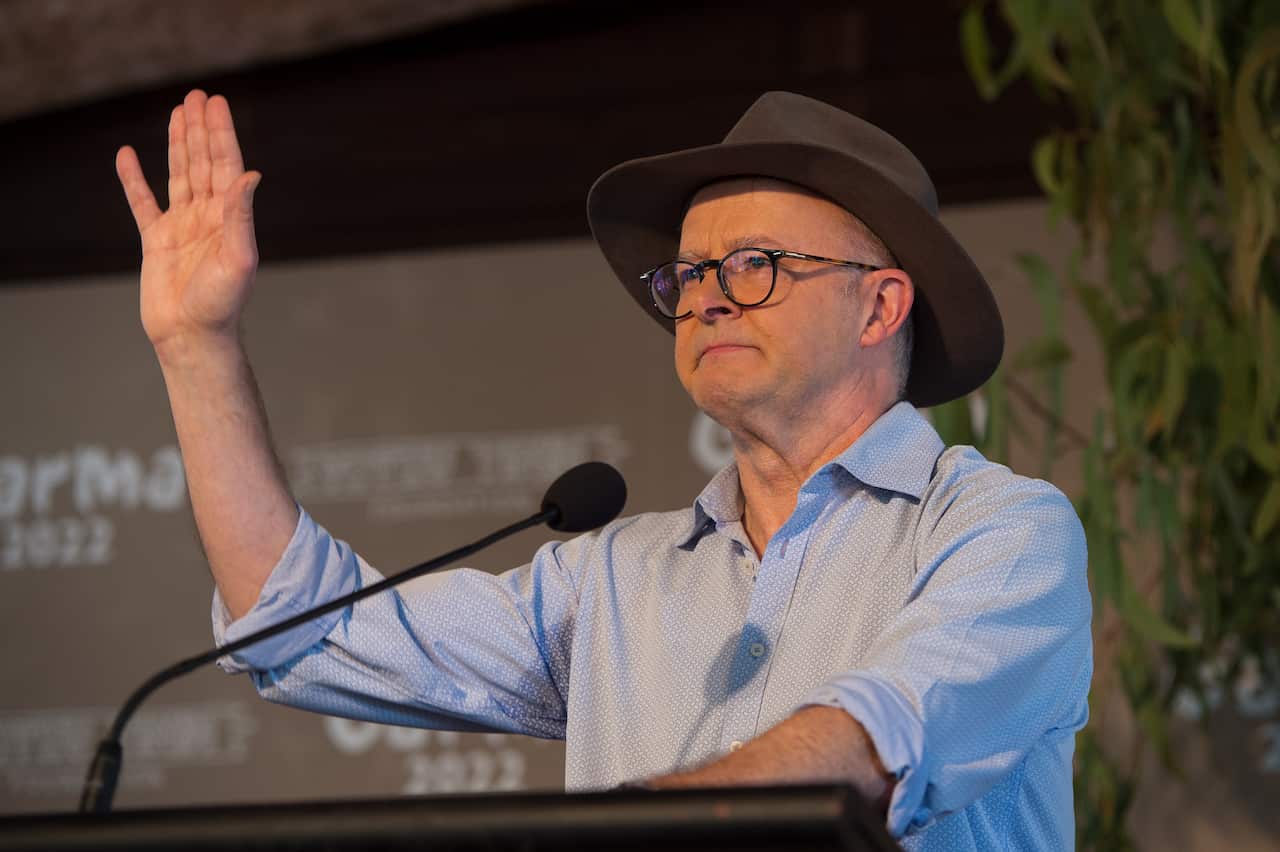
The decision has been criticised by some Indigenous leaders, with Northern Land Council chair Matthew Ryan describing the absence as "very disappointing", particularly at a time when Aboriginal communities in the Northern Territory face significant challenges.
The Yothu Yindi Foundation acknowledged Albanese had attended every Garma Festival since 2019 and remains a longstanding supporter of the event.
Who is attending Garma in 2026?
Although the prime minister will be absent, senior political and community leaders will still travel to Gulkula for this year's festival.
Among those taking part in keynote addresses and major discussions are National Commissioner for Aboriginal and Torres Strait Islander Children and Young People Sue-Anne Hunter, Northern Territory Chief Minister Lia Finocchiaro, Foreign Minister Penny Wong and Minister for Indigenous Australians Malarndirri McCarthy.
They will join Yolŋu Elders, Aboriginal community leaders, and thousands of other visitors from across Australia, reflecting Garma's unique role as both a celebration of living culture and one of the nation's most significant forums on First Nations affairs.
NITV and SBS will have extensive coverage from the Garma Festival beginning Friday 31 July and concluding Monday 3 August. You can watch on SBS and NITV and SBS On Demand.
For the latest from SBS News, download our app and subscribe to our newsletter.







