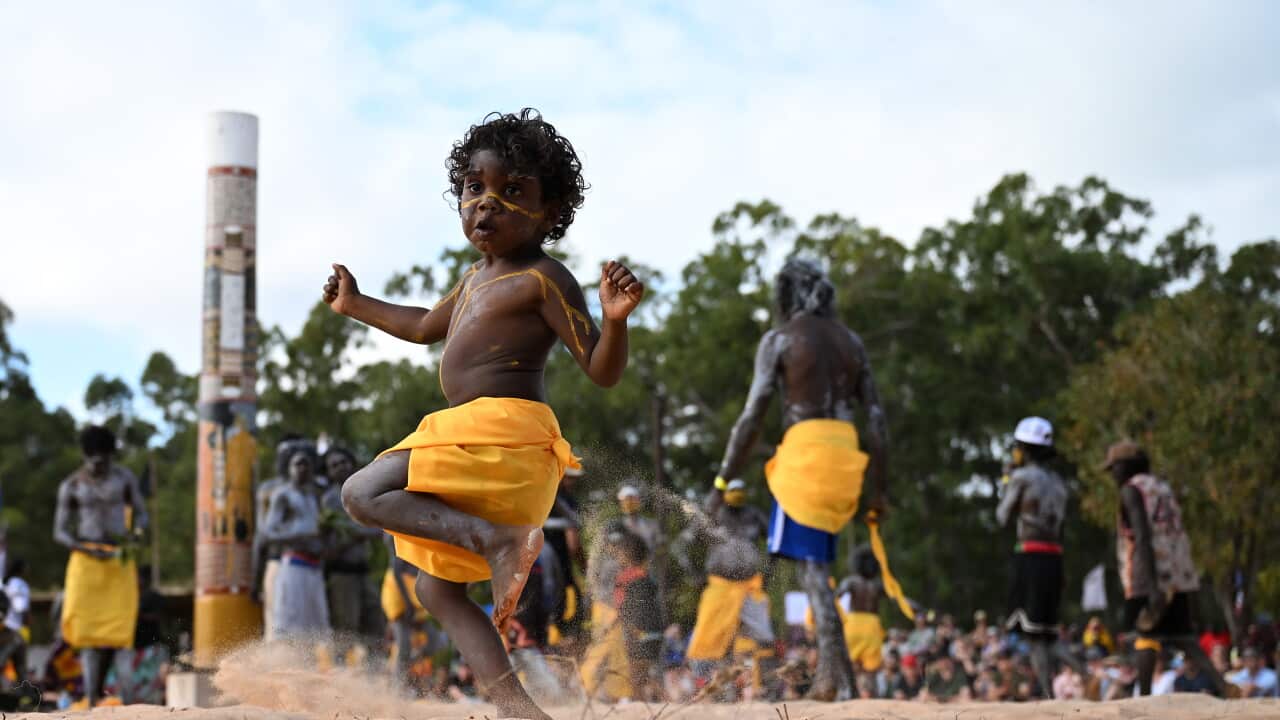
Garma Festival in NE Arnhem land has long been one of Australia's leading forums for political and cultural dialogue, bringing together political leaders, First Nations leaders, community organisations, researchers, educators, advocates, artists and senior business figures.
At its heart is the Yolŋu principle of two-way learning - the belief that everyone has knowledge to share.
Garma provides a space where First Nations communities lead the conversation, inviting Australia's political, corporate and civic leaders to listen, learn and engage.
This year's festival - which commences tomorrow - takes place amid renewed national conversations about child protection, youth justice, rising incarceration rates, and of Treaty, Truth-telling and economic development.
It also comes as Aboriginal and Torres Strait Islander leaders continue to call for greater investment in community-controlled organisations, arguing they are best placed to deliver better outcomes and accelerate progress on Closing the Gap.
NT child protection laws
Despite significant backlash and overwhelming opposition from Aboriginal organisations, human rights bodies, child protection experts and legal groups, the Northern Territory's CLP government passed its child protection legislation (in Late July).
The NT government says it’s ‘Every Child Matters’ bill is the most significant overhaul of the child protection system in a generation.
The new law abolishes the Aboriginal and Torres Strait Islander children placement principle, which accords that First Nations people who are removed from their homes are kept within their own culture.
The changes have prompted a broad coalition of opposition, including Aboriginal community-controlled organisations, legal groups, children's advocates and human rights experts.
Darwin’s Danila Dilba Health Service chief executive Rob McPhee resigned as independent Aboriginal chair of the NT Children and Families Tripartite Forum, accusing the CLP Government of abandoning genuine partnership, transparency and evidence-based reform.
Sue-Anne Hunter, the National Commissioner for Aboriginal and Torres Strait Islander Children and Young People, has said the legislation ignores decades of evidence about what keeps Aboriginal children safe.
Commissioner Hunter will deliver the Garma Education Keynote Address on Friday 31 July with the Chief Minister of the Northern Territory, Lia Finocchiaro MLA, also speaking later that day.
NT Member for Mulka Yingiya Guyula MP, who opposed the bill, will speak on Saturday 1 August.
Treaty and Truth Telling?
This year's Garma Festival marks three years since the defeat of the 2023 Voice referendum, with many Indigenous leaders and peak bodies renewing calls for what they describe as the ‘unfinished business’ of the Uluru Statement from the Heart.
While the Albanese government says it remains “committed to the principles of the Uluru Statement,” its emphasis has shifted from Treaty and Truth Telling to what they say are ‘practical reforms' - delivering better outcomes for First Nations Australians through action in key priority areas, including economic empowerment, housing, health, education, employment and justice.
That shift is expected to be a key point of discussion at Garma, where First Nations leaders, community organisations, policymakers and corporate leaders reflect on the path forward following the 2023 referendum and examine how the aspirations of the Uluru Statement can be advanced in the years ahead.
With the Prime minister not attending Garma this year, it will be up to Senator Penny Wong (Minister for Foreign Affairs) and Senator Malarndirri McCarthy (Minister for Indigenous Australians) to outline the government’s First Nations agenda heading into the next federal election.
The Shadow Minister for Indigenous Australians, Julian Leeser MP, is also attending and will speak on Friday 31 July on Indigenous Education (as the Shadow Minister for Education).
Mr Leeser supported the Indigenous Voice to Parliament.
50th anniversary of NT Aboriginal Land Rights
Garma will also acknowledge and celebrate the 50th anniversary of the Aboriginal Land Rights (Northern Territory) Act, which was passed by the Commonwealth Parliament back in December 1976.
The ground-breaking legislation was a pivotal moment in Australian history - the first of its kind in the nation, allowing Aboriginal people to claim land rights on Country where traditional ownership could be proven.
It also led to the creation of the four Land Councils in the NT – the Northern Land Council (NLC), the Central Land Council, the Anindilyakwa Land Council and the Tiwi Land Council.
The legislation was born out of the government’s response to the landmark Gove Land Rights case brought by Yolŋu leaders in 1968, which unsuccessfully sought to challenge the Commonwealth’s decision to grant mining leases on Yolŋu country to Nabalco.
While the Act marked a milestone in advancing self-determination, NT land council leaders say Aboriginal Territorians continue to face systemic disadvantages in housing, health, education and the justice system. '
They have called on the Federal Government to take stronger action against the NT Government over its poor progress on Closing the Gap targets.
Economic future of Nhulunbuy
Discussions will also focus on Nhulunbuy’s future within the projected development of Australia’s north, as the region approaches the end of three internationally significant mining projects: Gove Bauxite, Groote Eylandt Manganese and Ranger Uranium.
Ranger has closed, Gove will close in 2030, and Groote Eylandt is in closure planning and the Territory’s economic profile will be fundamentally altered (Rio Tinto's Gove bauxite mine is the region's largest employer).
Supermarket giant Woolworths also announced earlier this year that it will pull the pin on its operations in Nhulunbuy this financial year. Woolworths has said it has been in discussions for another operator to take over.
Senate Inquiry into Racism
Garma also occurs during the final public hearings of the Senate Inquiry into racism against First Peoples (which has been conducted by the Joint Standing Committee on Aboriginal and Torres Strait Islander Affairs since March).
Some 670 submissions have already been published – all painting a confronting picture of escalating racism and hate directed towards First Nations people, particularly across social media platforms and especially in the wake of the failed 2023 Voice to Parliament referendum.
Last year's attack on Camp Sovereignty in Melbourne and the alleged attempted bombing of an Invasion Day rally in Perth in January were partial motives for the inquiry.
The majority of submission are calling for greater accountability from Social media platforms and for the inquiry to recommend legislative reforms to combat racism (including implementing the 2024 National Anti-Racism Framework developed by the Australian Human Rights Commission).
Native Title
Garma 2026 will also see Indigenous Leader Noel Pearson attend - one of his first occasions of public speaking since the failed 2023 Referendum.
Mr Pearson, from the Cape York Institute for Policy and Leadership, has recently spoken about changes to native title benefits that see “future generations being more educated, healthier and participating actively in the opportunities on their land”.
Native Title is a significant issue in Northeast Arnhem land.
In March 2025, the High Court of Australia handed down a landmark judgement in favour of the Gumatj Clan.
In Commonwealth vs Yunupingu, the court found the Gumatj Clan was eligible for compensation, holding the Commonwealth liable for acts that affected their native title rights and interests.
The Commonwealth government may now be liable for up to $700 million in compensation for bauxite mining at Gove.
Mr Pearson is a director of iron ore miner Fortescue (in July 2026, the Federal Court ordered Fortescue to pay approximately A$150.3 million to Yindjibarndi native title holders for cultural loss caused by mining activities without permission.)
Mr Pearson will speak on Saturday 1 August.
While the Garma Festival is a staunch celebration of Yolŋu culture and rights, for its leaders it's also a place where people come together to listen, learn and build relationships.
Djawa Yunupiŋu, Chairman of the Yothu Yindi Foundation asked guests each year not to waste the energy Garma provides and calls on visitors to carry ‘it beyond this place and use it wisely to make things better.’
“Bukmak yolŋu ga balanda rrambangi - Everybody together as one,” he says.
NITV/SBS will have extensive coverage from the Garma festival - (NITV/SBS Simulcast and SBS On Demand commencing this Friday (31 July) and throughout the weekend concluding on Monday (3 August).
NITV News: Nula - Friday, 31 July: 3:00-3:30pm NITV/SBS Simulcast Broadcasting live from the Garma festival at Gulkula, this special half-hour edition of NITV News: NULA captures the voices, stories, and spirit of one of Australia's most important cultural gatherings.
Garma Opening Ceremony 2026 - Friday, 31 July: 4-5:30pm NITV/SBS Simulcast
Experience the power and storytelling of Yolŋu dance alongside the Garma Festival's opening ceremony from Gulkula in North-East Arnhem Land.
Garma: On the Ground with NITV -
Saturday 1 August & Sunday 2August: 12:00pm – 3pm NITV/SBS Simulcast
Garma: On the Ground with NITV brings audiences inside the festival with interviews, stories and key moments, including major speeches.
Garma Highlights Monday 3 August: 5:30pm - 6:30pm NITV/SBS Simulcast
Garma Wrap reflects on the defining moments of the festival, bringing together powerful speeches, cultural highlights and the voices shaping the national conversation.
Garma Buŋgul - Sunday 2August: 3-4pm on NITV Take in the graceful movement of the women and the strong songs of the men at the Buŋgul - a Yolŋu cultural ceremony with over sixty thousand years of connection to Country.
Garma Sound Lines - Saturday 8 August: 9:30-11 pm on NITV
Capturing the powerful music and performances from the Garma Festival.