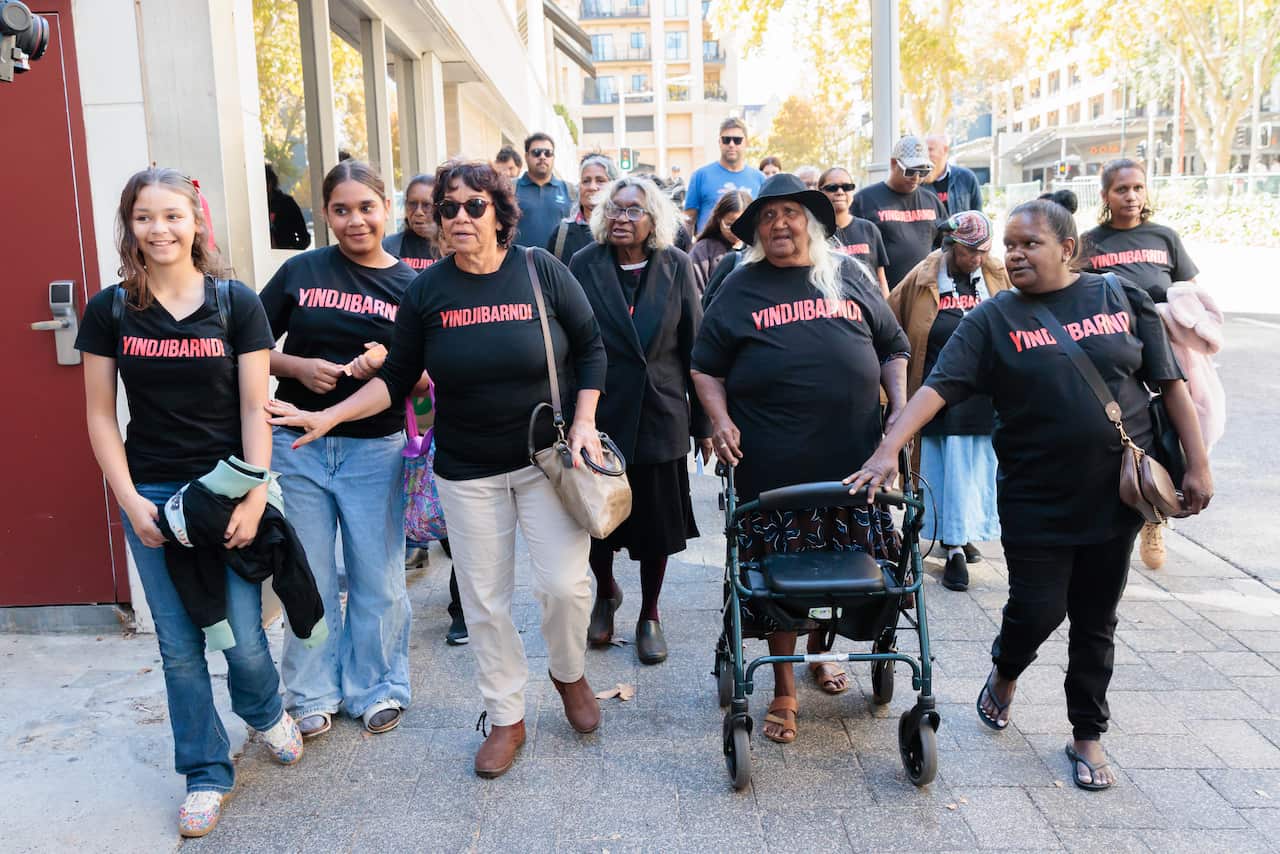
The Federal Court has awarded the Yindjibarndi people $150 million in compensation for economic and cultural loss caused by the mining of their land by Fortescue Metal Group (FMG), the largest native title compensation payout in Australian history.
FMG began iron ore mining at its Solomon Hub in Western Australia's Pilbara region in 2012, but the Yindjibarndi people have not been paid a cent by the mining giant despite having their exclusive native title rights recognised in 2017.
They've now been awarded $150 million for cultural loss, and $100,000 for economic loss.
Despite being a record payout, the amount is vastly less than the $1.8 billion the Yindjibarndi Ngurra Aboriginal Corporation had originally sought.
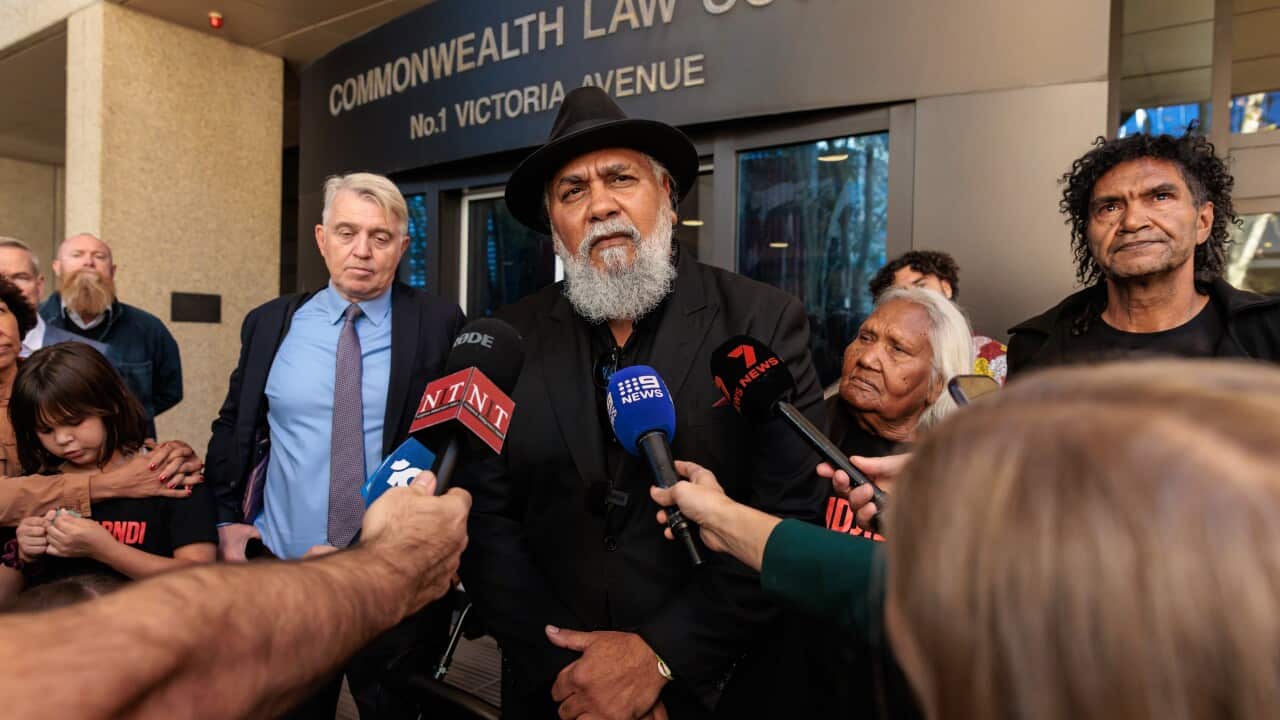
"They dig our ground up for nothing, give us nothing in return," Yindjibarndi woman Judith Coppin told reporters outside the court on Tuesday.
Ms Coppin said the amount awarded was nowhere near enough.
"They take tonnes and tonnes of things from our land and what do we get? Nothing," she said.
"They need to look at us, they need to come out there and look what they did to us."
Half of our family is gone, we've been fighting for 20 years.Yindjibarndi woman Judith Coppin.
Head of the Yindjibarndi Nation Aboriginal Corporation Michael Woodley said their work was far from over.
"We don't get this far and stop ... we're fighters, we've been fighting all our life," he said.
FMG, started by billionaire Andrew 'Twiggy' Forrest, acknowledged the decision.
"Dr Andrew Forrest and Fortescue care deeply about all First Nations people, including the Yindjibarndi community," a spokesperson said.
"Fortescue accepts that the Yindjibarndi People are entitled to compensation. The Company has agreed to and pays financial compensation under all of its other seven native title agreements."
In his decision, Justice Stephen Burley referenced the size of the Solomon Hub Project, saying it was relevant to determining both economic and cultural loss.
"Over 135 km2 of land has been fenced off and secured from entry, including by the Yindjibarndi people, because it is too dangerous to enter," he said.
"There is significant transport infrastructure for vehicles, a railway, a large tailings dam, waste dumps and a stockpile area. Water courses have been stopped and power infrastructure installed."
"Mining operations continue 24 hours a day, 7 days a week, generating tremendous revenue for both FMG and the State."
He also highlighted evidence given to the court by Yindjibarndi witnesses, such as Middleton Cheedy.
"I have been taught that my ngurra is precious and should not be defiled by a Mine," Mr Cheedy said.
The Mine has taken everything, ngurra is gone, the spirits are gone, the water is gone, the caves are gone, the munda is gone, the wundu is gone, and our ancestor’s remains have been put through the crushers on the Mine site."
The National Native Title Council (NNTC) also weighed in on the decision, saying it was the "tip of the iceberg" in relation to unpaid native title claims.
“Like any other landholder, native title holders are entitled to compensation when their property rights are infringed," said Jamie Lowe, the CEO of the NNTC.
"Yet First Nations communities face expensive legal battles to access the compensation owed to them."
The NNTC's Chair Kado Muir congratulated the Yindjibarndi people on their victory.
“The NNTC pays tribute to the extraordinary leadership of the Yindjibarndi People and their determination to exercise their native title rights, up against one of Australia’s biggest mining companies,” Mr Muir said.