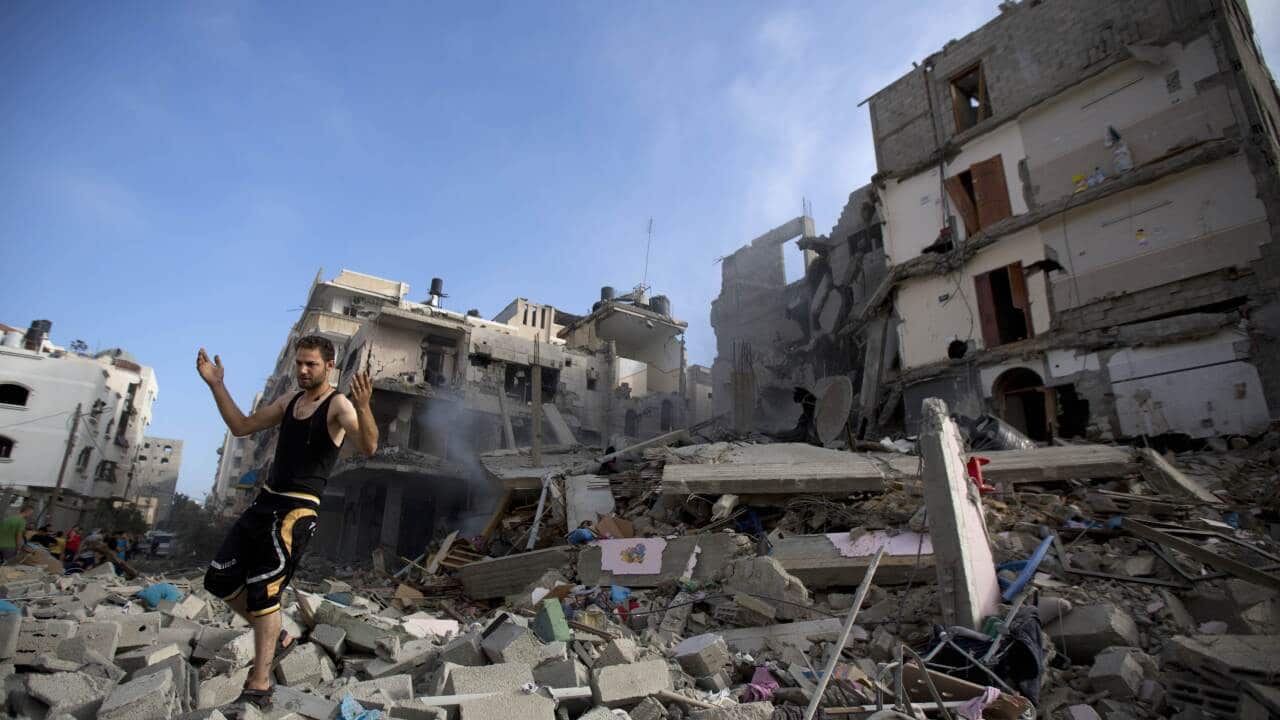
Israeli warplanes have continued their deadly raids on Gaza, but failed to prevent Palestinian militants from firing rockets across the border, despite mounting international appeals for a truce.
As the violence escalated, with more than 30 Palestinians killed on Thursday alone, UN chief Ban Ki-moon appealed for an immediate ceasefire at an emergency meeting of the Security Council.
"It is now more urgent than ever to try to find common ground for a return to calm and a ceasefire understanding," he said as the Organisation of Islamic Conference lobbied the UN to condemn Israel.
Russian President Vladimir Putin issued a similar plea in a phone call to Israeli Prime Minister Benjamin Netanyahu, urging an immediate end to the bloodshed and expressing concern over civilian casualties.
And US Secretary of State John Kerry warned the region was facing a "dangerous moment" after speaking to both Netanyahu and Palestinian president Mahmoud Abbas.
News that makes sense
Your trusted source for staying up-to-date with the world around you. Get free daily news updates and analysis, straight to your inbox.
French President Francois Hollande called on both sides to exercise "restraint" and "appeasement".
But Israel appeared bent on dealing a fatal blow to the Islamist movement Hamas, which controls Gaza, with Netanyahu reportedly saying talk of a ceasefire was "not even on the agenda".
Hamas also appeared to have no interest in letting up, striking deep inside Israel in the past 48 hours, with rockets crashing down near Jerusalem and Tel Aviv and even as far away as Hadera, 116 kilometres to the north.
Since the start of the campaign in the early hours of Tuesday, 83 Palestinians have been killed and more than 500 injured, Gaza medics said.
As the number of victims in Gaza rose, Egypt opened the Rafah border crossing, with hospitals in north Sinai placed on stand-by to receive the wounded, the Egyptian state news agency MENA said.
There have been no Israeli deaths, although medics said one woman died on Thursday, a day after falling while running for cover.
But And Israel has confirmed preparations are under way for a possible ground attack, with tanks seen massing along the border and Netanyahu facing mounting pressure from coalition hardliners to put boots back on the ground in the territory from which Israeli troops and settlers withdrew in 2005.







