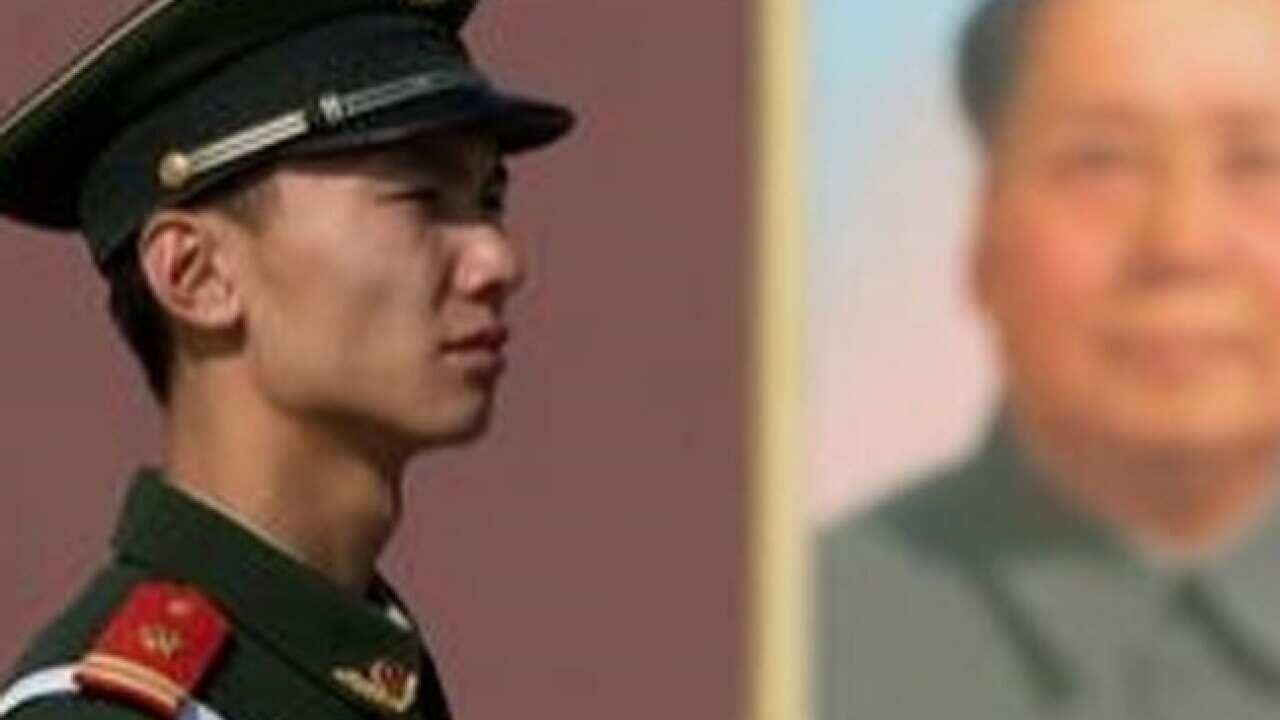
China's ruling Communist Party is about to undergo what's being described as the most significant leadership change in decades.
(Transcript from World News Australia Radio)
Party delegates will convene in Beijing on Thursday to elect a host of new leaders, expected to include successors to the Party's two most powerful figures: General Secretary Hu Jintao and Premier Wen Jiabao.
Also due to stand down is a majority of the Central Military Commission, which runs the People's Liberation Army..
News that makes sense
Your trusted source for staying up-to-date with the world around you. Get free daily news updates and analysis, straight to your inbox.
In the first of a two-part series, Kristina Kukolja looks ahead to what's expected from the 18th National Congress of the Communist Party of China.
The first National Congress of the Communist Party of China took place in 1921, the year the Party was founded and almost 30 years before it came to power -- creating the People's Republic of China.
Since the death of the Republic's founder, Chairman Mao Zedong, in 1976 the national gathering has been held every five years.
Once every decade a change of leadership occurs, and none to date has been as widely anticipated as that about to be announced at the 18th National Communist Party Congress.
A staggering 70 per cent of the Party's top leaders are expected to cede power, with a similiar proportion departing from the Central Military Commission.
And with the around 370-strong Central Committee elected from among delegates from Beijing, the regions and provinces and the People's Liberation Army, speculation abounds as to who will assume a seat on the Politburo, and in the small group of elite decision makers forming its Standing Committee.
Chinese Communist Party elections are a highly secretive process -- the outcome of extensive deliberation and debate by delegates ahead of the National Congress.
In 2012, the incoming group of leaders is the fifth generation, distinguished as being younger than their predecessors and the first to have lived their entire lives under Communism.
From within their ranks, two names have emerged as likely to inherit the top positions this year: Vice-president Xi Jinping to follow General Secretary Hu Jintao, and Vice-Premier Li Keqiang in place of Premier Wen Jiabao.
Mr Xi and Mr Li are known at home and abroad, but questions remain about the kind of political, social and foreign policy their leadership of the Party could bring.
Associate Professor of China studies at the University of Technology in Sydney, Dr Yingjei Guo. says he expects to see some major changes after this year's National Congress.
"One significant change that is already talked about is actually the status of Mao Zedong in the Party's ideology or rather Mao Zedong's thought. In the last couple of meetings of the Chinese Communist Party Mao Zedong's thought hasn't been highlighted. There is some talk this will be dropped in the next constitution of the Chinese Communist Party. Another thing people have been talking about is the future of political reform. There is a general consensus that China has reached the point where the economic reform is getting nowhere and what it takes is actually quite significant political reform."
Despite the impact of the Eurozone financial crisis on exports, and the declining rate of economic growth over the past two years, China remains on course to soon overtake the United States and become the world's largest economy.
The International Monetary Fund predicts the country's growth rate will return to above eight per-cent in 2013.
Professor Guo says the expected new Party leader Xi Jinping is seen to be more open to political reform than the incumbent Hu Jintao.
But the professor says Mr Xi will be looking to what's been achieved under the current Communist Party leadership, and he's unlikely to do anything that might jeopardise either economic growth, or the Party's hold on power.
"People have placed a lot of hope in Xi Jinping and tend to see him as somebody like Gorbachev who is going to start a series of political reforms that is going to change China fundamentally. I think that view is probably overly optimistic. You look at the leaders of the Chinese Communist Party, most people are in the same boat. It's in their interest to see China's economy grow. Their families, sons and daughters, grandsons and granddaughters are owing this, it's in everybody's interest to have a strong economy so that they can make a lot of money so that the Party's rule will stay intact. So long as the rule stays intact everybody will be safe. If the rule collapses I don't think anybody is safe."
However, China expert from Flinders University in Adelaide, Dr David Lockwood, thinks the Communist Party may have to loosen its hold on power.
Dr Lockwood thinks this is what's needed to allow for greater liberalisation of China's economy, particularly to encourage growth in small to medium-sized businesses.
"To the extent that the economy loosens up, decentralises that there are greater opportunities for SME (small to medium enterprises) which is one of the economic changes that people are flagging from the 18th Party Congress, to the extent that all those things happen then the authority of the Party must weaken. Business people in China are pretty tired, not the ones tied up with the Communist Party in state-owned enterprises, but independent business people are pretty tired of not getting full access to the internet, of having to be a member of the Communist Party in order to get on, of having their bids for various contracts shoved out of the way by political favourites of the local Communist Party official, for the economy to function in the way that the Chinese want it to function these things have to be weakened, perhaps it means that the Communist Party itself has to weaken."
Another of the challenges the new Chinese leadership is expected to face in the decade to come is the country's community of online activists.
The artist Ai Wei Wei's ability to reach audiences beyond China's borders is one example of how, despite increased censorship, the internet is being used to draw attention to the alleged extent Chinese authorities are willing to go to suppress dissent.
His and other cases are fuelling calls from within the international community for China to seriously address allegations of human rights violations.
Executive Director of the China Studies Centre at the University of Sydney Dr Kerry Brown also points to recent protests over environmental pollution, land seizures and corruption across China.
Dr Brown says this shows the next generation of Chinese leaders will be forced to pay more attention to issues such as social cohesion and equality, rather than just on the economy.
"You've really got a kind of leadership that are going to have to make fairly tough decisions about the rule of law, about the non-state enterprises and what to do about those and non-government organisations and the way they have some kind of legal basis and how they operate. These are tough decisions to make and ones that in the past it wasn't possible to make because there wasn't political consensus, but now I guess they are going to become more important as society becomes more complicated and China moves towards middle income status."
As is usual ahead of a National Congress, China observers outside the country have been looking for divisions within the Communist Party that could threaten its hold on power.
Flinders University's Dr David Lockwood expects to see evidence of some divisions, as the new leadership group emerges.
"Even at the top level there are different factions around different individuals, but more broadly at the level of the state elite as a whole there are a lot of interest groups. There are regional leaders who have their own particular economic interests, there are the generals in the defence forces who have their interests who might favour a more aggressive foreign policy, there are the managers at the massive state-owned enterprises who are interested about the investment climate. There are many of these people interlinked with what are called the princlings, the children of ancient Communist Party figures who are basically out to maintain their own privileges. All these groups will jostle and the jostling will manifest itself in some ways in the leadership itself."
Dr Lockwood one recent high-profile victim of such power play was Bo Xilai, whose fate continues to cast a shadow over this year's Congress.
He says it was accusations of corruption and the conviction of Bo Xilai's wife for the murder of a British businessman that led to a spectacular political downfall.
"Bo Xilai was in some ways seen as being on track for a seat in the standing committee of the Politburo, but it is felt that he put himself out there for that position too aggressively. It was felt that he was in his particular fiefdom he was implementing a policy which was not all together in line with the central policy. Communist Party leadership is very very wary about alternative centres of power and Bo Xilai was possibly seen as one of those and therefore he fell by the wayside."
This is the first in a two-part series looking at the transition of leadership in the Chinese Communist Party. In part two, we look at the implications for China's relations with the rest of the world, including Australia.







