Gina Yannitell Reinhardt, University of Essex
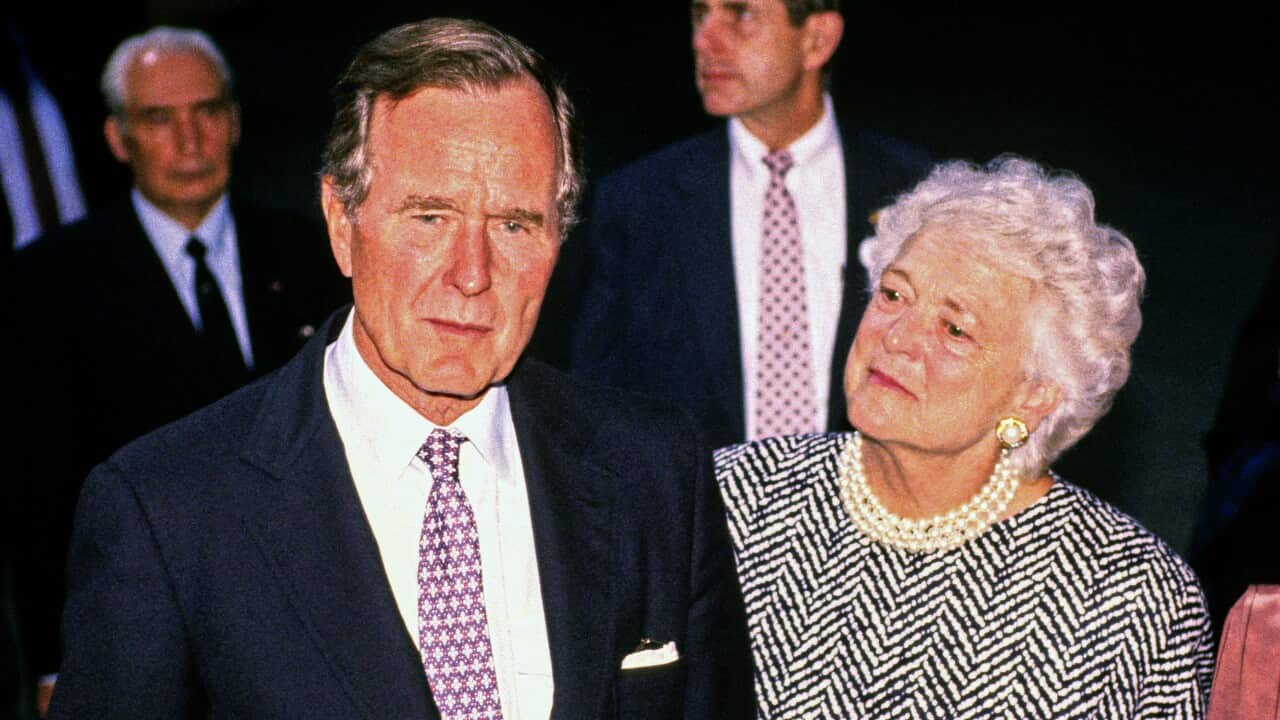
George HW Bush, who died on November 30 aged 94, was a lovely man. He was polite, genteel, intelligent and thoughtful. He was careful, considerate and kind.
We called him “41” because he was the 41st American president – between 1989 and 1993. As a faculty member at the Bush School of Government at Texas A&M University for ten years, I met him several times. The first time was December 2005, when he arranged a lunch to meet us. He asked each member of the new faculty to stand up and introduce ourselves.
At the end, the Secret Service asked us all to remain at our seats while the former president exited the room. But he didn’t just sweep out. He stopped to chat with several board members, faculty and staff along the way. I was still surprised when he stopped at me. He put his hands on my shoulders, and said: “Hi, Gina! Welcome to the Bush School!”
I started to thank him, but he interrupted me to say how excited he was that I was bringing my work on decision making and foreign aid to the Bush School. He asked if he could drop by my statistics class some time to tell the students the importance of the skills I was teaching them. He gave me a quick hug and moved on.
In that moment, I saw clearly the human being behind the statesman and public servant who had served as president during the uncertain years around the collapse of the Soviet Union.
Personal touch
I had heard it said of George H. W. Bush that despite his reputation as a nerdy or wishy-washy president, one only needed to be in the same room with him once in order to realise how and why he was elected. That was true.
This man had represented the state of Texas in the US House of Representatives. He had been ambassador to China and directed the CIA. Ultimately, he had served the country as both vice president (under Ronald Reagan) and president. And he knew my name, my research, and the subject I taught. He made me feel like I was important to him, to his work, to the world in general. He made me feel special. I think he did that for just about everyone.
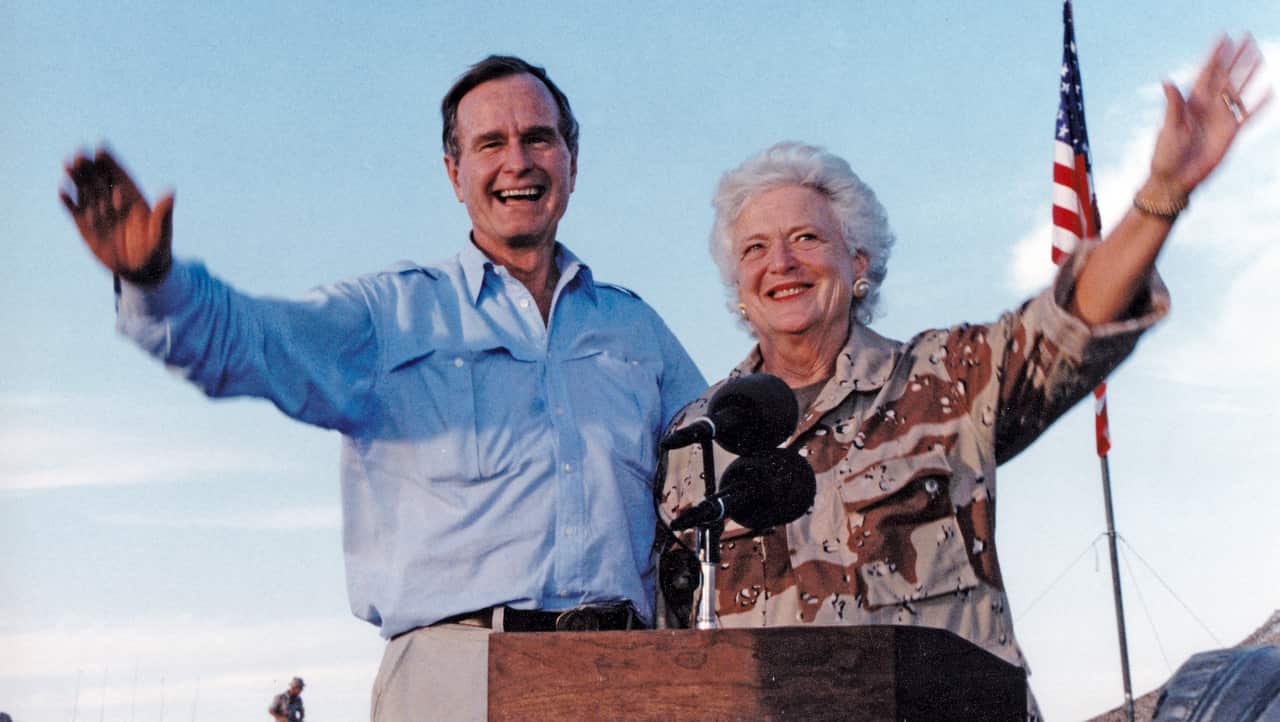
During my time on the Bush School faculty, I met 41 several more times, and attended a collection of his speeches and events. Several years after our first meeting, at a reception he and his wife, Barbara, hosted in their apartment on campus, I plopped down next to him in a patio chair on the veranda where he was sitting on his own. I started to make a silly comment about how the best-known person at the party was sitting alone, but before I could finish, he turned to me. “Hi, Gina,” he said. “How are those statistics classes going?”
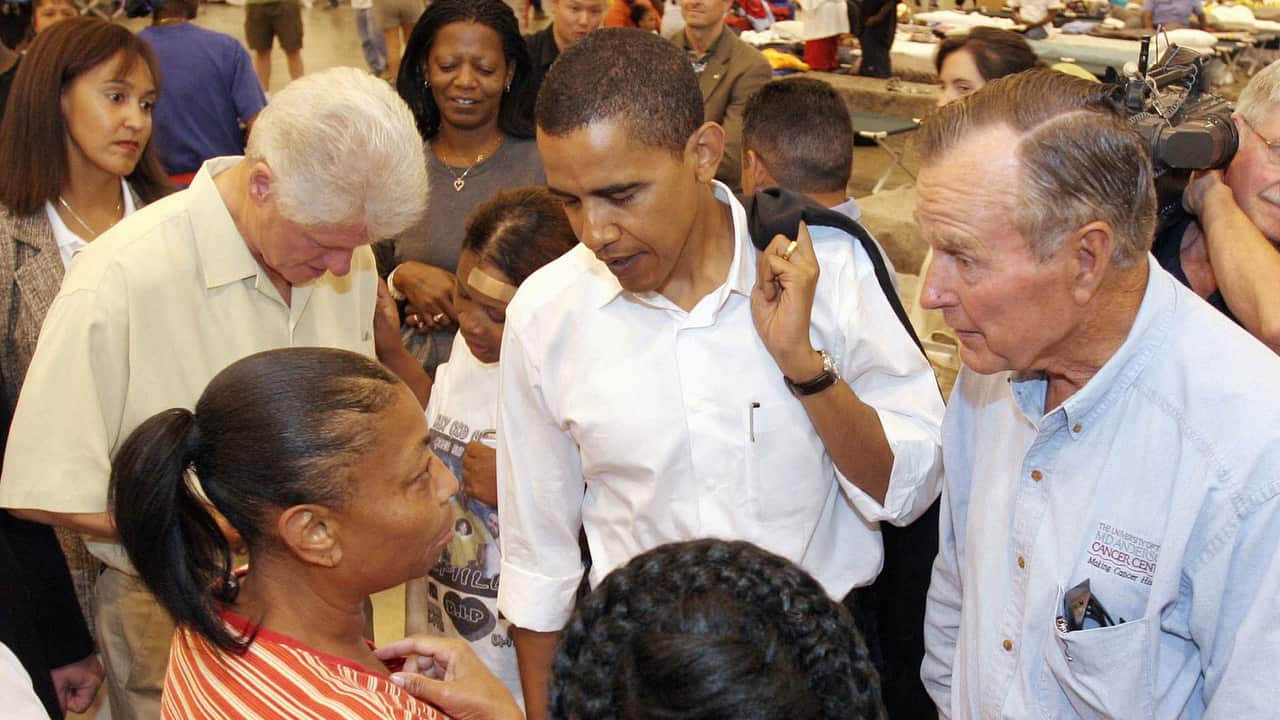
He had the ability to make you think he was addressing you personally, even if you were one among 10,000 others. His statements were carefully crafted pieces of inspiration, with a little dose of laughter and a touch of poignancy. They made you want to be a public servant. They made you want to be his friend.
His presidency oversaw substantial change both domestically and globally, including the Americans with Disabilities Act, the Clean Air Act Amendments, and a budget deal in 1990 that ushered in prosperity for the decade to follow. Under his administration the country navigated the events of Tiananmen Square, the first Gulf War, the end of the Soviet Union, the fall of the Berlin Wall, and the negotiation of NAFTA.
It’s understandable that 41 had political opponents, people who remember certain decisions in a poor light. That would be true of anyone in his position. We do live in a pluralist society, after all.
Legacy
What is amazing is the positive legacies he left despite the tumult and criticism. He consciously stepped out of the spotlight during the end of the Cold War so the nations of Eastern Europe could decide their own future without outsiders taking the credit. He created the Points of Light Foundation to honour community servants for their dedication and sacrifice. He founded a school designed to create, educate and train future generations of public servants that would help America and the rest of the world act nobly, honourably, and with conviction.
There were no major scandals during 41’s presidency. He did not leave office and speak negatively about subsequent administrations. If he was unexciting, it was because he wasn’t controversial – he didn’t deliver quips and barbs in public. He gave people credit for their achievements, and demurred when the spotlight came back to him.
George HW Bush was one of the last true statesmen from an era that seems to be drawing to a close. My favourite quotation of his is etched on the Bush Presidential Library. It comes from his 1991 State of the Union address, in which he referred to American participation in the first Gulf War:
Let future generations understand the burden and the blessings of freedom. Let them say we stood where duty required us to stand. Let them know that, together, we affirmed America and the world as a community of conscience.
When future generations look back at us today, will they see that we stood up against adversity at home and in foreign lands, that we opened our eyes to aggression and stood where duty required us to stand?
If we try to behave according to his standards, they might.
Gina Yannitell Reinhardt has received funding from the British Academy, the UK Economic and Social Research Council, the Wellcome Trust, and the US National Science Foundation.