
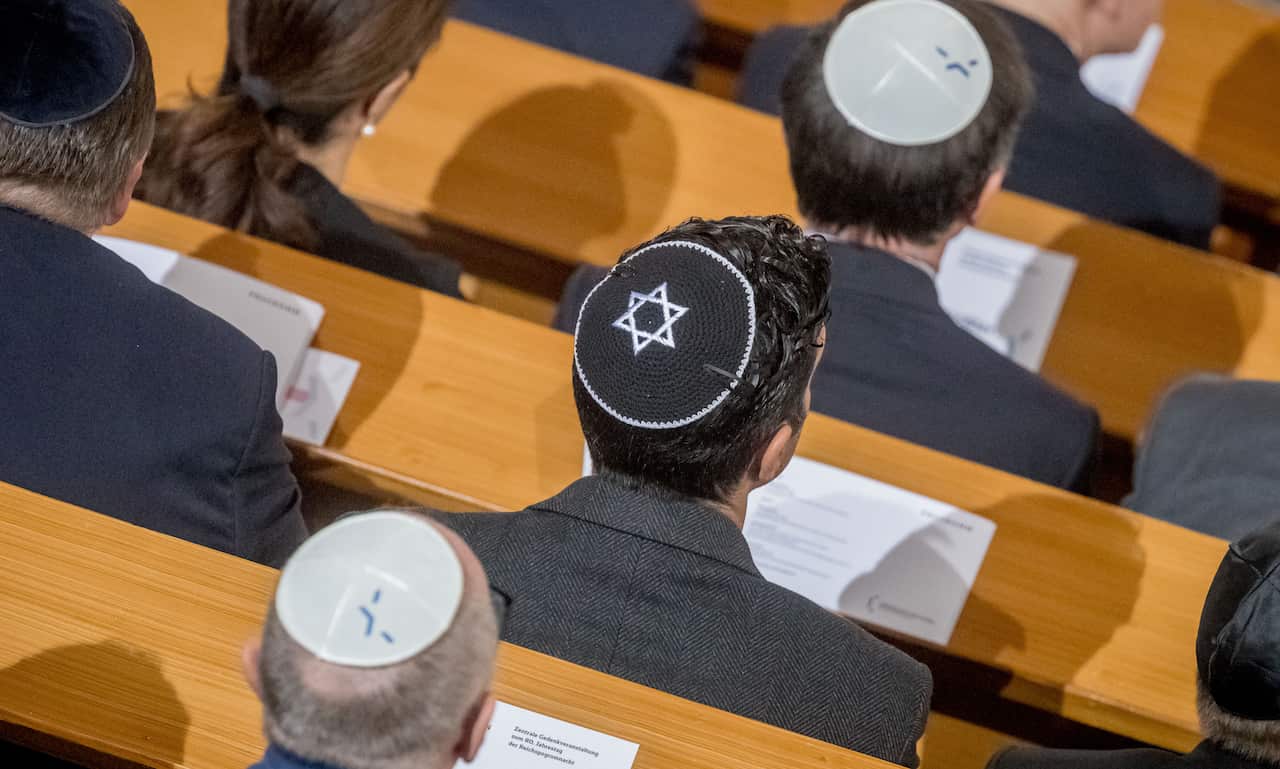
Germany's government commissioner on anti-Semitism, Felix Klein, said in an interview published Saturday he "cannot advise Jews to wear the kippah everywhere all the time in Germany," due to increasing anti-Semitism and anti-Jewish attacks there.
Julian Reichelt, Editor-in-Chief of Germany's largest newspaper Bild, responded strongly to the warning on Twitter, announcing he would print a kippah on the front page of the Monday paper.
"If just one person in our country can't wear a kippah without putting himself in danger then the answer must be we should all wear the kippah.
"The kippah belongs to Germany," he said.
News that makes sense
Your trusted source for staying up-to-date with the world around you. Get free daily news updates and analysis, straight to your inbox.
'We will never submit'
Israeli President Reuven Rivlin said Sunday that Germany's warning to Jews on the dangers of wearing the traditional kippah cap were a "capitulation to anti-Semitism" and evidence Jews were unsafe there.
Rivlin said Klein's remarks "shocked" him, and while appreciating the German government's "commitment to the Jewish community," accused it of bowing to those targeting Jews in Germany.
"Fears about the security of German Jews are a capitulation to anti-Semitism and an admittance that, again, Jews are not safe on German soil," he said.
"We will never submit, will never lower our gaze and will never react to anti-Semitism with defeatism -- and expect and demand our allies act in the same way," he said.
Anti-Semitic crimes rose by 20 percent in Germany last year, according to interior ministry data which blamed nine out of 10 cases on the extreme right.
Klein, whose post was created last year, said that while the far-right was to blame for the vast majority of anti-Semitic crime, some Muslims were also influenced by watching certain television channels "which transmit a dreadful image of Israel and Jews".
Germany has a culture of atonement over atrocities committed during World War II, during which the ruling Nazis orchestrated the murder of some six million Jews in the Holocaust.







