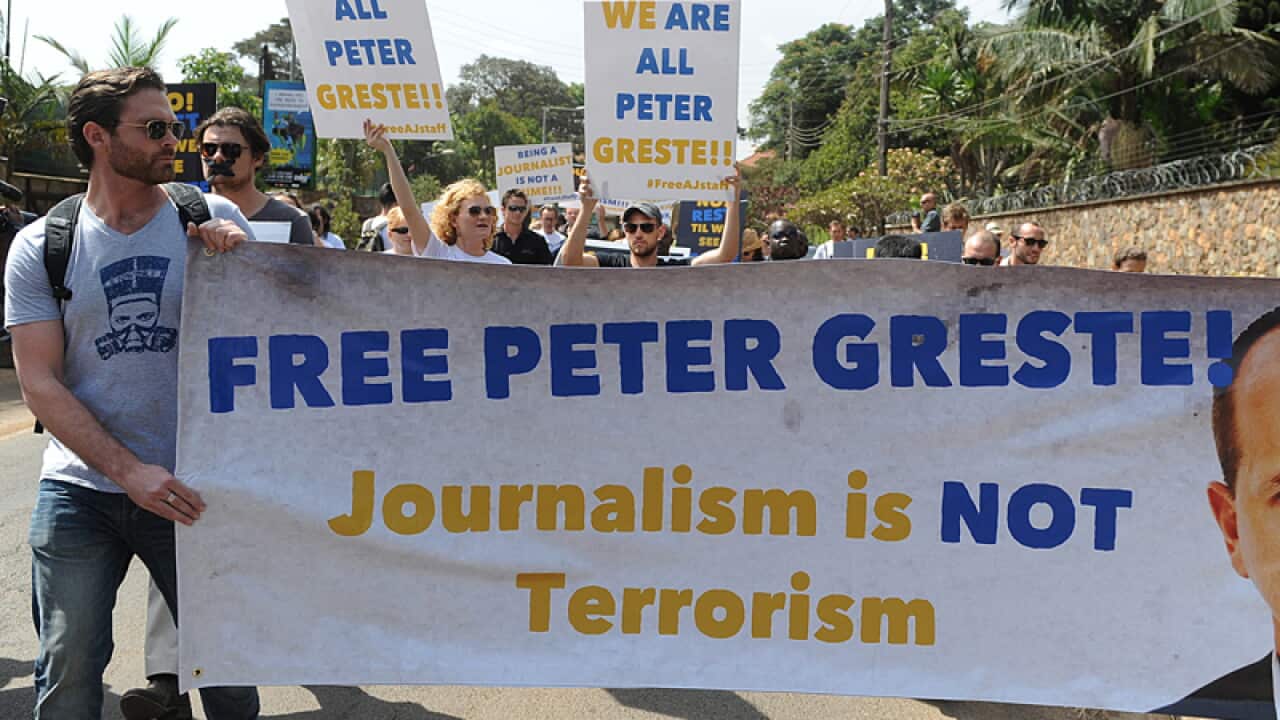
World press freedom has hit its lowest level in a decade after a regression in Egypt, Turkey and Ukraine, and US efforts to curb national security reporting, a watchdog says.
A report by Freedom House, which has been conducting annual surveys since 1980, found that the share of the world's population with media rated "free" was 14 per cent in 2013, or only one in seven people.
Meanwhile, 44 per cent of the world population lived in areas where the media was "not free" and 42 per cent in places where press was "partly free", the Freedom of the Press 2014 report said on Thursday.
"The overall trends are definitely negative," said Karin Karlekar, project director of the report.
Karlekar said press freedom is under attack in many regions of the world.
News that makes sense
Your trusted source for staying up-to-date with the world around you. Get free daily news updates and analysis, straight to your inbox.
"We saw a real focus on 'attacking the messenger,'" she told a news conference, including "deliberate targeting of foreign journalists" in many countries.
"In every region of the world last year, we found both governments and private actors attacking reporters, blocking their physical access to newsworthy events, censoring content, and ordering politically motivated firings of journalists," she said.
Of the 197 countries and territories evaluated in 2013, Freedom House found 63 rated "free", 68 "partly free" and 66 "not free".
The top-ranked were the Netherlands, Norway and Sweden, and the lowest North Korea, which ranked just behind Turkmenistan and Uzbekistan.
The report expressed concern on use of new technologies by authoritarian governments to filter online content and to monitor the activities of reporters.
"Governments have become more sophisticated in their efforts to crack down, even in the online space," said Karlekar.







