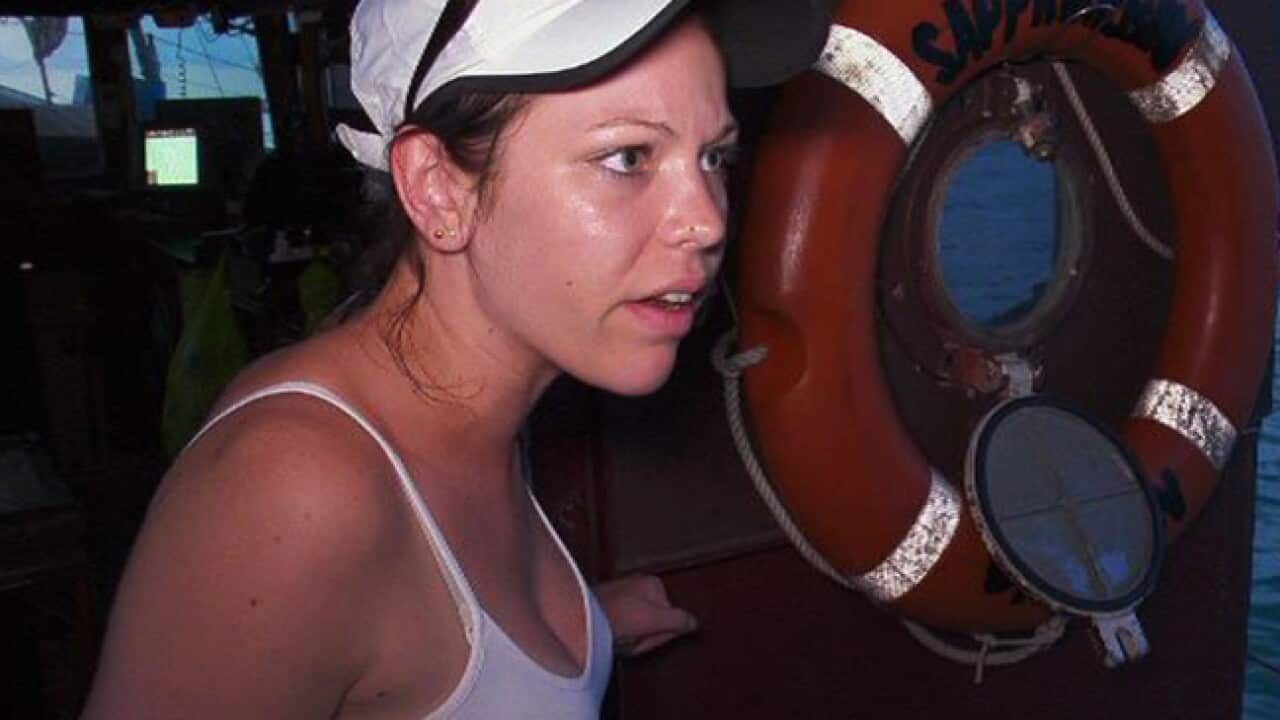
Six ordinary Aussies and a film crew who participated in a reality-TV style journey to refugee countries faced grave danger and had no idea of their final itinerary until the last minute, the series director says.
And due to hold-ups in processing the team's applications to enter Iraq and the Democratic Republic of Congo, filming only finished a day after Episode I had already aired.
The show's producers couldn't be certain they would succeed in taking the participants 'back' to the countries the refugees they had met in Australia came from - as the series title proclaimed.
RISKY COMMISSION
Ivan O'Mahoney has spoken to SBS about the making of the hit series that has sparked a furious online debate, becoming the number one topic on Twitter worldwide for a few hours as it premiered.
News that makes sense
Your trusted source for staying up-to-date with the world around you. Get free daily news updates and analysis, straight to your inbox.
The concept was seen as a "risky commission", with a good chance of backfiring, but low ratings were the least of the team's worries as they drove through Baghdad, he recounts.
"The fact that they needed to be in an armoured vehicle to be safe brought home what was happening around them," O'Mahoney added.
CRITICISMS 'A COMPLIMENT'
The tiny production team wasn't expecting the show to have the massive impact that it has, he says.
According to him, even the criticisms that have been levelled at it are a form of compliment.
"It would almost be an insult if people didn't criticise it," he says.
Despite a largely rapturous reception on air and in the press, some commentators said it was 'preaching to the choir', while others called it manipulative.
"It is manipulative," reflects O'Mahoney.
"We're constructing an experience for these people ... It's a social experiment. But we've always been up-front about that," he explains.
And although some of the participants are making few friends among audiences - by pointing out asylum seekers hiding during a raid in Malaysia, for example - they have formed close relationships with the show's producers and are in touch daily.
O'Mahoney hinted that those who are particularly critical of Raquel Moore, from Blacktown, were likely to find themselves softening toward her in Episode III.
NO IDEA OF MALAYSIA PLAN
A raid in Malaysia was aired in Episode II on June 22, shortly after PM Julia Gillard announced plans to send asylum seekers there - including unaccompanied children.
However, as O'Mahoney and the crew filmed the raid, they had no idea the government had even considered such an idea.
The Australian and Malaysian authorities with whom he dealt in order to get permission to film the raid must have known of Gillard's plan weeks in advance, says O'Mahoney, but they 'never let on'.
He says the team had initially felt compelled to explain why the show's participants weren't sent to Indonesia - from whence the majority of Australia's refugees set out - but upon returning, they found that Malaysia was suddenly at the centre of the asylum debate.
LAST MINUTE CHANGES
The original itinerary for the series included Afghanistan and Iran, but despite months of apparently-favourable responses to the Go Back team's correspondence, authorities denied them access at the last minute.
'That (was) 50 per cent of the show out the door," says O'Mahoney.
Even the ultimate itinerary - to Iraq and DR Congo - was finalised only in the last days of filming, when the participants had already reached neighbouring countries Jordan (to Iraq) and Kenya (DR Congo).
In spite of it all, filming finished in time for the show's 'immovable' - according to O'Mahoney - broadcast date, which was planned to coincide with Refugee Week, June 19-25.
You can at watch the full episodes of Go Back To Where You Came From here, and you can participate in an online simulation, or test yourself on the numbers behind the refugee debate.
There are more facts and figures on the asylum debate on our Refugee Week minisite.
Watch this interview on YouTube:







