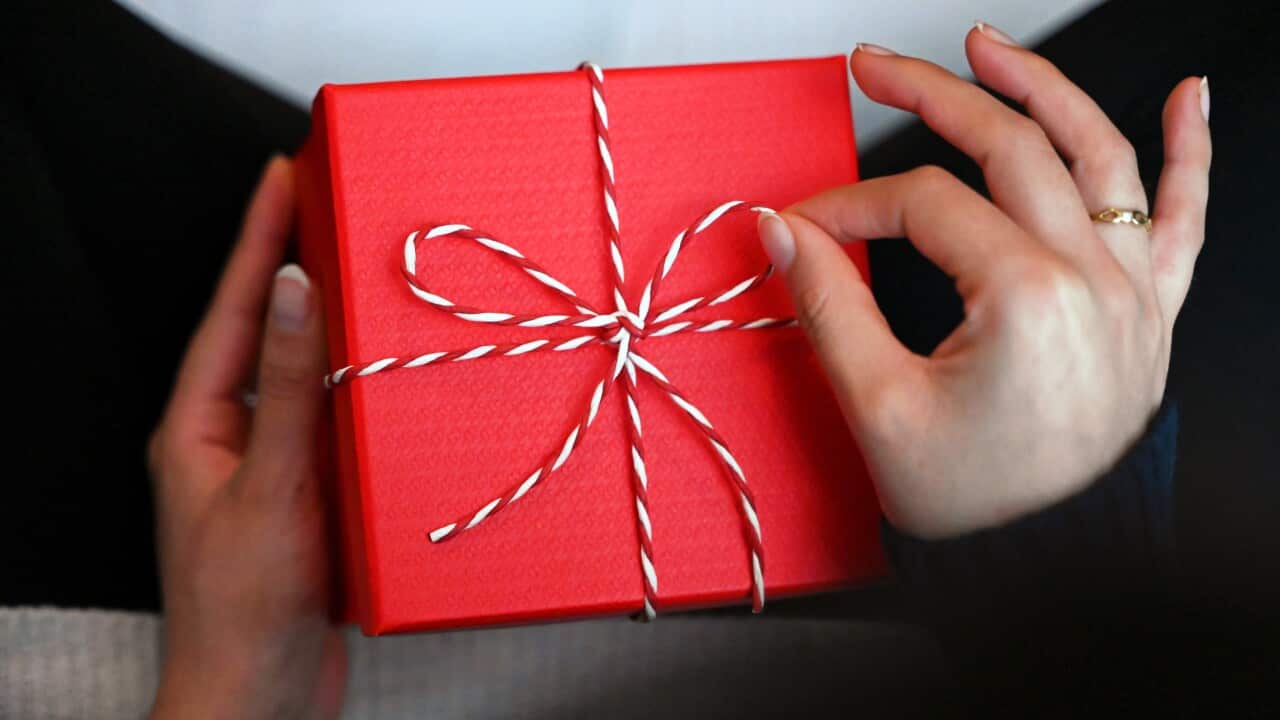
From wafty deodorant to odd novelty items and unconventional candles — we've all been on the receiving end of unsuitable gifts at some point in our lives.
But instead of adding to the nation's landfill, Australians are being urged to donate their unwanted Christmas gifts — whether through op-shops, re-gifting to family and friends, or handing them over to neighbours — with the goal of making them someone else's treasure.
And with the nation's charity bins set to be inundated this holiday season, people are being urged to donate responsibly and think carefully about the condition of the item being donated.
Give it to an op-shop
When considering donating, most Australians opt to donate to their local charity bins.
News that makes sense
Your trusted source for staying up-to-date with the world around you. Get free daily news updates and analysis, straight to your inbox.
Yolanda Saiz, CEO of Vinnies NSW, a charity group which runs op shops, said the appeal of op-shopping for many is the "treasure hunt" experience.
"They might find that quirky gift or something a little bit different, that they didn't think they wanted or needed, but when they see it in an op shop, it's exactly what they want for their home or for themselves," Saiz told SBS News.
Men's clothing is in demand, she said, but they are also keen on shoes, handbags, books, bric-a-brac, and women's clothing.
It's best if it still has the tags, is unused, or is unopened, but that's not a red line.
Many op-shops end up having to reject goods because they're in a state that can't be resold — furniture with chips or cracks, electrical goods that are glitchy, clothing that's torn.
"It doesn't have to be in any original packaging, just as long as it's in good working condition and something that you ... might not have a need for, but you would pass on to a friend or family member," Saiz said.
Additionally, donors are being asked to be mindful of how their items are disposed of — if they're left outside a charity shop, exposed to the elements, or foraged by others, they can get damaged.
Pay it forward to your community
If you don't want to go the op-shop route, 'pay it forward' groups are another option for re-homing items, where others will come and pick them up from you.
Pay it forward groups feature prominently on Facebook community pages, connecting unwanted or pre-loved goods with new owners.
It's a good alternative for those who may be more comfortable donating online, said Jennifer Macklin, a senior research fellow at BehaviourWorks Australia, part of Monash University's Sustainable Development Institute.
"Some people find it trickier than others, but for most people, listing something on there is as easy as taking a few photos, writing a pretty good description, you know, and popping it on there, and then, you know, leaving it for people to decide," she told SBS News.
Macklin said it's a good option for the environmentally conscious.
"In that way, when you list them, you know that the people coming to get them actually want them," she said.
"Whereas when you ... give it to charity, you have to kind of exercise ... your own judgement to determine, are they likely to want it or not?"
Consider a re-gifting cupboard
Macklin said storing unwanted gifts in a cupboard for re-gifting for a later celebration is another handy option.
This is a great way to avoid landfill, support the circular economy, and avoid being caught without a present when you're heading to an event in the near future.
"You don't then need to go out and buy a new gift," Macklin said.
It will also ensure it doesn't send the wrong signal to manufacturers about the demand for certain products.
"Because one of the biggest impacts of all of this is that most of these things are new, and they've been purchased new. So they're sending an economic signal that we want to produce more stuff," Macklin said.
"So if you can actually re-gift it yourself, that means next time you need a present, you don't need to go out and buy and send that economic signal of 'We want to buy more, so you need to make more'."
The final option, of course, is to resell the items on various online platforms, which can come with the added bonus of cash.
Macklin also advises people to shop at op-shops to create a more even balance for the charity groups.
"We know that more people donate than buy from charity stores, and if we could get that more even, if more of the people who donated also bought back, that would make the system run smoother.
"That would mean that charity stores could take more."
For the latest from SBS News, download our app and subscribe to our newsletter.







