In brief
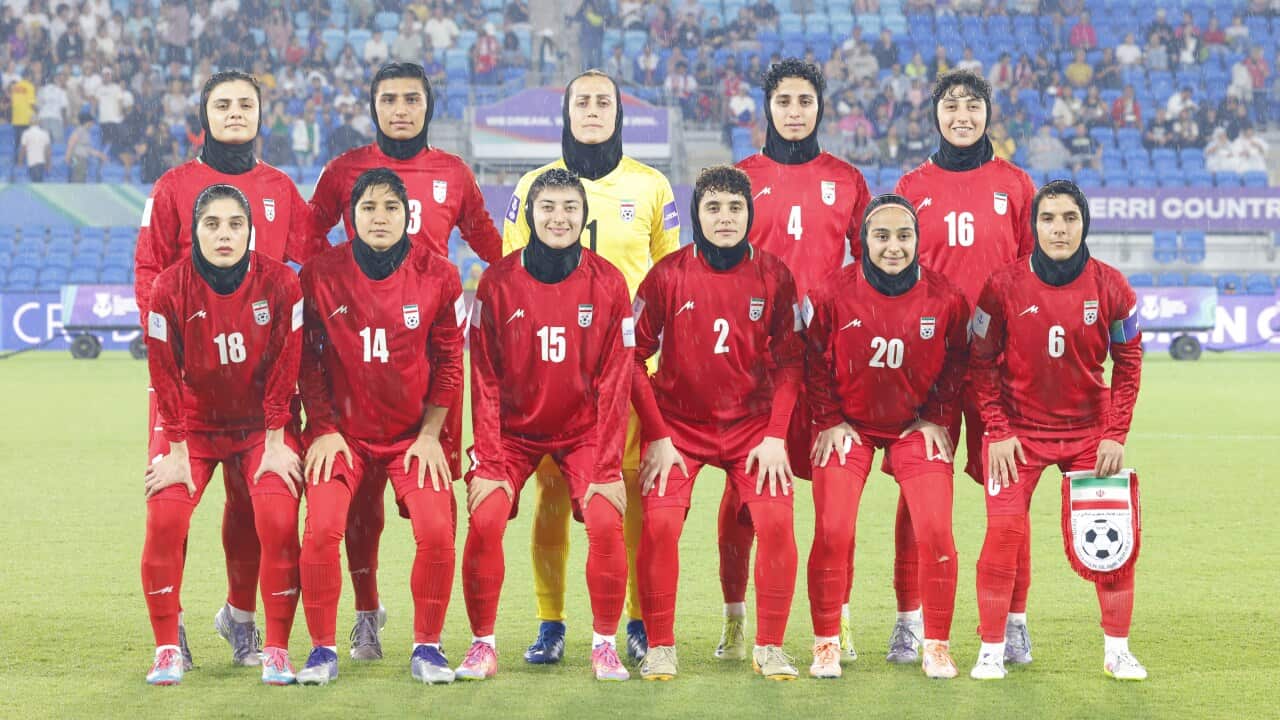
- The Iranian women's football team refused to sing their national anthem before a game against South Korea on Monday.
- They've been attacked over the gesture in Iranian media, sparking fears for their safety if they return home.
Australian authorities are being urged to step up and protect an Iranian soccer team as they wrap up their Women's Asian Cup campaign.
There are "grave concerns" the footballers will face retribution if and when they return home after refusing to sing the national anthem before their tournament-opening game against South Korea in what was viewed as a silent protest.
Footage from a state-controlled television broadcaster in Iran showed a conservative presenter labelling the women's actions "the height of shamelessness and betrayal" and calling them traitors, sparking fears the country could arrest the players on their return.
Corruption and treason can be punishable by death in Iran.
The players sang the anthem and saluted before their second match on Thursday night against Australia after they were allegedly instructed to do so by the government.
News that makes sense
Your trusted source for staying up-to-date with the world around you. Get free daily news updates and analysis, straight to your inbox.
A letter signed by 12 Iranian community organisations and civil society groups has been sent to Home Affairs Minister Tony Burke.
It outlines "grave concerns" and says the current wartime environment in Iran has intensified repression, fear and the risks faced by people perceived as traitors.
The letter calls for no players to leave Australia while credible fears for their safety remain, for independent legal advice to be provided and for Australia to make it clear that humanitarian obligations to players at risk of persecution and harm will be upheld.
"The players are not simply visiting athletes, they are women under the authority of a barbaric authoritarian state that has a long record of punishing perceived disobedience, including through intimidation, coercion, torture and reprisals against family members," the letter says.
The organisations behind the letter have also been running an online petition that's now been signed by more than 51,000 people.
It is unclear what help Australia can or will offer, given there are fears family members in Iran might be in danger if the footballers seek asylum.
Foreign Minister Penny Wong would not say whether her government had made contact with the players but said Australia stood in solidarity with them.
"It has been really moving for Australians to see them in Australia, and the Matildas swapping jerseys with them was a very evocative moment," she told ABC's Insiders program on Sunday.
Former Australian of the Year and human rights advocate Craig Foster called for football's governing bodies — the Federation Internationale de Football Association (FIFA) and tournament organiser the Asian Football Confederation (AFC) — to uphold their obligations to players.
"If any player feels unsafe for any reason, whether in camp or following, they are entitled to make this clear to the AFC and FIFA, who must immediately secure their safety," he said.
"The Australian government should ensure that no players are forced to leave against their wishes or will, and provide all opportunities to be satisfied this is not the case."
Protests follow Iran's exit in Women's Asian Cup
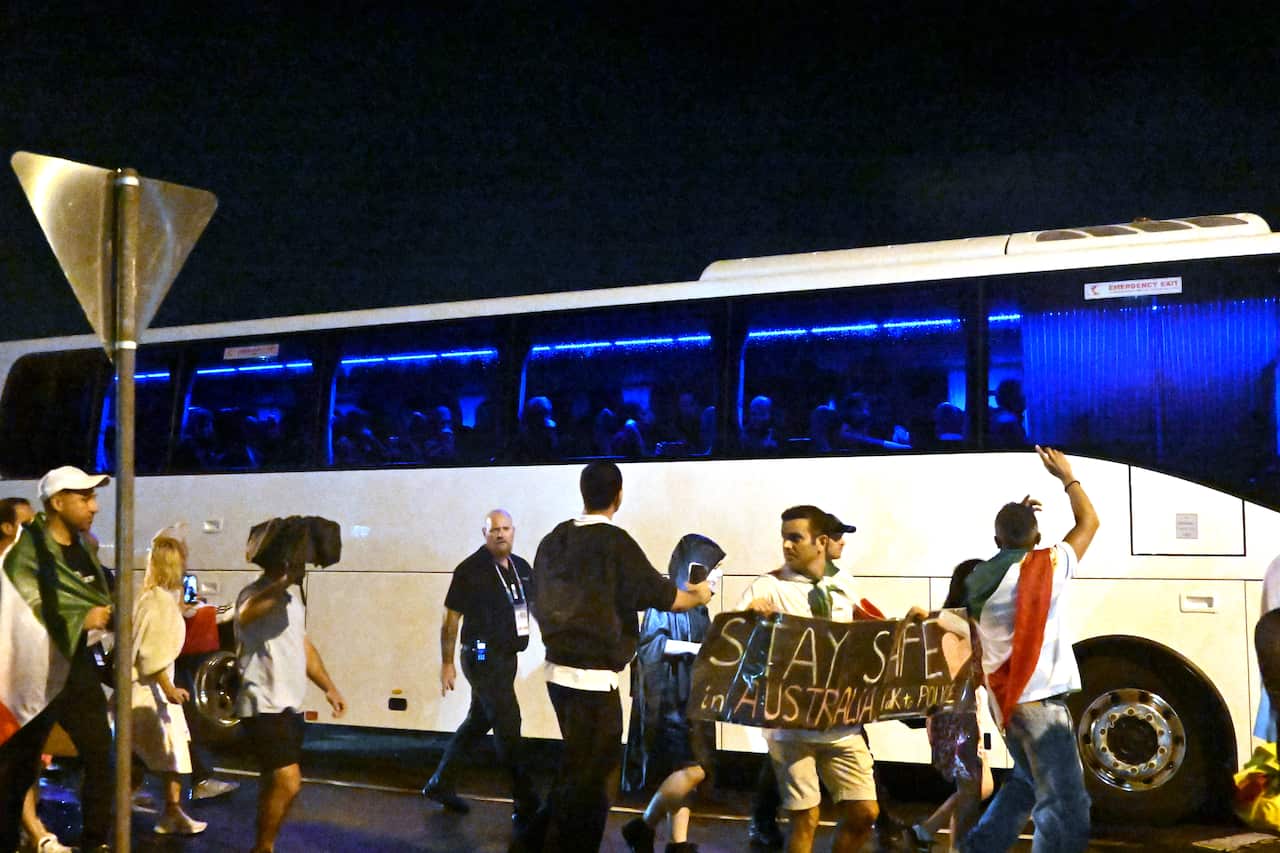
After their 2-0 defeat against the Philippines, which ended their tournament on Sunday, the Iranian team had to face dramatic scenes as protesters blocked their bus amid 15 minutes of mayhem as they tried to depart.
The demonstrators banged on the side of the vehicle and chanted "let them go", leading to police intervention as they tackled and pushed the crowd of about 200 people.
As the bus crawled up the road, the Iranian players themselves were captured taking photos of the protest.
The unrest happened after the Philippines' Sara Eggesvik and Chandler McDaniel netted the two game-defining goals to send Iran tumbling out of the tournament as they finished fourth in Group A.
Before the match, the Iranian players and coaches again sang the national anthem, displaying a military salute.
"We want to come back to Iran as soon as we can," coach Marziyeh Jafari said.
"I want to be with my country and home Iranians inside Iran. We are eager to come back."
For the latest from SBS News, download our app and subscribe to our newsletter.







