The federal government wants to partner with private investors to fund state infrastructure in hopes of reducing Commonwealth grants for key projects.
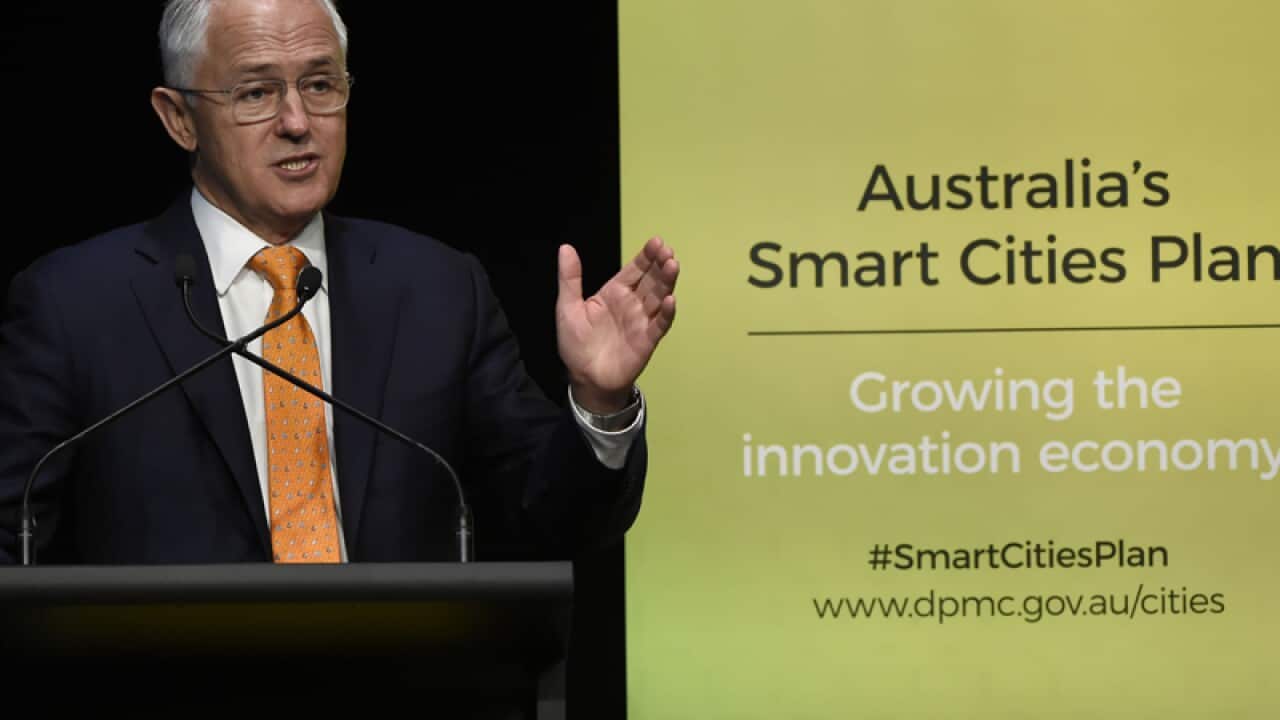
Prime Minister Malcolm Turnbull will on Friday reveal his "smart cities" plan to reshape investment in train lines, roads and other infrastructure.
The federal government will encourage private investment by leveraging its balance sheet, while encouraging state governments to partner on "city deals" that drive national priorities.
The plan also focuses on so-called "value-capture" for major projects - where the value added to impacted areas is collected to recoup costs.
The federal government wants to reduce reliance on grants for infrastructure, saying it adds to the nation's deficit and reduces incentives for innovative funding.
News that makes sense
Your trusted source for staying up-to-date with the world around you. Get free daily news updates and analysis, straight to your inbox.
"We cannot afford to fund every project of merit from our budget," the policy document states.
Mr Turnbull will on Friday commit $50 million to kick off planning and development works on major infrastructure projects - including the controversial Melbourne Metro rail project.
It will come with an innovation financing unit, which will strike deals with the private sector to fund projects.
The plan aims to improve access to jobs and housing affordability and reduce traffic congestion by better spreading out economic hubs.
About 40 per cent of Sydney's jobs growth is in the city centre.
"The concentration of jobs in these economic centres is often reinforced by pre-existing transport corridors and interchanges," the policy states.
The way cities are planned, built and managed must be rethought, the government said.
All governments, and the private sector played a role in increasing housing supply in the right locations.
The federal government invests in urban infrastructure, states control stamp duty and land tax while local governments are responsible for zoning and development approvals and charges.
The government uses the concept of the 30 minute city - where no matter where you live, you can access facilities within half an hour - as a potential goal in Australia's cities.
The plan also focuses on long term investment in regional cities, some of which are hit by low or negative growth as manufacturing and mining sectors decline.
"While new job opportunities are being created in regional tourism and services, including health and aged care, not every regional city is experiencing new opportunities," the policy said.







