A case in point of economic weakness is Russia's dependence on energy exports. Without oil and gas sales, which accounts for 50 percent of its national income, Russia would collapse economically. Meanwhile, the West produces the advanced technologies for extracting energy from the ground. Technologically, Russia is "seriously lagging behind" in microcomputer production – according to Russian Deputy Prime Minister Dmitry Rogozin – compared to Europe and other parts of the world. China, while growing by leaps and bounds for the last twenty years, is facing declining economic output and is handicapped by its authoritarian political system.
Three, authoritarian governments are vulnerable to internal and external sources of opposition. Russia, China, and Iran impose Internet censorship laws to hobble domestic opposition movements. Authoritarian governments resist UN intervention against other members of the axis, notably Syria, because they fear cascading revolutions in authoritarian states. If one state falls, others are not far behind.
In the end, the axis grand strategy is fundamentally weak. That democracies are chaotic and unpredictable, but know reflexively how to adapt and advance, puts authoritarian states on the defensive. Knowing that, the best strategy for axis states is to maximize their power by working closely together to coordinate their policies as a way to put the West on the defensive. Ultimately, authoritarian societies cannot compete effectively with the West because the strengths of the axis grand strategy are more than matched by its weaknesses
News that makes sense
Your trusted source for staying up-to-date with the world around you. Get free daily news updates and analysis, straight to your inbox.
Can the West Defeat the Axis Grand Strategy?
The question for the West is: can they defeat the axis grand strategy?
The answer is “yes.”
First, the West must express, in words and actions, that it is and truly should be, supremely confident in its abilities and policies – largely because the force of history is on its side. Is anyone willing to argue that the authoritarian axis represents anything other than a failed past?
The West's anti-authoritarian axis strategy should build from an inner sense of confidence, sadly somewhat lacking at the moment, that free societies and free markets are the wave of the future. While the West faces a stalling economic recovery with most of the European Union in recession, the cyclical nature of economics suggests that the West and its confidence will rebound. Eventually, the West will organize effective leadership against the axis.
Second, the West has other reasons to be confident. Energy reserves in the U.S. and elsewhere are increasing, as new oil and natural gas reserves are found. For the first time in decades, observers openly ask if the U.S. might achieve energy independence, utilizing domestic and North and South American sources of oil and gas. This development rests purely on economic and technological élan, as the axis states are unlikely to marshal the wherewithal to achieve such breakthroughs.
In demographic terms, China and Russia face serious difficulties. Russia is experiencing emigration as talented people are leaving to pursue the opportunities that abound in free societies. Why would young, talented stay in Russia with its authoritarian government and moribund economy? China, by contrast, faces the classic problem of suffering the consequences of massively mismanaged demographic policies. China's population has rising economic aspirations that economic growth may simply not satisfy. Beijing's export model is failing. They are having trouble moving to a service economy while using domestic consumption to power growth.
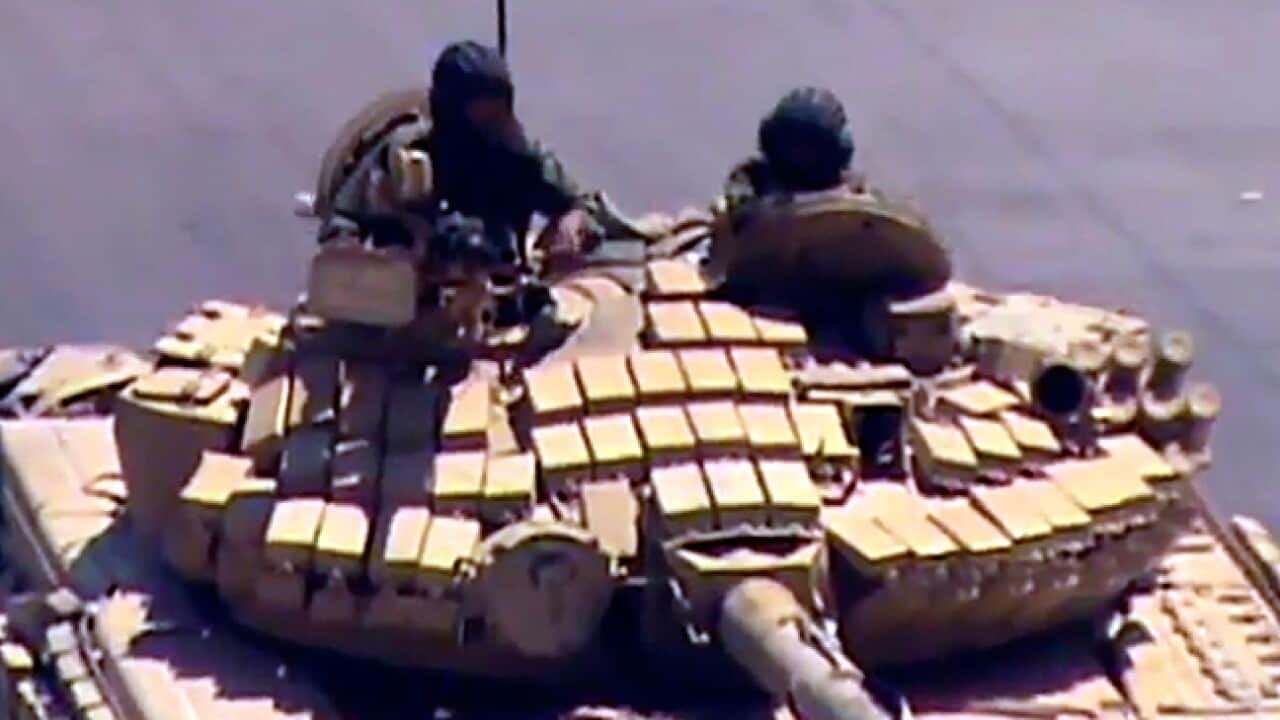
Politically, several states in the axis face serious domestic problems. North Korea always seems to be hovering on the brink of collapse. Syria is practically in a full-scale civil war, as seen by an attack that killed senior members of the government in Damascus. Iran faces increasingly determined adversaries, notably Israel and the United States, who threaten military intervention to prevent Tehran from gaining nuclear weapons. Venezuela's economy is in shambles after Chavez's mismanagement, while he is reportedly quite ill.
States such as Russia, Iran, and Venezuela depend on high oil prices to keep their economies afloat and public expectations in check. In the worst case, North Korea, without China's energy and food support, would collapse.
Third, the West should not feel, much less show, any sense of weakness, indecision, or dithering. The West's grand strategy rests on freedom, while authoritarian states adhere slavishly to the failed logic of controlling all facets of life in their societies, as seen in North Korea.
Put directly, the authoritarian axis grand strategy cannot succeed unless the West fails to respond.
Fourth, the West must guard against the twin dangers of under- and over-reaction. Just because the Russian government uses provocative language does not mean that Washington, Tokyo, Tel Aviv, London, or Warsaw should reciprocate. However, failing to respond forcefully and patiently only emboldens the axis. In the end, the West must marshal its self-confidence into a coherent strategy that permits it to deal with the axis states in a direct, measured, and statesmanlike fashion.
The West's strategy is to identify the challenges posed by the axis grand strategy, while taking steps to counteract it in a thoughtful and deliberate fashion. The West's resources, despite current economic difficulties, so vastly outstrip that of the Axis states that the outcome is not in doubt.
Policy Implications
The West could be forgiven for wondering why we are back to struggling with authoritarian states. Most observers believed the end of the cold war signaled the death throes of authoritarianism.
Strangely, however, authoritarianism experienced resurgence from the birth of free markets in China and energy exports by Russia, Iran, and Venezuela. North Korea survives in part from China's free market successes and the subsidies it provides. Diplomatic cover provided by Russia and China allows Syria to survive open revolt and massacre its own people.
Sooner or later, the West will seriously organize itself to deal with the challenges posed by the axis grand strategy – sooner if the axis continues to push beyond the limits of prudence. What operates in the West's favor is that authoritarian states often fail to exercise sound strategic judgment because their policies are not moderated by public opinion. If the West's weakness is its failure to postpone dealing with threats, the weakness of authoritarian states is their tendency to overreach.
Ultimately, the West's grand strategy is to restrain the actions and manage the decline of the authoritarian axis. We did this before, and we can do so again. The playbook has already been written – it just depends on the West re-reading it.
Dr. William C. Martel is an Associate Professor of International Security Studies at the Fletcher School of Law and Diplomacy at Tufts University. He is the recent author of “Victory in War: Foundations of Modern Strategy.”Follow him on Twitter: @BillMartel234
Related posts:







