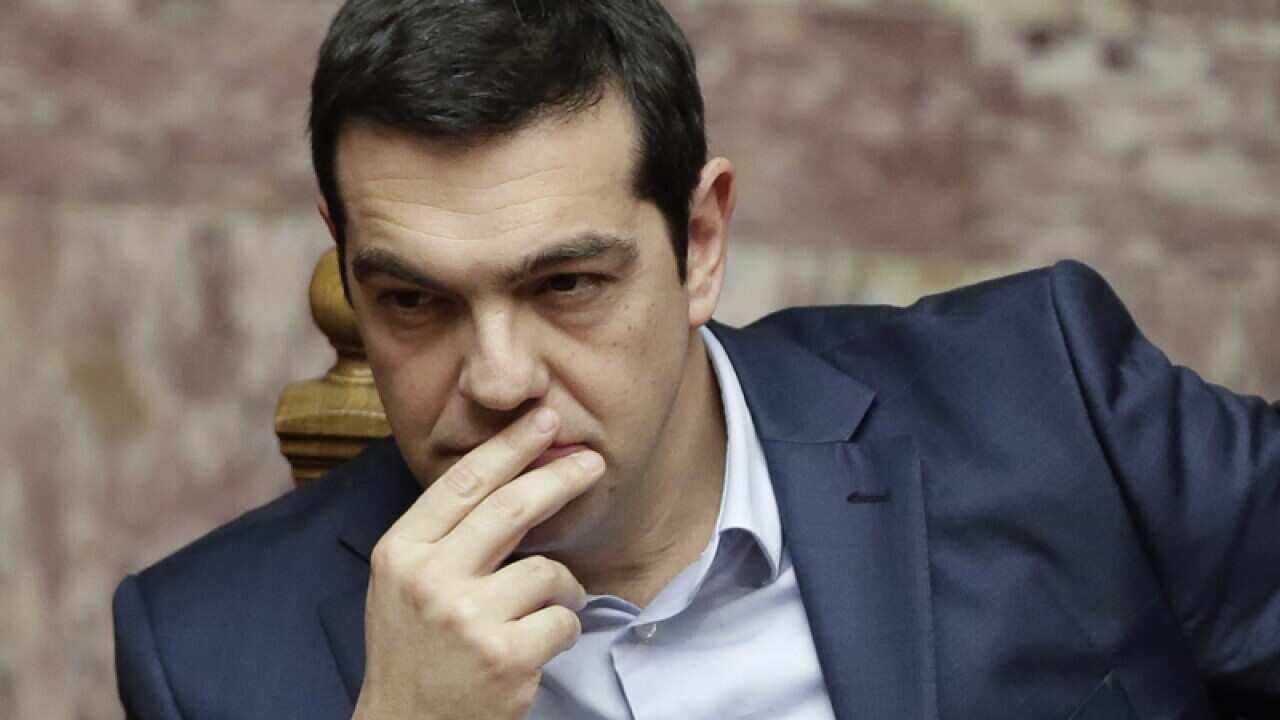
Germany and Greece face off at yet another eurozone meeting in search of a last-minute bailout compromise, with Berlin insisting Athens accept continued austerity in return for fresh debt aid.
After days of sharp exchanges, the 19 eurozone finance ministers gather for the third time in little over a week to consider a take-it or leave-it proposal by Athens seeking the extension of an EU loan program which expires this month.
Europe's paymaster Germany initially rejected the request out of hand, denting hopes of a deal.
But a lengthy phone call between Greek Prime Minister Alexis Tsipras and German Chancellor Angela Merkel late on Thursday appeared to calm the waters.
The conversation was "aimed at finding a mutually beneficial solution for Greece and the eurozone," a Greek government source said, adding that it took place in a "positive climate".
And Berlin said on Friday the Greek request offered a "starting point" for further talks.
The Merkel-Tsipras call came after a Greek government source released a document said to outline Berlin's defiant stance at official-level talks on Thursday.
The Greek proposal "is not clear at all.... It rather represents a Trojan horse, intending to get bridge financing and in substance putting an end to the current program," the German statement said, according to the source.
"On this basis it makes no sense to start drafting a Eurogroup statement on Friday," it added.
Greece, whose new government is vehemently opposed to austerity measures demanded in the bailout deal, denied it had made any U-turns.
"We have not abandoned our red lines," government spokesman Gabriel Sakellaridis told Greek television.
Financial markets were calm, reassured to some extent by the Tsipras-Merkel exchange while keeping a close eye on the finance ministers' meeting.
Time is pressing to find a solution before the current bailout program ends, for fear that failure could see Greece run out of money and be forced out of the eurozone within weeks.
Analysts cautiously downplay the likelihood of a "Grexit", saying the eurozone is much stronger now than at the height of the debt crisis in 2011-12.
But the uncertainty weighs heavily at a time when the economy has faltered and governments are desperate to boost growth.
A top European official said the stand-off had come down to a clash of personalities with German Finance Minister Wolfgang Schaeuble furious at the negotiating style of his Greek counterpart, the casual and fast-talking Yanis Varoufakis.
"There is a real problem of personalities and I understand that Schaeuble is outraged by comments made by Varoufakis," the official said.
The issues go beyond personalities, however, and echo a divisive debate in the European Union over whether the austerity policies adopted to cope with the debt crisis have done more harm than good.
Share


