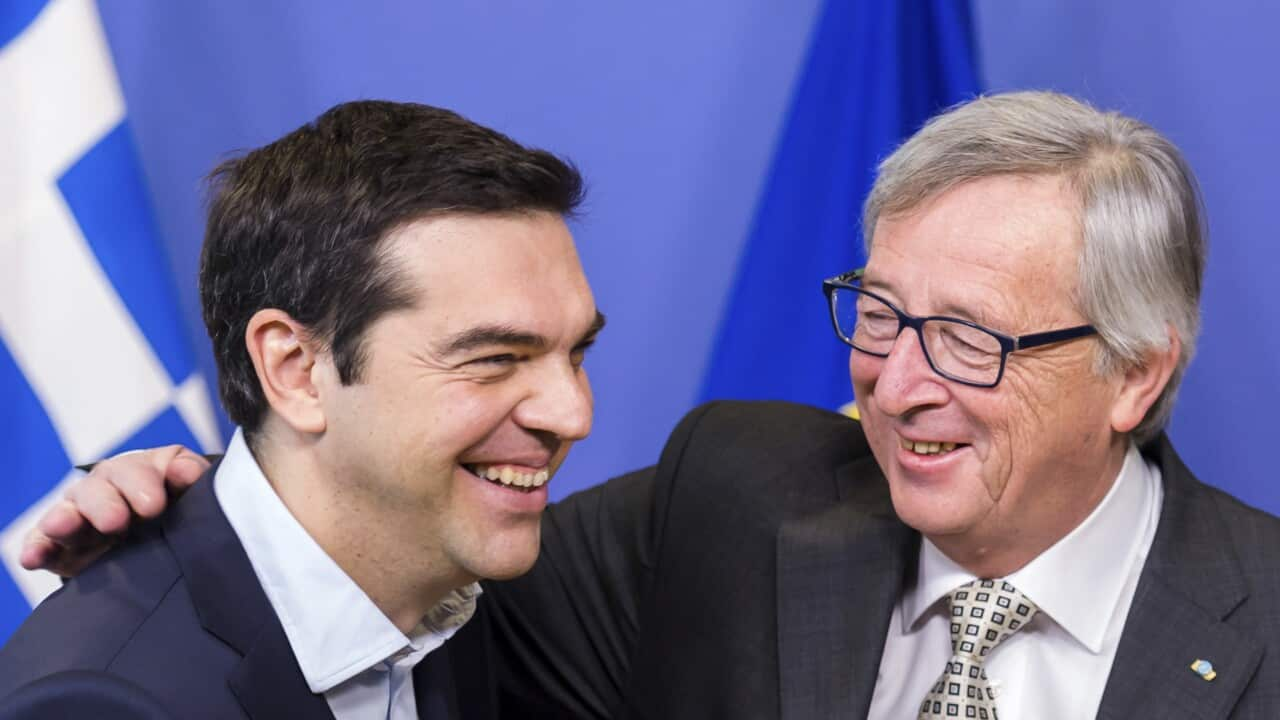
EU Commission President Jean-Claude Juncker invited Tsipras "to discuss the state of play in the negotiations between Greece and its international partners," a Commission spokesman said earlier on Wednesday.
With time running out, and looking to draw a line under four months of acrimonious negotiations, the creditors have effectively come up with a take-it-or-leave-it offer.
However, Tsipras has produced a plan of his own and said he intended to discuss that document in Brussels, calling on euro zone partners to show some "realism" and urging a deal that would let Greece escape from "economic asphyxiation."
Tsipras told journalists at the end of the meeting that only his plans was 'realistic'.
"At the end of the day I think that the realistic proposals on the table are the proposals from the Greek government," Tsipras said.
"I believe that in a few days, in the next days, we will be more close in an agreement. I believe in any case that agreement is in sight but we need to conclude the discussions with a realistic point of view and I am optimistic that from the side of the Commission there is the intention to go on in a realistic point of view," he added.
Asked about the pending payment to the International Monetary Fund, he said: "Don't worry about it."
Noting Greece had made payments in the past, he added: "We will continue."
Greece is due to pay back the IMF 300 million euros ($335 million) of loans on June 5.
Facing bankruptcy, his government has been resisting creditors' demands for bigger cuts in pension payments and bigger sales tax increases to generate higher budget surpluses that would allow it to pay off debts.
Locked out of international bond markets, Greece has not received any cash from its trio of creditors since last August and its coffers are all but empty.
Eurogroup President Jeroen Dijsselbloem also took part in the meeting. As he left the Commission and checked in a nearby hotel, Dijsselbloem said talks would continue in the coming days.
Greece owes a total of about €320 billion, of which about 65 per cent is owed to euro zone governments and the IMF, and about 8.7 per cent to the European Central Bank.
Share


