Several members of the Arctic 30, who spent two months in Russian prison last year on piracy and then hooliganism charges following the protest, were there to greet the ship and boarded the vessel in Beverwijk, near Amsterdam, including Tasmanian Arctic 30 member Colin Russell.
In a statement released by Greenpeace, Mr Russell said, "You cannot break or take the tenacious spirit of the Arctic Sunrise. We will fix up all the damage, replace the equipment and the Arctic Sunrise will bounce back into her role as the campaigning legend she is.
"The only way to be confident that we can actually maintain an existence here on earth next century is to err on the side of caution and take the action needed now so that we are not scrambling to save ourselves later on."
Mr Russell will assist in repairing the Arctic Sunrise and crew on its next campaign voyage.

Veteran Greenpeace skipper Pete Willcox, who captained the vessel at the time of the seizure, told AFP, "It's great to have her back."
"We were missing a big member of our family for many months."
Russian commandos seized the Dutch-flagged boat in September 2013 and detained 30 Greenpeace activists and journalists after a protest at an offshore oil rig owned by Russian state oil giant Gazprom.
Russia released the ship in June, but it then took two months to prepare it for the voyage back to The Netherlands, with Greenpeace saying equipment including navigation and communication aids "disappeared or had been severely damaged".
The activists, including four Russians, were arrested after two campaigners attempted to scale the giant Prirazlomnaya offshore platform, which environmentalists warned poses a threat to the pristine Arctic ecology.
Originally facing a charge of piracy, the so-called "Arctic 30", including Australian Colin Russell, Brit Alexandra Harris, who lives in Sydney, and New Zealander Jon Beauchamp, from Adelaide, were later targeted with less severe hooliganism accusations.
They were detained for around two months before being bailed and then benefiting from a Kremlin-backed amnesty.
Greenpeace is suing Russia before the European Court of Human Rights for what it says was the illegal detention of its activists, arguing that it breached their right to freedom of expression.
The Arctic Sunrise meanwhile was towed to the Arctic port of Murmansk in northwestern Russia where it was detained.
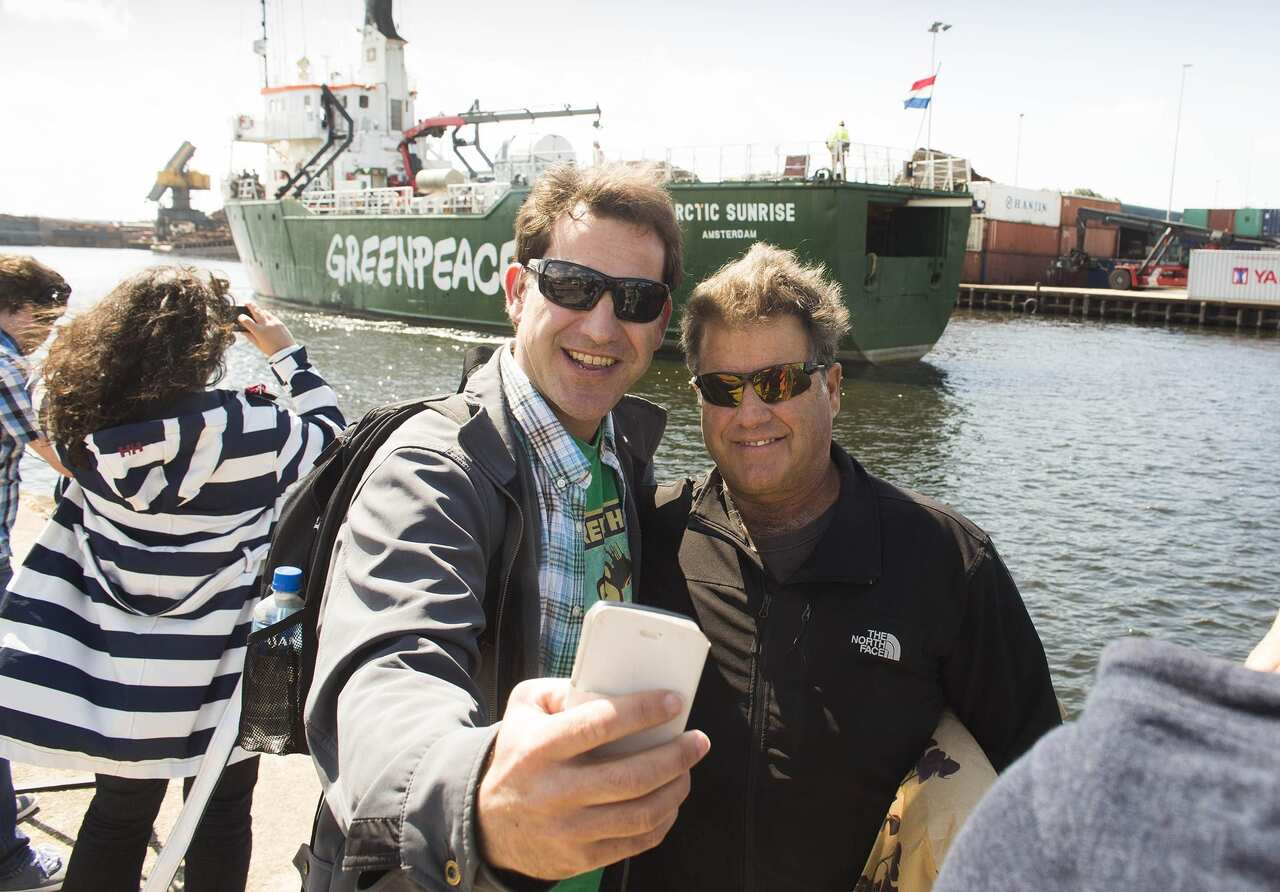
The Arctic Sunrise finally left Murmansk just over a week ago after a Greenpeace crew worked around the clock to repair some of the damage.
"Once welcomed in Amsterdam, the Arctic Sunrise will head straight for the shipyard for much-needed repairs," Greenpeace said in a statement.
"The idea is to re-install the electronics and get her going again," said Willcox, who was also in charge of the environmental group's Rainbow Warrior ship when French agents sank it in Auckland harbour in 1985 as it prepared to lead protests around Mururoa atoll.
"I think she'll be back out campaigning in about a month, maybe six weeks," Willcox said.