In brief
- The H5 bird flu variant has finally been detected in Australia after years of preparation.
- Poultry industries are on high alert, and there are concerns for Australia's unique wildlife.
After years without a single case, H5 bird flu was detected in Australia for the first time last week. The virus has had devastating consequences on wildlife and poultry on other continents. What could happen now that it's finally reached our shores?
A brown skua and a northern giant petrel in Western Australia have tested positive for the H5N1 strain of the virus, prompting precautionary lockdowns at some WA poultry production facilities.
Both animals were discovered on a remote beach in Esperance, about 700km south-east of Perth.
While spread to humans is rare, the virus can infect or cause illness in a range of animal species, including dairy cattle, domestic cats, pigs, goats, horses and seals. In chickens, an infection is typically fatal.
There's no evidence to suggest the strain has been found in local poultry or agriculture, federal Agriculture Minister Julie Collins said.
News that makes sense
Your trusted source for staying up-to-date with the world around you. Get free daily news updates and analysis, straight to your inbox.
The federal government has reiterated that Australia is well-prepared for the arrival of the virus, which has been circulating globally since 2020.
Authorities are still investigating whether the virus is widespread in Australian wildlife or contained to a few isolated cases in migratory birds.
But Collins warned lessons from overseas indicated the virus cannot be prevented from spreading, and Australia can't stop it from arriving via migratory birds.
"Experts will decide whether or not it's eradicable or whether or not we manage the disease," she said.
Another egg shortage?
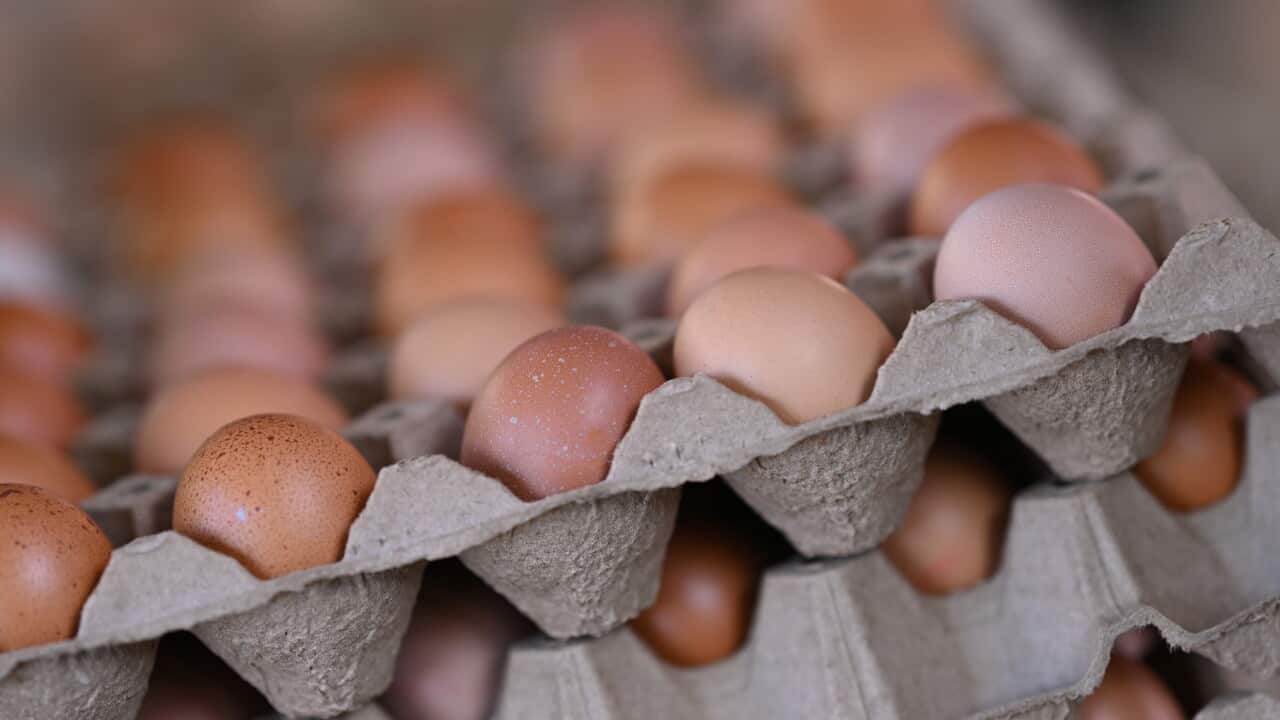
During previous avian influenza outbreaks, egg and poultry production were impacted in some parts of Australia, causing the cost of eggs to spike and shortages to occur.
In 2024 and 2025, egg shortages were reported in Australia after hundreds of thousands of hens were euthanised to contain the spread of the highly pathogenic virus.
More than 200 million chickens have been culled in the US since the virus arrived there.
Robyn Alders is a veterinary immunology expert and honorary professor at the Australian National University's Development Policy Centre.
She said the characteristics of the H5N1 bird flu variant are "significantly different from the bird flu viruses that Australia has dealt with in the past".
"We know what happened to egg prices during the last outbreak, and that was an H7 — so, a different strain of bird flu — but one that behaves like the old bird flus that we knew," she told SBS News.
She also noted that heightened biosecurity measures, such as bringing free range hens into indoor housing to prevent exposure to wild birds, can also come at a cost to producers, which could be passed on to consumers.
Nationals deputy leader and agriculture spokesperson Darren Chester said on Tuesday that poultry producers were hoping for the best, but had to prepare for the worst.
"This is a potentially very serious situation, but we need to reassure Australians right now and reassure them quite clearly that it is safe to eat Australian poultry and eggs," he said.
What about the dairy industry?
The virus has caused significant infection and productivity losses to the US dairy industry.
"In the US, we've seen that this variant is able to infect dairy cattle," Alders said.
"It doesn't necessarily cause death in these cattle, but it does lower their production. It puts them sort of off colour, and even after they recover from the virus, their milk production never returns to what it was."
In a report published last year, the Department of Agriculture, Fisheries and Forestry estimated the risk to the Australian dairy industry from H5 bird flu to be low.
It estimated the risk to be negligible for beef cattle, low for pigs and negligible for sheep and goats.
What's the risk to humans?
Infections in humans are rare, but can be severe, according to the Australian Centre for Disease Control (CDC).
It typically causes a respiratory infection, and occurs almost exclusively in individuals who have had close contact with infected sick or dead animals.
The CDC says the risk to people in Australia is low, and staying away from sick or dead birds is the best way to protect yourself.
"There is no evidence of human-to-human transmission with this virus worldwide, and this virus has been circulating around the world since 2020," said Emma Grant, a research fellow with La Trobe University's Institute for Molecular Science.
"The risk to human health remains low, but it is really important for people to remain vigilant, particularly those who are in farming or agricultural roles, keeping an eye on their farms, preventing contact with any wild animals," she told SBS News.
Concerns for Australian wildlife
The H5 variant is affecting a much wider range of animals than other bird flu variants.
More than 13,000 elephant seal pups died after being infected on Heard Island, a sub-Antarctic island and Australian external territory.
The strain was also found in king penguins, Gentoo penguins, Antarctic fur seals and a South Georgia diving petrel.
"Our worry with this variant coming to Australia is our unique wildlife, in that we don't know how susceptible they're going to be," Alders said.
"It's going to be a really important job for scientists and wildlife folk and the general public to really to take note of what's happening and to share information if they're concerned as quickly as possible."
Domestic animals
The virus has caused serious illness in domestic cats overseas.
It is suspected to be caused by exposure to infected wild birds or poultry
"If the virus does spread and become widespread in Australia, the recommendation in countries where the disease is endemic is that cats should be kept indoors as much as possible, because we know they love to hunt," Alders said.
What can you do?
Members of the public should stay away from birds that are sick or dying and report them to the 24-hour Emergency Animal Disease Hotline on 1800 675 888.
People in agricultural roles are advised to take steps including frequently changing animals' drinking water to prevent contamination from bird droppings, keeping animals in clean environments and away from wildlife populations.
Experts said getting a regular flu vaccine is also a useful step.
Though the likelihood is low, bird flu could combine with human flu in a co-infected person, creating a new strain with greater potential to spread between humans.
"Everybody in Australia, be they farmers, be they people who care for or love wildlife, or be they pet owners, we're all going to play our role in hopefully preventing spread," Alders said.
— With additional reporting by the Australian Associated Press.
For the latest from SBS News, download our app and subscribe to our newsletter.







