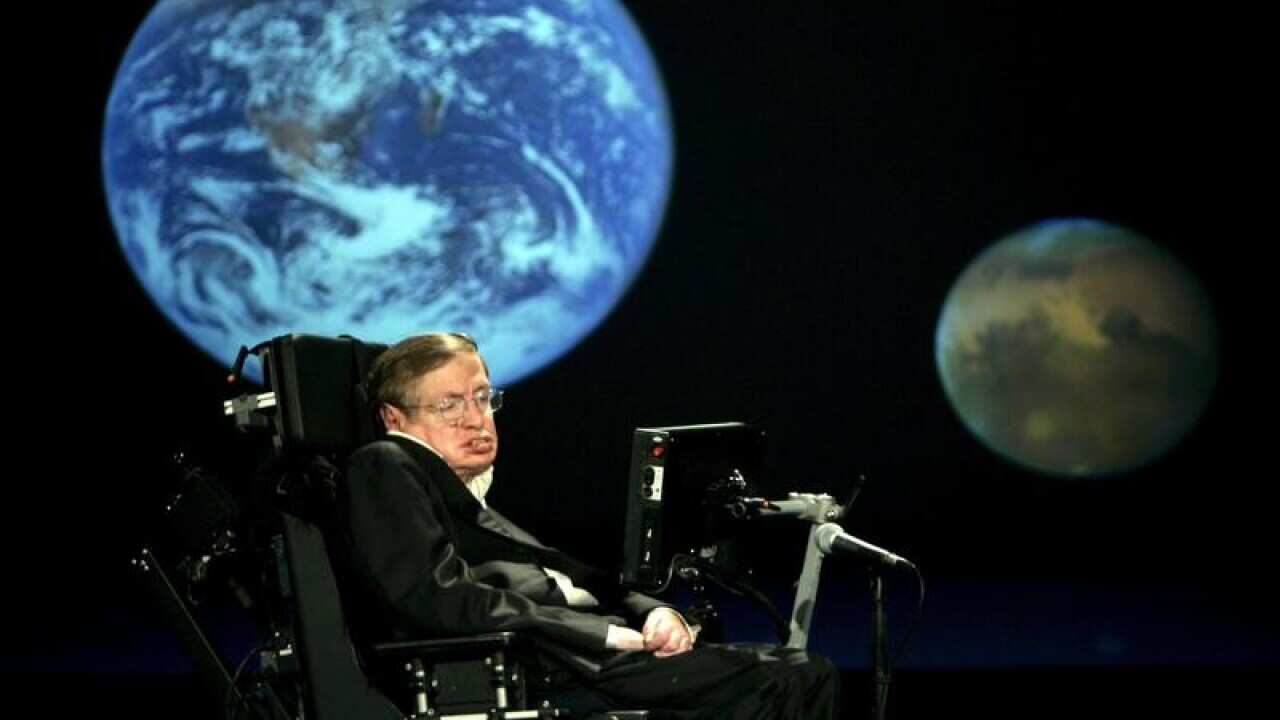
Stephen Hawking's computer-generated voice was known to millions of people around the world, a robotic drawl that somehow enhanced the profound impact of the cosmological secrets he revealed.
The technology behind his means of communication was upgraded through the years, offering him the chance to sound less like a machine, but he insisted on sticking to the original voice because it had effectively become his own.
The renowned theoretical physicist, who died on Wednesday aged 76, lost his ability to speak more than three decades ago after a tracheotomy linked to complications in the motor neurone disease he was diagnosed with at the age of 21.
He later told the BBC he had considered committing suicide by not breathing after the operation, but he said the "reflex to breathe was too strong".
Hawking started to communicate again using his eyebrows to indicate letters on a spelling card.
News that makes sense
Your trusted source for staying up-to-date with the world around you. Get free daily news updates and analysis, straight to your inbox.
A Cambridge University colleague contacted a company which had developed a program to allow a user to select words using a hand clicker, according to a 2014 report in Wired magazine.
It was linked to an early speech synthesiser, which turned Hawking's text into spoken language.
In 1997, PC chipmaker Intel Corp stepped in to improve Hawking's computer-based communication system, and in 2014 it upgraded the technology to make it faster and easier for Hawking to communicate.
It used algorithms developed by SwiftKey, a British software company best known for its predictive text technology used in smartphones.
Hawking provided lectures and other texts to help the algorithm learn his language, and it could predict the word he wanted to use by just inputting 10-15 per cent of the letters.
But despite the upgrades to the software, one thing remained constant: the voice itself.
Hawking stuck with the sound produced by his first speech synthesiser made in 1986.
It helped cement his place in popular culture.
"I keep it because I have not heard a voice I like better and because I have identified with it," he said in 2006.







