
Key Points
- The four-country summit is aimed at ending the 11-year conflict in Syria.
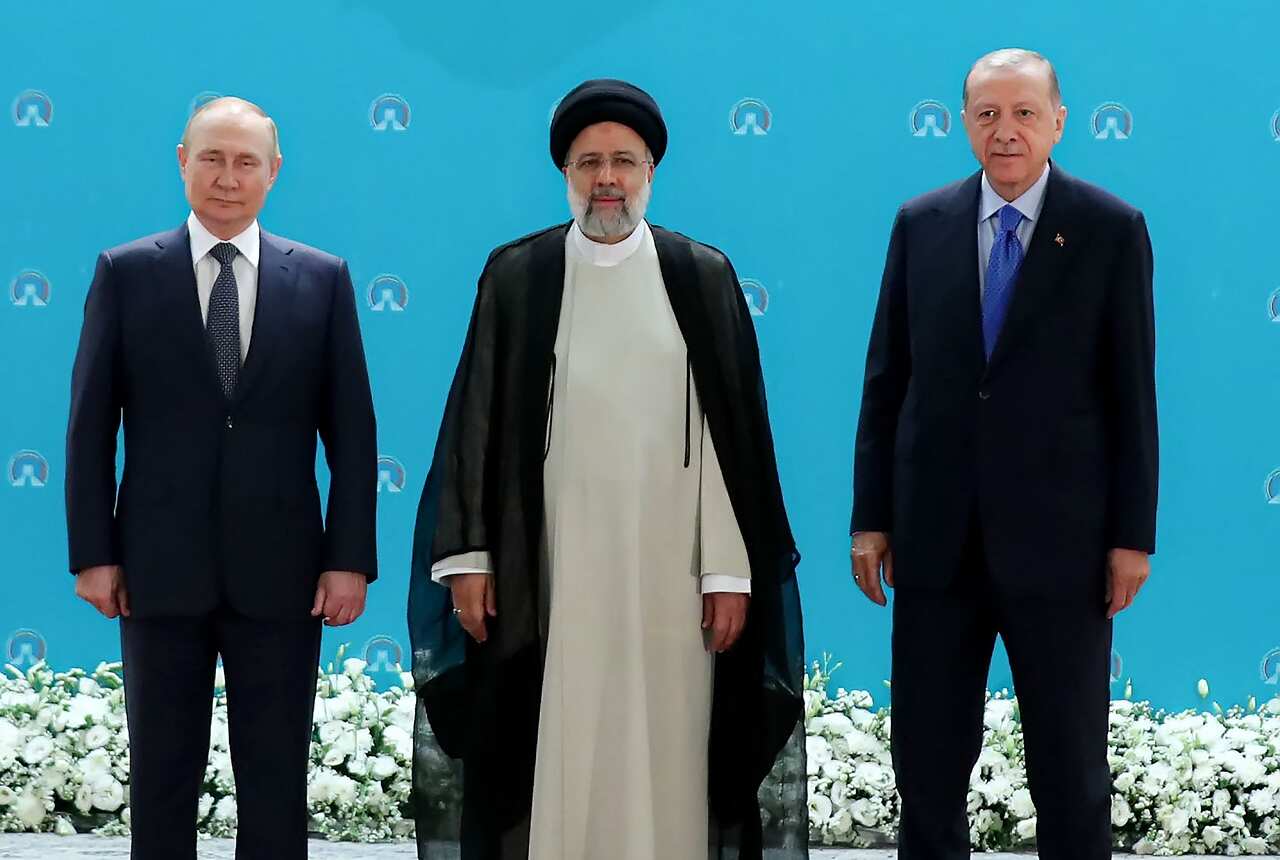
- Iran's President Ebrahim Raisi hosted his Russian and Turkish counterparts, Vladimir Putin and Recep Tayyip Erdogan.
Syria says the Turkish president did not achieve his "goals" during a summit with Iran and Russia, referring to Ankara's efforts to rally support for a military operation in northern Syria.
Iran's President Ebrahim Raisi hosted his Russian and Turkish counterparts, Vladimir Putin and Recep Tayyip Erdogan, on Tuesday as part of the "Astana Peace Process" ostensibly aimed at ending Syria's 11-year conflict.
Iran and Russia support the Syrian government and Turkey supports rebel forces against the regime in the long-running war.
But Turkey is also deeply opposed to a semi-autonomous Kurdish administration in Syria's oil-rich northeast, and Mr Erdogan has lately repeatedly vowed to launch an offensive against Kurdish militants, on the back of a 2019 onslaught.
News that makes sense
Your trusted source for staying up-to-date with the world around you. Get free daily news updates and analysis, straight to your inbox.
Mr Erdogan said at the summit Turkey "will continue" its fight against "terrorist organisations", demanding Russia and Iran's backing.
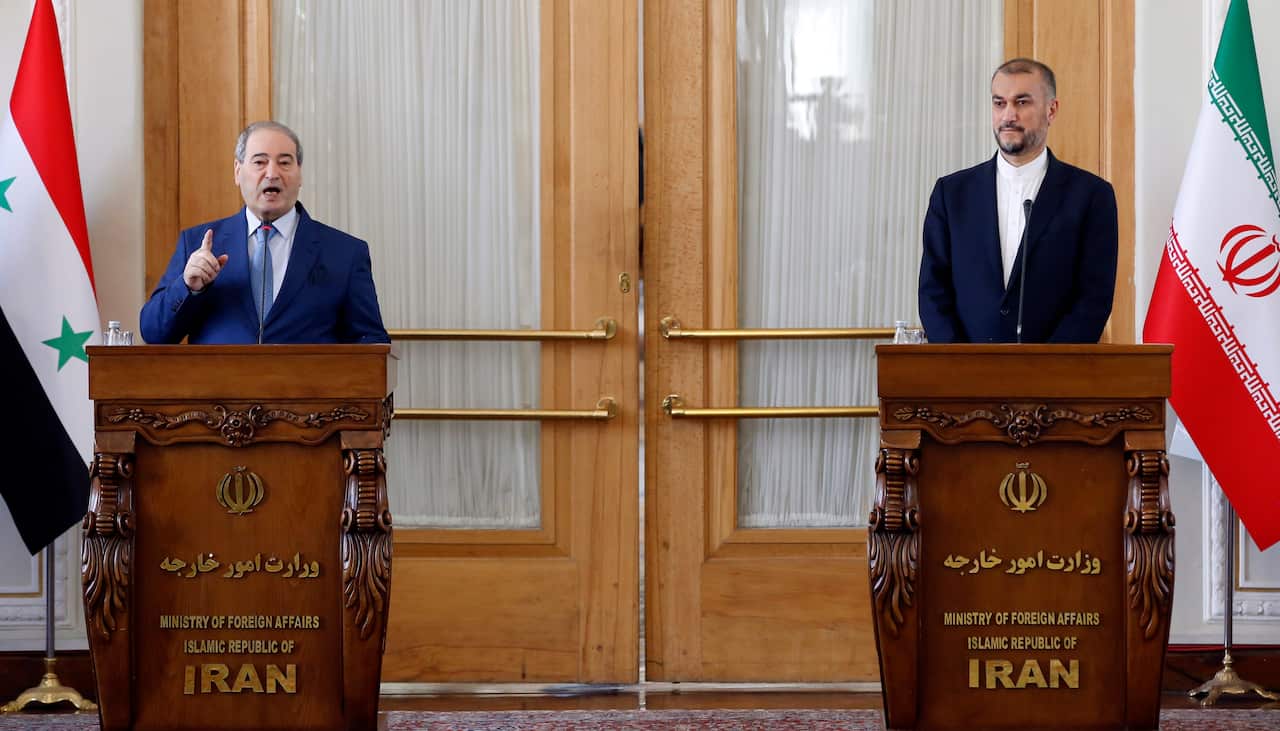
Hours after the summit finished, Syrian Foreign Minister Faisal Mekdad was received in the Iranian capital Tehran by his Iranian counterpart Hossein Amir-Abdollahian.
Mr Erdogan "had many goals and policies that he wanted to impose on the meeting," Mr Mekdad said in a joint press conference on Wednesday.
Those goals "were not achieved thanks to the serious discussions and opinions put forward by Iranian and Russian friends."
'Negotiate and consult'
On Tuesday, the Turkish president earned a rebuke for his push for the offensive from Iran's supreme leader Ayatollah Ali Khamenei in a bilateral meeting.
Mr Khamenei told Mr Erdogan that any Turkish offensive on Syria would be "detrimental" for the region and called for the issue to be resolved through dialogue between Ankara, Damascus, Moscow and Tehran.
Moscow has previously called on Ankara to "refrain" from an attack.
However, in a statement at the end of the summit, the three countries "rejected all attempts to create new realities on the ground... including illegitimate self-rule initiatives", and expressed their determination to stand against separatist and "terrorist" groups in Syria.
Ankara hopes to create a "safe zone" that would drive Kurdish militants 30 kilometres back from the Turkish border.
Mr Amir-Abdollahian noted that his country "will continue to negotiate and consult with the Turkish and Syrian sides" over Ankara's threatened offensive.
Mr Mekdad suggested that the move increase the risks of Syrian-Turkish "conflict".
"It does not benefit Turkey or anyone other than Turkey to penetrate the Syrian borders and for there to be safe areas, because this will create another kind of conflict between Syria and Turkey," he said.
"We are ready to defend our sovereignty, our security, our freedom and the freedom of our people and this is something that cannot be abandoned."
The Iranian foreign minister reiterated a demand for United States forces — aligned with the Kurdish administration — to withdraw from areas east of the Euphrates, a call that Khamenei issued on Tuesday in a meeting with Putin.
"The presence of US armed forces east of the Euphrates is one of the problems of the region," Amir-Abdollahian said, adding that "we believe American forces should leave Syrian soil immediately and without precondition."
Mekdad described the US presence in Syria as "illegal".







