
Health authorities say most travellers returning to Australia who have tested positive for coronavirus do not appear to have caught the virus on the plane ride home.
Australia introduced mandatory 14-day hotel quarantining for all returning travellers 11 weeks ago, and NSW has hosted the majority of quarantined travellers.

NSW Health said, of the 24,501 people who had been quarantined in the state so far, 128 people have tested positive for COVID-19.
Medical staff have been testing all symptomatic travellers, with about three per cent of those exhibiting symptoms subsequently testing positive.
News that makes sense
Your trusted source for staying up-to-date with the world around you. Get free daily news updates and analysis, straight to your inbox.
NSW Health said most of those people had already contracted the virus before boarding their flights home.
"Most passengers diagnosed with COVID-19 appear to have contracted their infection before boarding their flight," a NSW Health spokesperson said.
"Travellers are returning from all over the world, including the Middle East, Asia, Europe, the US and Africa."
Since 1 April, NSW Health have learned there were coronavirus-positive passengers on 26 international flights into Sydney.
The majority of those flights originated in the Middle East - a common stopover destination for travellers making their way home from Europe.
Australia is currently in talks with New Zealand to open up a trans-Tasman travel bubble with the hopes of eventually expanding it to the Pacific.Australian National University infectious disease physician Professor Peter Collignon said he believes it is safe to resume long-haul travel as long as the planes are not overcrowded.
"We do know this is transmitted, primarily, by droplets, and so the big seat in front of you on a plane does act as a physical barrier," he said.
"But I do think they need to keep the middle seat free, unless you're a family. There's no reason to think planes will be different to anywhere else, so we don't want people sitting next to each other.
"By the same token, we do know that tuberculosis gets transmitted on planes, as does measles, so there is evidence things can be transmitted on planes, it just doesn't happen very often."
Reports emerged over the weekend that the government is considering trimming that period down to seven days for business travellers throughout Asia in a bid to boost the economy.Responding to the report, NSW Health said a reduced quarantine period would not be effective.
"The quarantine period is 14 days, because this is considered to be the outer limit of the incubation period of COVID-19," a NSW Health spokesperson said.
"That is, after being infected with the COVID-19 virus, it can take up to 14 days for symptoms to develop."
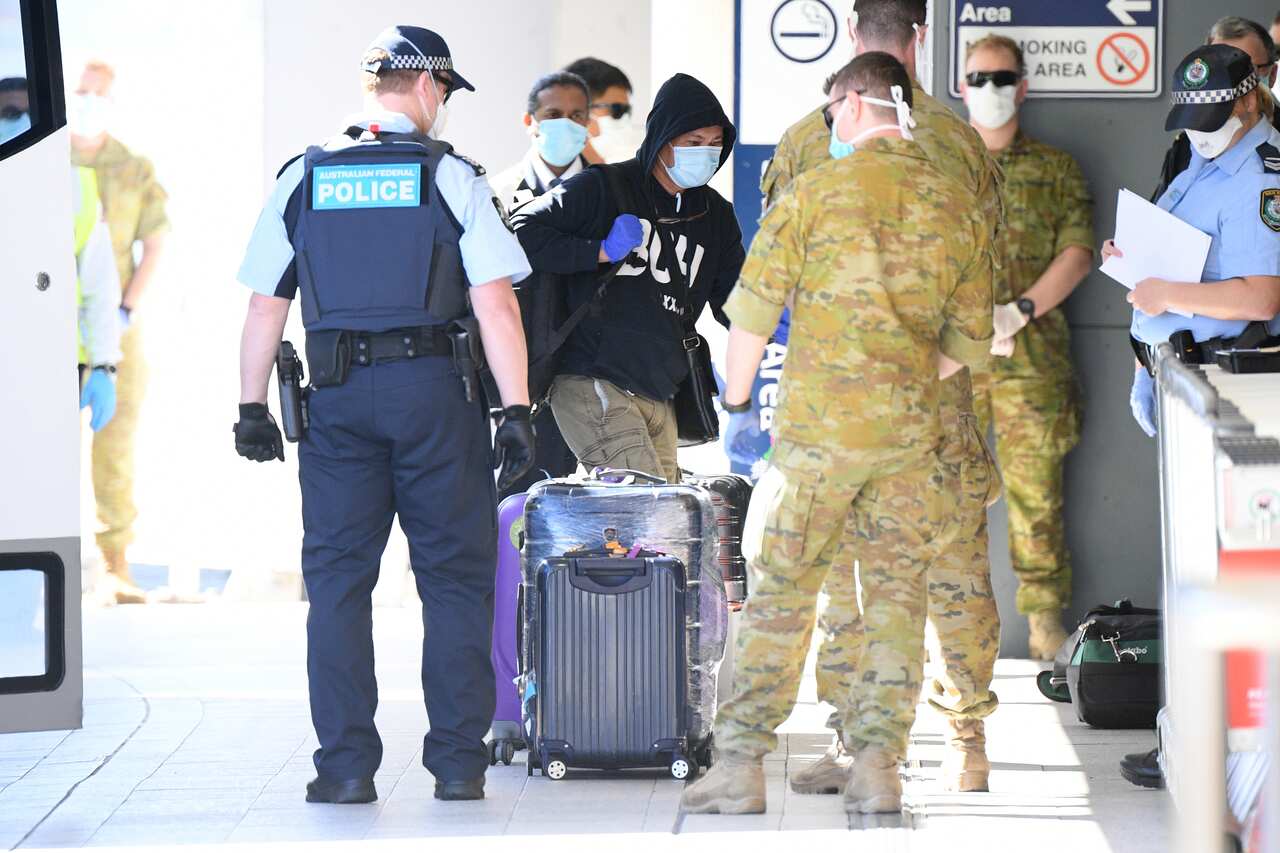
Professor Collignon agreed, saying shortening the quarantine period would be a "disaster".
"The average incubation period is five days, but that’s just the average," he told SBS News.
"So the 14-day quarantine period is here to stay and money from overseas cannot buy you out of the quarantine period."







