

Rodney Sinclair, University of Melbourne
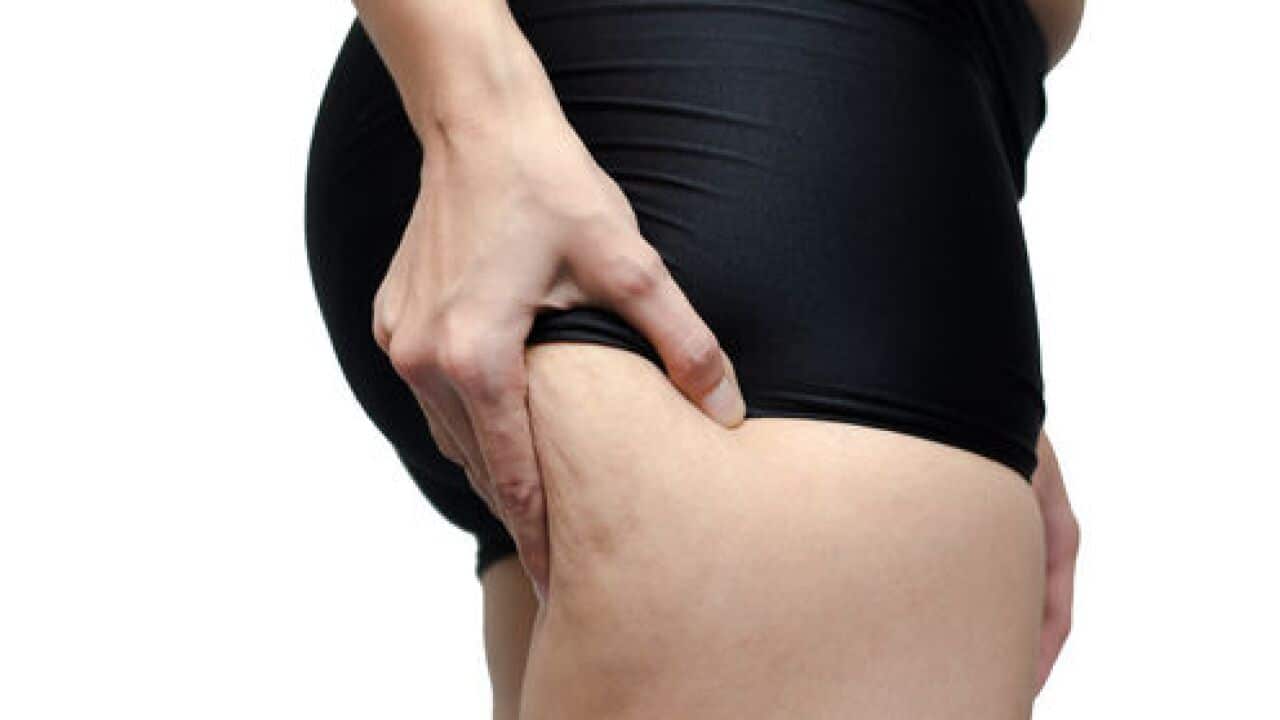
Most women (85%) and a small number of men have cellulite, usually on the thighs, buttocks and upper arms. It’s a normal pattern of fat for people of all shapes and sizes.
The dimpling of cellulite, or gynoid lipodystrophy as it’s medically known, is caused by alterations to the layer of fat beneath the skin, known as subcutaneous fat.
Cellulite can be hard, soft or oedematous (swollen). Hard cellulite is seen in young women who exercise regularly. Soft cellulite is more common in inactive women who have recently lost weight. Oedematous cellulite is seen in women who are overweight.
Why do we have subcutaneous fat?
News that makes sense
Your trusted source for staying up-to-date with the world around you. Get free daily news updates and analysis, straight to your inbox.
The fat tissue beneath our skin has three main functions. It acts as a shock absorber to dissipate external forces applied to the skin, to protect the underlying muscle and overlying skin. Fat in the feet aids walking, while fat on the buttocks aids sitting.
Second, fat provides thermal insulation and helps regulate and maintain our core body temperature. Underweight people feel the cold more. Overweight people find heat and hot climates more difficult.
Third, fat stores surplus energy when food supply is irregular. Feasting leads to fat accumulation. Fat stores can release energy slowly and evenly to help us endure famine. Fat tissue is an integral part of a very sophisticated energy storage and delivery system that allows humans to get by comfortably with three meals a day, while other mammals such as sheep need to feed almost continuously for 80% of their waking hours.
Apart from these main functions, subcutaneous fat participates in many of the body’s other metabolic, hormonal and healing activities. Fat tissue, for instance, is a major reservoir of stem cells involved in healing and tissue regeneration. Fat contributes to our immunology system that protects us from infection.
Hormones such as oestrogen and testosterone are manufactured in our fat tissue. Insulin and glucagon regulate fat metabolism and body energy supplies.
Compartments of fat
Fat is a liquid at body temperature. Thin fibrous connective tissue, called septae, separate the liquid fat into small compartments of similar size.

Fibrous connective tissue, called septae, separate liquid fat into small compartments of similar size. Cynosure
Septae attach the skin on top to the muscle and underlying tissue below. This produces normal skin contours, brings our skin back into place after pinching and essentially stops gravity sending all our fat to our feet and ankles when we stand up.
How does cellulite form?
Cellulite occurs primarily due to changes in the amount and composition of fat within the fat cells (adipocytes) and alterations in the connective tissue, the septae.
These changes are thought to be caused by alterations in the blood vessels and circulation in the subcutaneous tissue and are influenced by genes and hormones, and exacerbated by a sedentary lifestyle and obesity.
In cellulite, the fibrous collagen walls of the septae thicken and become rigid. The stiffened septae stick together to produce larger and more irregularly sized balls of fat.
Think of septae as balloons filled with water. The balloons change from being similar in size, soft and flaccid to become irregular in size, thick, hard and inflexible.
This feels lumpy rather than smooth, and when we apply and release pressure, it does not recoil as readily as skin elsewhere.
What causes cellulite?
Oestrogen is the most important hormone involved in the production of cellulite, and explains why it predominately (but not exclusively) affects women, it begins after puberty and gets worse during pregnancy and with oestrogen therapy.

Many women of a healthy weight have cellulite. Lets Go Out Bournemouth and Poole/Flickr, CC BY
While obesity contributes to cellulite by increasing the fat volume caught within the irregular-sized fat lobules, cellulite is structurally and mechanistically different to obesity. In obese people, the fat cells (adipocytes) enlarge and swell with fat, but the cells do not increase in number. The fibrous septae remain thin and supple and there are no structural changes in the skin.
Cellulite is more common in Anglo-Saxon women than Asian or black women. Mediterranean women are more likely to develop cellulite on their hips while Celtic women may develop it on their lower abdomen.
Reduced muscle activity and muscle mass associated with a sedentary lifestyle aggravate cellulite by affecting the blood’s circulation to the heart and the circulation within the fat tissue.
What if your cellulite bothers you?
Weight loss will reduce the fat content within the lobules and improve the appearance of cellulite. However, the fibrous walls remain.
To date no-one has come up with an effective strategy to prevent cellulite, or stop it progressing. Medical creams and tablets to soften the thickened fibrous septae have so far proved disappointing. Massage alone will not break the fibrous septae.

There’s no evidence that massage or creams work. Fuschia Foot/Flickr, CC BY-NC-ND
A number of non-invasive laser devices, acoustic wave therapy and radio-frequency devices have produced minor and short-lived results. Multiple treatment sessions are required which can make these approaches expensive.
Liposuction, using a thin tube to suck out fat, may reduce obesity, but is only partially helpful in cellulite.
Subcision, a surgical technique where a tiny blade or laser cannula cuts the fibrous septae, is the treatment of choice for those looking for an invasive treatment. However it can be expensive and causes short-term bruising.

Rodney Sinclair does not work for, consult to, own shares in or receive funding from any company or organisation that would benefit from this article, and has no relevant affiliations.