(Transcript from World News Radio)
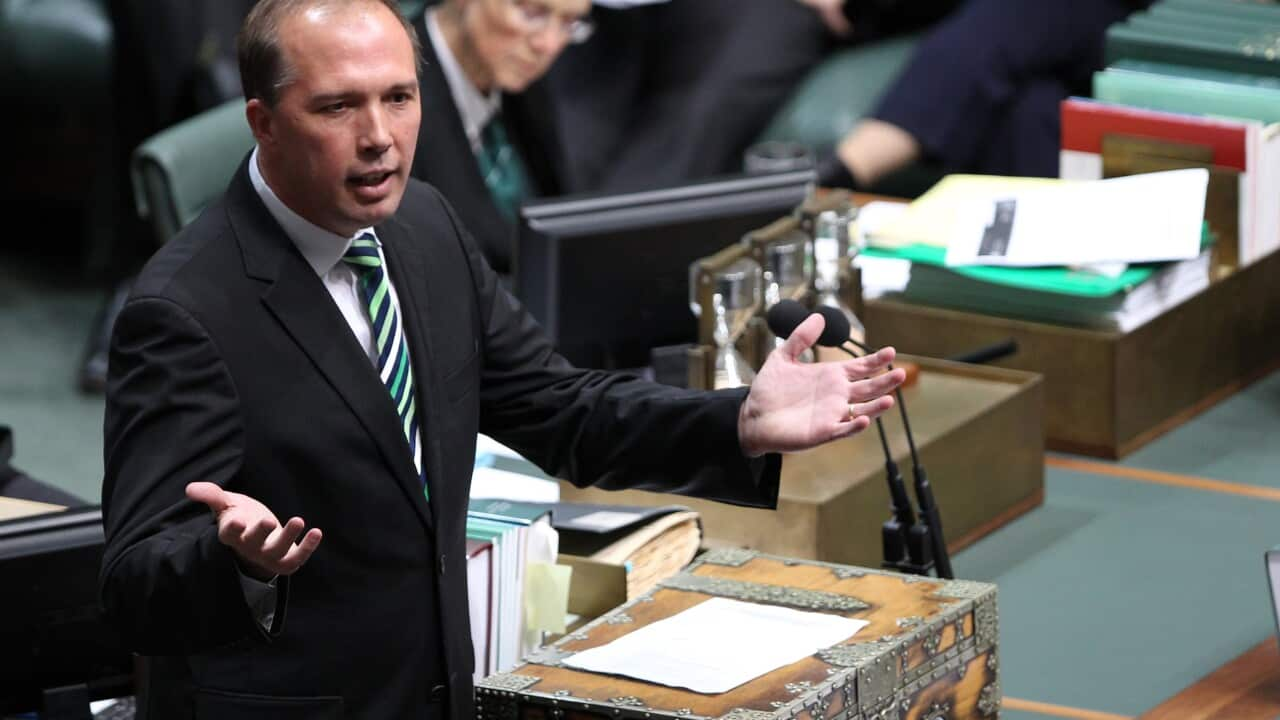
Mr Dutton says there needs to be a frank, fearless and comprehensive discussion about the health system, which he says is unsustainable in its current form.
His comments have sparked a backlash, with some saying the move signals the death of the universal health-care system.
Amanda Cavill reports.
(Click on audio tab to listen to this item)
Peter Dutton says an ageing population, technological developments, and obesity and diabetes rates will all increase financial pressures on the health budget.
He says, without any policy changes, the Commonwealth's health expenditure will balloon from 4 per cent of Australia's gross domestic product to 7 per cent by 2050.
That is about 685 billion dollars.
Mr Dutton says his main focus is modernising and strengthening Medicare.
And he says there needs to be a discussion about whether those who can afford it should pay more for their own health care.
"At the moment, government pays about 70 per cent of that which we spend on health each year. And I know these figures sort of gloss -- are glossed -- over, or go over people's heads, but $140 billion at the moment we're spending each year on health, (where) we raise about $10 billion a year out of the Medicare levy. There are enormous amounts of money to be spent. There are lots of technologies coming through. And as a First World country, we want to adopt those early. And we have to have a conversation about how we pay for those. And those that have a capacity to pay, in many cases, are already paying within the system, but we have to have a discussion about how it is that payment model works going forward."
Mr Dutton says subsidies through the Medicare Benefits Schedule, the Pharmaceutical Benefits Scheme and the Private Health Insurance Rebate are the major contributors to health expenditure.
The National Health Reform payments to states and territories for public hospitals are also a key cost.
Mr Dutton says the Government will look to the private sector to provide more services and help train staff.
"Why shouldn't we be open to greater involvement of the insurers who cover 11 million Australians? Why should we see the private sector involving itself in public services as a bad thing? We should be leveraging the private sector, not just for services but to meet workforce-training challenges."
The Government has already flagged a proposal to charge patients six dollars to visit their general practitioners.
And there is a suggestion that a similar payment for using the emergency departments in hospitals could also be introduced.
Dr Steve Hambledon, from the Australian Medial Association, has told Sky News there does need to be a discussion around the cost of health care in Australia.
But Dr Hambledon says a co-payment scheme could have a negative, not positive, impact on Australians' health.
"We've got to be very careful, if we use a blunt instrument like payments, and in particular in primary health care, that we don't get perverse outcomes. There are think-tanks internationally ... the Lancet think-tank is actually saying, if you want to increase the efficiency of your health system, you lower the barriers to primary health care, you don't lift them. Now people who defer visits to the GP, that might be discretionary, but it also might be important. And if they end up in hospital, that's going to be a downside, because it's going to make the health system more expensive."
Mr Dutton's comments come just days after hundreds gathered at Sydney's Town Hall to rally against any weakening of Medicare and the introduction of co-payments.
Unions New South Wales secretary Mark Lennon says the Abbott Government is talking about destroying Medicare after just a few months in office.
He says the Government should be aware of the political backlash that will follow if Medicare is dismantled.
"Medicare, there is a social compact around Medicare. The nation accepts that we should have a universal health-care system. There's been bipartisan support for that now for over 30 years. Mr Abbott should hear the message loud and clear from the community today and leave Medicare well alone."





