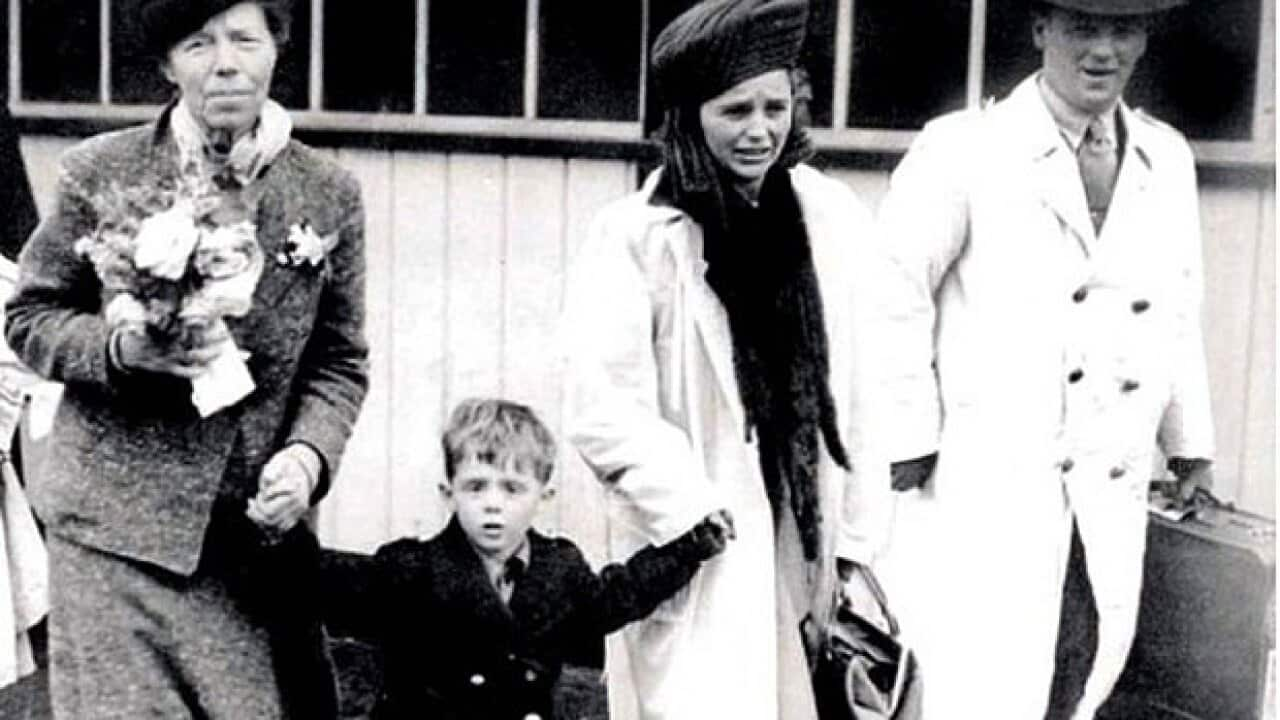
Leonid Kulikovsky remained in the morgue for two months after his death before his identity was confirmed.
He was the great-grandson of Alexander III, the penultimate tsar who ruled Russia in the 1880s.
His grandmother was Grand Duchess Olga, a sister of Tsar Nicholas, who was killed in 1917 by revolutionary forces when the Romanovs were ousted from power.
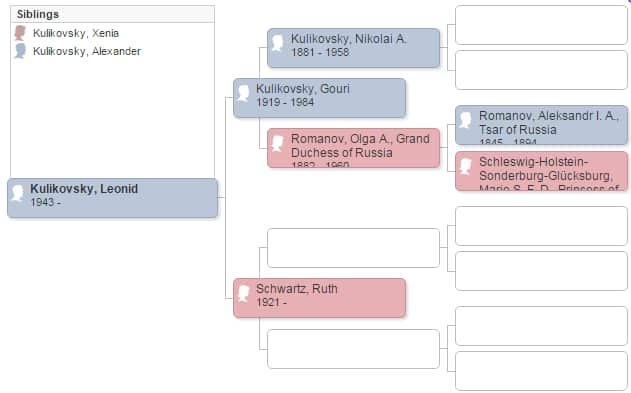
Olga was said to have escaped to Crimea and then Denmark, where she purchased a dairy farm near Copenhagen.
News that makes sense
Your trusted source for staying up-to-date with the world around you. Get free daily news updates and analysis, straight to your inbox.
Mitred Archpriest Mikhail Protopopov conducted the burial service in Darwin at St Savva Serbian Orthodox cathedral because of a lack of Russian Orthodox church in the city.
He told SBS Radio's Russian program that Mr Kulikovsky’s reclusive behaviour meant no-one knew he was living in the Northern Territory.
“He used to live in Sydney, and a few years ago he just disappeared saying no word to anyone. [He] dropped all the contacts with his relatives in Denmark and that is why it was so difficult for them to find him.”
Northern Territory Police confirmed Mr Kulikovsky died on September 27, aged 72.Russian representative in the Northern Territory, Simon Andropov said he was found dead under a tree after suffering from a heart attack while walking his dog.
Mr Kulikovsky was a member of the exiled Romanov family and had never pursued his claim to the throne after his ancestors were removed from power by two revolutions in 1917.
Solemn ceremony
At least 30 people attended the 45-minute funeral service in the Darwin suburb of Malak on Monday.
None of Mr Kulikovsky’s relatives could attend, but those present were NT Multicultural Affairs Minister Peter Styles, Russian Embassy representative Maxim Raku and the Chancellor of the Russian Orthodox church in Australia, Dr Michael Protopopov.
Mr Kulikovsky moved from Denmark to Sydney in 1967 and worked for Sydney Water until his retirement seven years ago.
He then travelled in a campervan around the country until the vehicle was stolen while he was in the Northern Territory town of Katherine.
He spent his remaining years in the town with his dog for company. He never married and had no children.
Having performed the funeral service for other descendants of the Romanov family, Mr Protopopov said there is one truth that is common to all the ceremonies.
“I ran the funeral service for the Prince Mikhail Andreevitch Romanov in Sydney seven, eight years ago; and participated in the reburial of the Empress Maria Fedorovna, when her body was transported from Denmark to Russia,” he said.
“We are all equal when God takes us to him. There are no tsars, no slaves, no labourers, no earls. We are all the same.”
‘A great shock to the family’
Mr Kulikovsky's family had lost touch with him for two decades.
A message from Mr Kulikovsky's family, read out at the service, described their grief at finding out about his whereabouts in the circumtances of his death.
"The death of Leonid Gurevich Kulikovsky came as a great shock to his family," the message said.
"We had just been taught he was far away from Moscow, about finding him, and had renewed hope that we would be able to come into contact, but a few days later we were informed by the police that he was found dead."
The message went on to say that Mr Kulikovsky had always been circumspect about his royal heritage.
"We guessed that not many of you know about his life before he arrived in Australia," it said.
"Those who met him during his time in Sydney or in Katherine most likely did not know that he was a descendant of the Russian Tsar Alexander III.
"Leonid did not show or talk about his roots very much."
The royal lineage extends further with links to British royal family.
Mr Kulikovsky’s great-grandmother’s brother was Prince William of Denmark, whose son was the father of Prince Phillip, the Duke of Edinburgh, AP reports.
His great-grandmother’s sister was the wife of King Edward VII, the great-grandfather of the Queen Elizabeth.
The Northern Territory's richest family who made their wealth from pearling, the Paspaleys, offered to pay for the burial, offering a gravesite for the Russian heir in their private family burial area.
Body lay for two months in morgue unidentified
The body was finally identified after the head of Russia’s Orthodox Church in Australia, Father Michael Protopopov, visited Moscow with news of the death.
Mr Protopopov said it was when the police searched Mr Kulikovsky’s living quarters and found out he had relatives in Denmark that the search ramped up in intensity.
“At that moment I was in Moscow and met with his nephew, who had been asking me for some time to find his uncle,” he told SBS Radio’s Russian program.
“Then, I came back to Australia and started my search which led us to the morgue in Darwin.”
'A lovely man'
Locals remembered Mr Kulikovsky as a man who "got on with everybody", despite being a loner.
Peter Byers, the owner of the Northbank Caravan Park where Mr Kulikovsky lived, said he had been known by the nickname, "Old Nick", possibly a reference to the last Tsar of Russia and a cousin of the British royals, Nicholas II.
"He said he'd made a few friends in Katherine and was happy here. He got on with everybody. He loved his dog and took great care of him," he told the NT News.
"He was great reader and had a huge number of books on Vikings."







