

(Transcript from SBS World News Radio)
Divorce and separation are tough on families.
Parents and children are buffeted by the experience.
But often overlooked is the devastation it can inflict on grandparents.
And there are some grandparents who pay a very heavy price.
News that makes sense
Your trusted source for staying up-to-date with the world around you. Get free daily news updates and analysis, straight to your inbox.
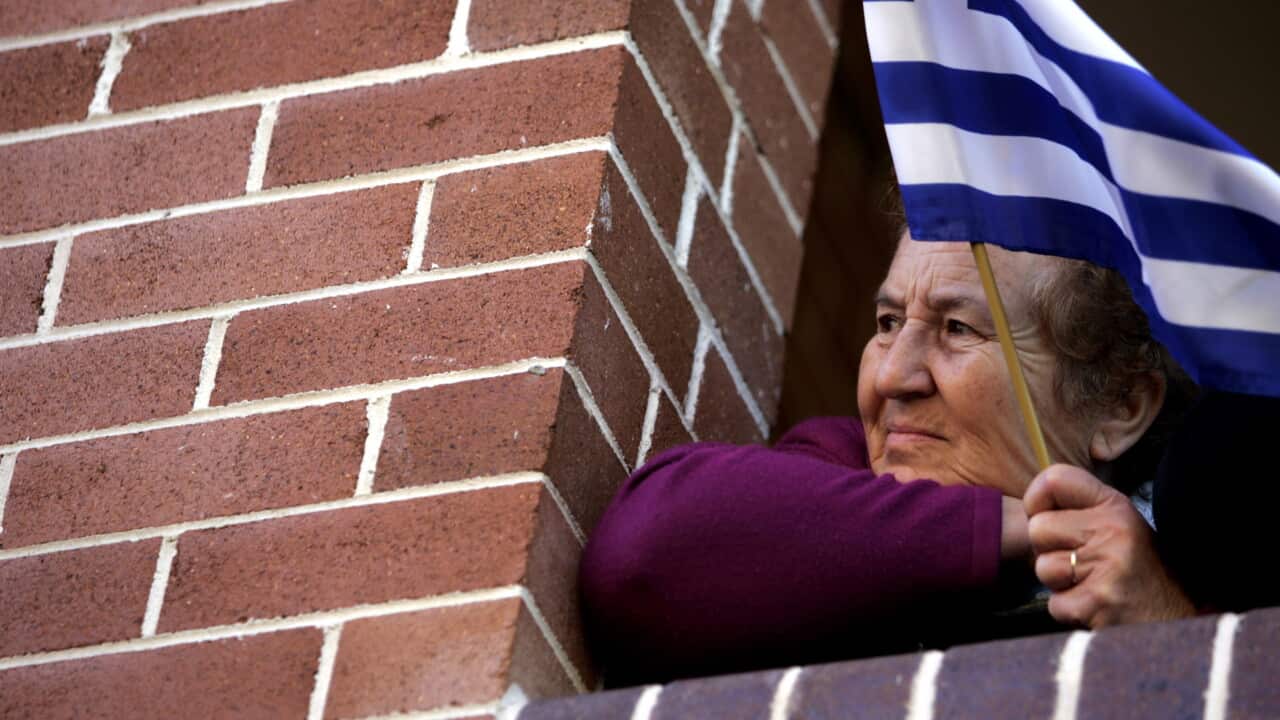
Melbourne's Greek community has identified its grandparents as being vulnerable and is supporting older members struggling to maintain contact with their grandchildren.
Peggy Giakoumelos reports.
(Click on the audio tab above to hear the full report)
Konstantina Kouroutsidou is a community care worker with the Australian Greek Welfare Society in Melbourne.
She says older members of Australia's Greek community are finding it particularly difficult to deal their children's divorce or separation from partners, prompting the organisation to run workshops for grandparents.
In a culture with a strong emphasis on the extended family, relationship breakdown can bring shame and the loss of a traditional sense of what it means to be a grandparent.
"Well it's devastating for the grandparents, because it's grandparents who are really involved in the ch
ildren's families and the grandchildren's upbringing. First it's a cultural issue, of what the neighbours and other people are going to say. We still see a bit of that. Or if the ex-daugher-in-law or ex-son-in-law don't allow the grandparents to see the grandchildren any more."
Konstantina Kouroutsidou says for many older Greek-born Australians, especially women, their own identity is often tied up with their families.
The situation can sometimes be complicated further when Austrailans of Greek ancestry partner up with someone from outside the Greek community.
Once the extended family disintegrates, so too do the rituals of daily life.
"For the holidays and the Sundays and the visiting and the cooking and the babysitting. All of a sudden everything is changed and they are out of a mission. They do live through the children and the grandchildren, a lot of Greek grandparents."
Australian Bureau of Statistics figures show that in in 2012, there were close to 50,000 divorces granted in Australia.
Based on this and other recent data, the ABS estimates that around one-third of all marriages in Australia will end in divorce.
While not all relationship breakdowns are acrimonious, for those that are the effects on the extended family can be profound.
Ian Yates is the CEO of the Council of the Ageing.
"It's certainly an issue that occurs and recurs over many years. Grandparents do have some rights in family law, but there are often practical and financial issues involved in pursuing those if there's a hostile relationship. So yes it's a significant issue on both sides. Grandparents are a significant presence in their grandchildren's lives and vice versa. And we think grandparents deserve even greater recognition. I don't think anyone knows quite what the breadth of the problem is but I can tell you it comes up regularly and it's been recurring for many years."
Legal Aid New South Wales says while grandparents don't have an automatic right to have a relationship with a grandchild, if they have an ongoing connection with the child they may apply to the Family Court for Parenting Orders if they believe the child is at risk.
To avoid the expense and trauma of going through the court system, all parties involved are at first encouraged to try mediation.
Family relationship educator at Lifeworks, Wendy Driscoll, says the issues faced by grandparents in this situation are similar regardless of cultural background.
She adds though that the priority should always be the children's welfare.
"If the children have been used to seeing the extended family, by all means continue doing all you can or getting a smattering of it. And it's very important for the extended family also not to say negative or ugly things about the family. So to try and keep it normal. Yes it's difficult to live separately, but we all still love you and we will do our best to make you as comfortable as possible. So that's the way that extended families can help make things as normal as possible for children so that they know that they're loved, no matter what."
The Australian Greek Welfare Society in Melbourne has been running workshops for grandparents for a number of years, the most recent of which kicked off in mid-July.
Konstantina Kouroutsidou from the Society says the workshops run for eight weeks but once they're over, the group is encouraged to continue meeting in an informal manner.
"First of all it's great to admit to your problem and let it out, share it with other people. It's a great mechanism to face your fears and your questions and then the magical thing in a group situation is that when you share your problem with other people, and listen to other people's problems, you realise 'oh my god' you're not the only one, so straight away you feel better."