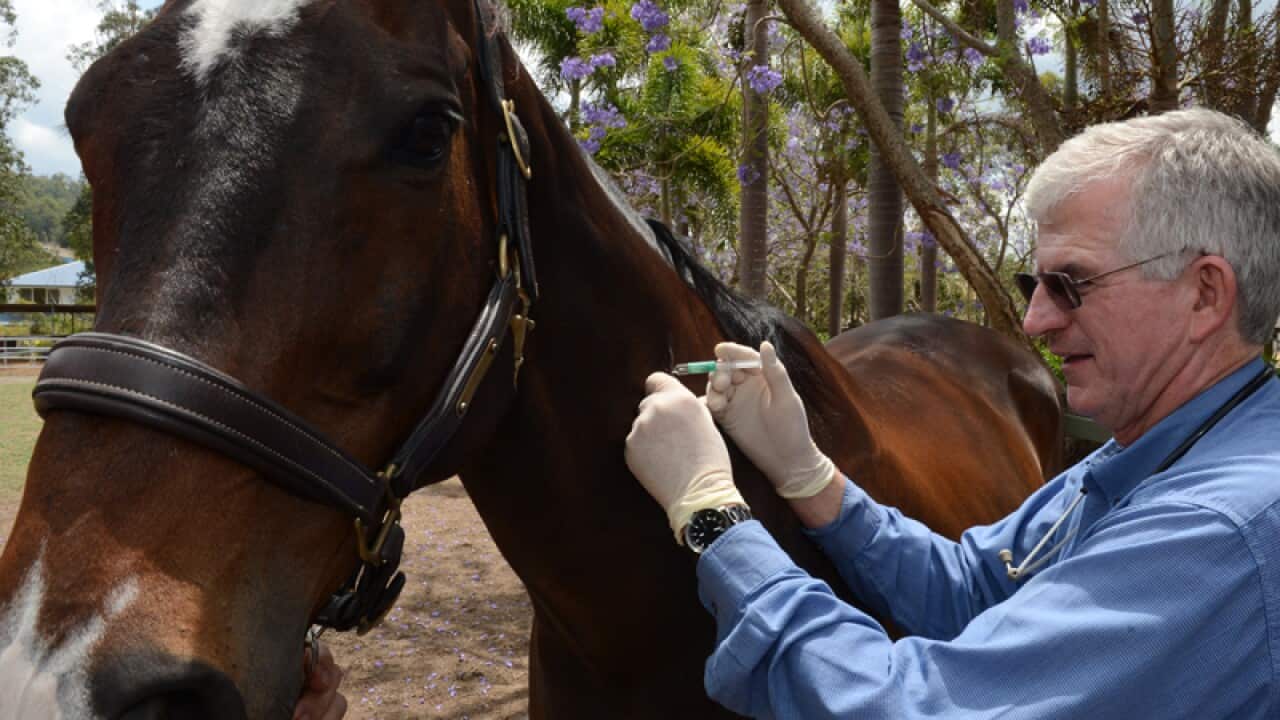
Scientists are now confident boosters of a vaccine for the deadly Hendra virus can protect horses for one year rather than six months.
Horses have previously been required to have six-monthly boosters of the Equivac HeV shot, which provides immunity against the virus that has claimed the lives of four people since its discovery in 1994.
Lead CSIRO researcher Dr Deborah Middleton said experiments had introduced the virus to animals one year after the six-monthly booster.
"We are confident in the safety and efficacy of 12-month immunity for Equivac HeV and pleased this work has resulted in a positive outcome for horse owners and the equine industry," she said.
Fruit bats are the natural hosts of Hendra, which can be transmitted to horses before potentially spreading to dogs and humans.
News that makes sense
Your trusted source for staying up-to-date with the world around you. Get free daily news updates and analysis, straight to your inbox.
It has a mortality rate of more than 75 per cent in horses and most infected animals die within one or two days of showing symptoms.
Last July, a major advancement in understanding how the virus is spread revealed horses were most likely to catch it from bat urine, rather than saliva or faeces.
Any suspected case triggers stringent precautionary measures - including the use of personal protective gear - and there can be legal consequences for vets who fail to comply.
In March, Gold Coast vet Dr Matthew George Morahan was placed on a two-year good behaviour bond after pleading guilty to breaching the Workplace Health and Safety act, which was amended in 2012 to include more rigorous Hendra guidelines.
Dr Morahan visited a suspected case at a Worongary property in mid-2013 and did not provide the horse's owner with protective gear while drawing a sample.
Vaccine manufacturer Zoetis reminded horse owners to speak with their vet to ensure their animals comply with the required boosters.
The Australian Veterinary Association (AVA) welcomed the news, saying the new regime would make it easier for everyone involved and reduce owners' vaccination costs.
"With the annual booster, horse owners can halve the number of boosters required," said Dr Ian Fulton, of the equine branch of the AVA.







