In brief
- Kuwait's foreign ministry said one person was killed in an Iranian attack, which followed US strikes on an Iranian island..
- At least 63 people were injured, including airport workers and passengers, Kuwait's health ministry said.
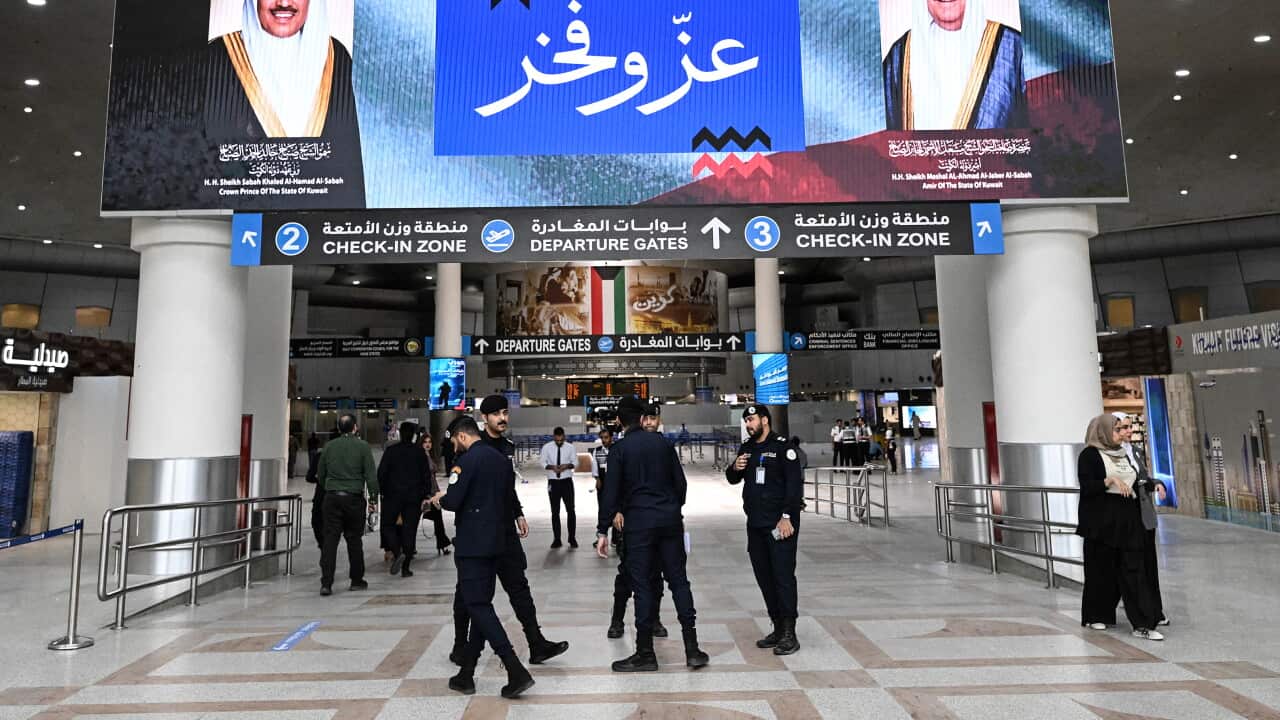
Kuwait says Iranian attacks on its territory killed one person and wounded several others, forcing its airport to close and damaging unnamed diplomatic missions.
At least 63 people, including airport workers and passengers, were injured in Wednesday's attacks, the health ministry said. Kuwait's foreign ministry said one person was killed in the attack.
The attack marked one of the more severe tests yet of a fragile 8 April ceasefire, which has largely held despite sporadic strikes after more than a month of war following the US and Israeli attack on Iran on 28 February.
Kuwaiti officials blamed the attack on the airport on Iran, whose Revolutionary Guards accused US forces of triggering the night's sequence of attacks by targeting a communications tower on the country's Qeshm Island, forcing it to respond.
But, with Bahrain also complaining of an overnight drone attack from Iran, the United Arab Emirates attempted to rally its Gulf neighbours in opposition to Tehran.
News that makes sense
Your trusted source for staying up-to-date with the world around you. Get free daily news updates and analysis, straight to your inbox.
"In light of Iran's repeated aggression against the sisterly states of Kuwait and Bahrain, a firm, unified, and cohesive Gulf stance is imperative," UAE presidential advisor Anwar Gargash posted on social media.
"This aggression does not just target one country, it targets us all."
Kuwait's ministry of defence spokesman Brigadier General Saud Abdulaziz Al-Atwan described the airport strikes as "criminal Iranian aggression which resulted in significant material damage to the building and injuries".
Al-Atwan did not say how many people were hurt but said those wounded had received medical care.
Kuwait's state news agency Kuna said the civil aviation authority had suspended air traffic and transferred arriving flights to alternative airports after "Terminal One came under Iranian attacks causing casualties and damage".
Iran's Revolutionary Guards did not confirm they had targeted the airport.
But a statement said that, in response to a US attack "their air base and helicopters located in one of the countries in the region, as well as the headquarters of the US Fifth Fleet, were attacked by missiles and drones from the IRGC Aerospace Force".
Kuwait's international airport was targeted several times during the war, and had only fully resumed operations on 1 June.
Strikes come amid Israel-Lebanon ceasefire talks
The oil-rich Gulf nation, a US ally, has been on the receiving end of Iranian attacks after the US and Israel attacked Iran and killed its supreme leader in late February.
Tehran has repeatedly accused Kuwait and other Gulf countries of allowing US forces to launch strikes from their soil.
Earlier, the US military said it had "successfully defeated" a series of Iranian missile and drone attacks on Kuwait and Bahrain and confirmed it had conducted strikes on Iran's Qeshm Island.
"Two Iranian missiles fired at Kuwait fell short or broke apart en route, and three missiles launched at Bahrain were immediately intercepted by US and Bahrain air defence forces," Centcom said.
Bahrain authorities said they had intercepted three Iranian missiles and a number of drones.
The escalation came after US, Israeli and Lebanese officials met in Washington for direct talks on ending the parallel conflict between Israel and Hezbollah.
US secretary of state Marco Rubio said the militant group was the only impediment to deal, which the Lebanese embassy in Washington said would at first only cover Israeli attacks on Beirut and Hezbollah attacks on Israeli territory, before expanding in scope.
Israel has been fighting Hezbollah since the group dragged Lebanon into the wider Middle East war by attacking Israel on 2 March in support of Iran.
Neither side has publicly accepted Trump's deal, with senior Hezbollah official Mahmud Qomati telling Agence France-Presse in a written statement the group "will not accept a partial ceasefire".
According to US site Axios, however, Trump pressured Netanyahu to back down, calling him "f-----g crazy" in a phone call and accusing him of putting peace talks with Iran at risk.
Lebanon's National News Agency reported Israeli strikes, some of them deadly, on around 30 locations across the south on Tuesday.
Hezbollah meanwhile said it had attacked Israeli troops in southern Lebanese lands they occupy, but did not claim attacks in Israel.
For the latest from SBS News, download our app and subscribe to our newsletter.







