(Transcript from World News Australia)
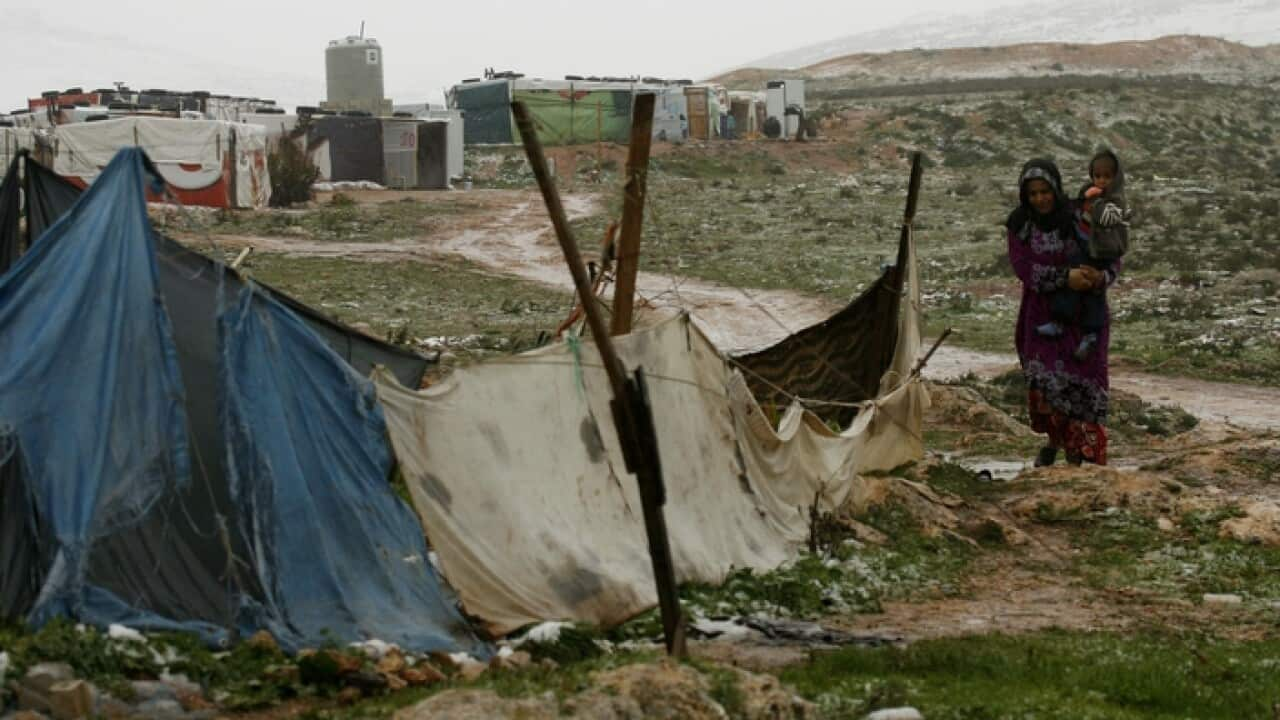
Syrian refugees who have fled the conflict and sought refuge in neighbouring countries have opened up about the challenges they're facing.
In its latest report, rights group Amnesty International highlights the plight of some of them.
Santilla Chingaipe reports.
(Click on audio tab above to listen to this item)
News that makes sense
Your trusted source for staying up-to-date with the world around you. Get free daily news updates and analysis, straight to your inbox.
"(through translation) Before we left Syria, my husband came here to find work because the situation was very bad. He came here together with my brother. Then he was arrested at the Syrian border by the security forces and we have heard nothing from him for three years. Then we found out that he was in a prison in Dera'a . Six months ago they killed him and left the body outside the prison. Some people buried him and put the video on YouTube - and they added his full name to the video."
That's 23 year old Yara.
A widow and mother of four from Syria who is struggling to make ends meet in Lebanon.
Hers is just one of many stories Amnesty hopes will put a spotlight on Syria's refugee crisis.
Spokesman Graeme McGregor.
"Although they've managed to flee the conflict in Syria itself, which as we know has been raging now for about four years, they've now found themselves as refugees in neighbouring countries living extremely hard lives with very little hope for any kind of safe or stable future."
Another story featured by Amnesty is of Kurdish-Syrian divorcee Layla.
She now lives in Beirut and hasn't seen her ten year old daughter in ten years.
"My husband divorced me because I got arrested. A security officer back home wanted to have an affair with me - and when I refused, the officer tried to rape me several times, but couldn't. Then he accused me falsely of having drugs, I was arrested and interrogated - and along with other officers, he participated in torturing me. I was tortured for three days and then imprisoned for five months. When I was proven innocent, I was released."
Layla says she then went to live with family members.
"Then the war broke out and we were forced to go to Lebanon. In Lebanon I stayed with my brother and his family for two months - but I was forced to leave my brother and his wife because they treated me very badly. Back in Syria he hit me several times. When we arrived in Lebanon he didn't hit me, but he treated me like a servant. Also, since I was divorced, according to Kurdish tradition, being a divorced woman is akin to social death. Especially because I was divorced due to my arrest - my brother treated me very badly and therefore I left.I would like to leave Lebanon and forget all the fear that I have encountered since I left Syria."
Amnesty says more than 190,000 people have lost their lives and more than 11 million have been forced to flee their homes as a result of the conflict in Syria.
It says about 7.6 million people have been displaced within Syria and 4 million have fled the country.
The majority of those fleeing to Turkey, Lebanon, Jordan, Iraq and Egypt
Amnesty's Graeme McGregor says wealthy countries need to do more to help resettle them.
"The UN has identified 380,000 refugees as being in need of resettlement. None of these countries are going far enough. What we need, what we really need at this moment is a combined effort from all of these nations to do what's right to help people facing what's been dubbed the greatest humanitarian crisis of our time."
Mr McGregor says Australia in particular, should step up its response.
"At the moment, the government is offering 1,500 places per year for the next 3 years. That's only 1.2% of the total number of refugees that UN has identified as needing resettlement. What we're calling on the Australian government for, as we're calling on many other governments, is to increase the number of refugees they take in from Syria and in Australia's case, we're asking them to take in 10,000 refugees from Syria."







