


Japan welcomed a new Emperor on Wednesday in a solemn ceremony at the Imperial Palace in the heart of its capital.
In his first speech, Naruhito said he would act according to the Constitution and fulfill his responsibility as the symbol of the state.
His ascension to the throne came after his 85-year-old father Akihito abdicated on Tuesday, the first Japanese monarch to do so in two centuries.
Akihito became an active symbol of peace, reconciliation and democracy during his three-decade Heisei era.
News that makes sense
Your trusted source for staying up-to-date with the world around you. Get free daily news updates and analysis, straight to your inbox.
Many expect Naruhito to follow that model, but with his own style.
"As far as we know, he is pretty much in his father's mould, he's quite close to his father, but we don't know all that much about his personality," said Tessa Morris-Suzuki, Professor Emerita in Japanese History at the Australian National University.
"Because the role is primarily a symbolic one, it's not going to change the nature of the politics in Japan very dramatically."
Celebrations around the world
In Sydney, well-wishers poured through the doors of the Japanese consulate to send their congratulations to the Imperial family.
A practice which is being repeated at Japanese consulates around the world.
“After we collect all the books, we will send them to Tokyo in order to submit to the imperial household and this is happening all around the world,” says Keizo Takewaka, the Consul-General of Japan in Sydney said.
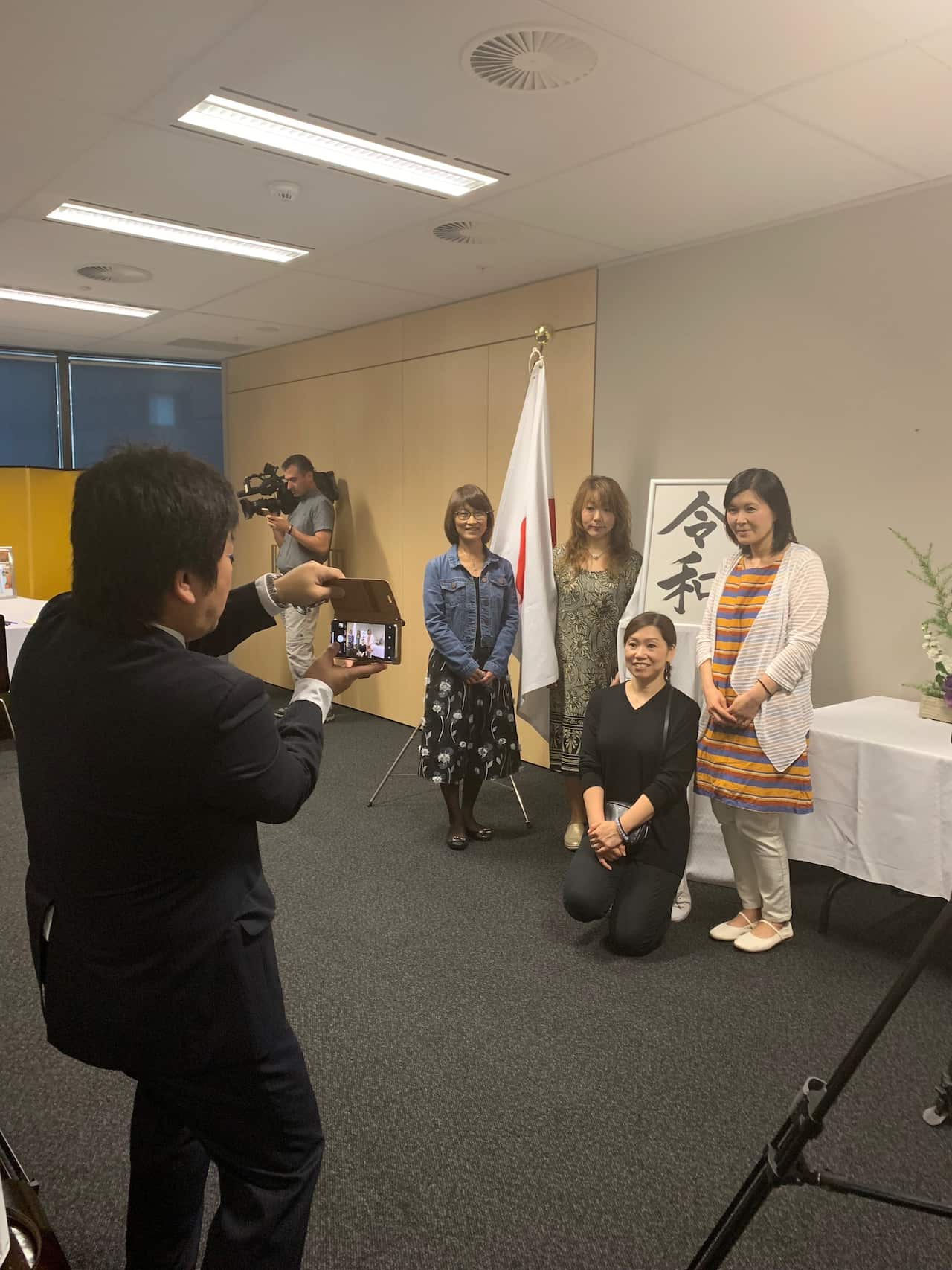
Chii, who is on a working holiday visa and visited the Japanese Consulate in Sydney says he is excited about Japan entering a new era and to have Naruhito as the new Emperor.
"The Emperor is so kind and so polite, that's why I want to celebrate the new Emperor," he says.
Chii also has fond memories of the Heisei era under Naruhito.
“Eight or so years ago, (Naruhito) went around to many prefectures in Japan to visit locals so I think he is very kind to the Japanese people."

Many of the people who came send their well-wishes hoped for peace in the new Reiwa era.
“I hope the Reiwa era is more peaceful ... no nuclear or chemical wars,” says 26-year-old Wataru Makino.
Japanese Imperial Succession
With Naruhito as the new emperor, the Japanese imperial family is left with just three heirs to the throne - one of whom is 83 - a situation which could reignite debate on the monarchy's males-only succession.
Naruhito has one daughter, 17-year-old Princess Aiko. But she is not eligible to inherit the throne because of a males-only succession law that conservatives see as central to the imperial tradition but that some experts say threatens the very existence of the monarchy.
First in line after Naruhito is his younger brother, Akishino, 53, followed by Akishino's son, 12-year-old Hisahito.
After that comes 83-year-old Prince Hitachi, younger brother to Akihito, who abdicated as Emperor on Tuesday.
“I think there are a lot of people who would like to see the system change so that women can inherit the throne as well but at the moment the government is itself a conservative government, and they are not in favour of that change,” says Ms Morris-Suzuki.
“Unless things shift politically, it is difficult to see things change in the near future. “
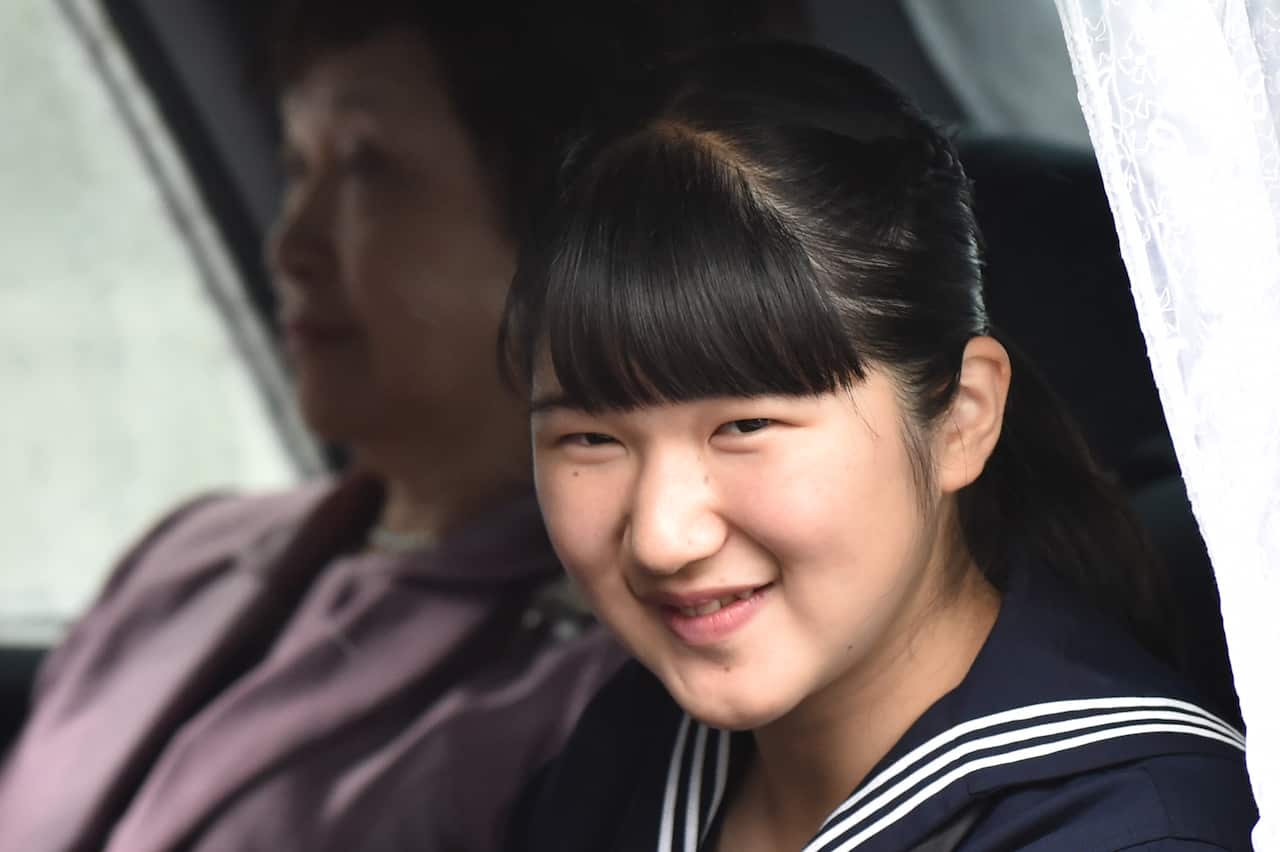
Surveys show a majority of Japanese are in favour of letting women take the throne and then passing it on to their children, but conservatives disagree, and they are key to Prime Minister Shinzo Abe's support.
The Australian Japanese community SBS News spoke to also largely support reform in this area.
"We should change the law of the Emperor system because now men and women are equal,” says 30-year-old Chii from Sydney.
“I think we are a new generation, everything is changing … a woman should be allowed to sit on the throne,” adds Jun.
In 2006, the then-prime minister, Junichiro Koizumi, was close to proposing a revision of the males-only rule, but that was shelved with the birth of Prince Hisahito, ending a 41-year drought in male heirs.
Historically, Japan's imperial line was preserved by a combination of concubines and cadet royal families called "miyake", who could supply a male heir in a pinch.
- with Reuters